





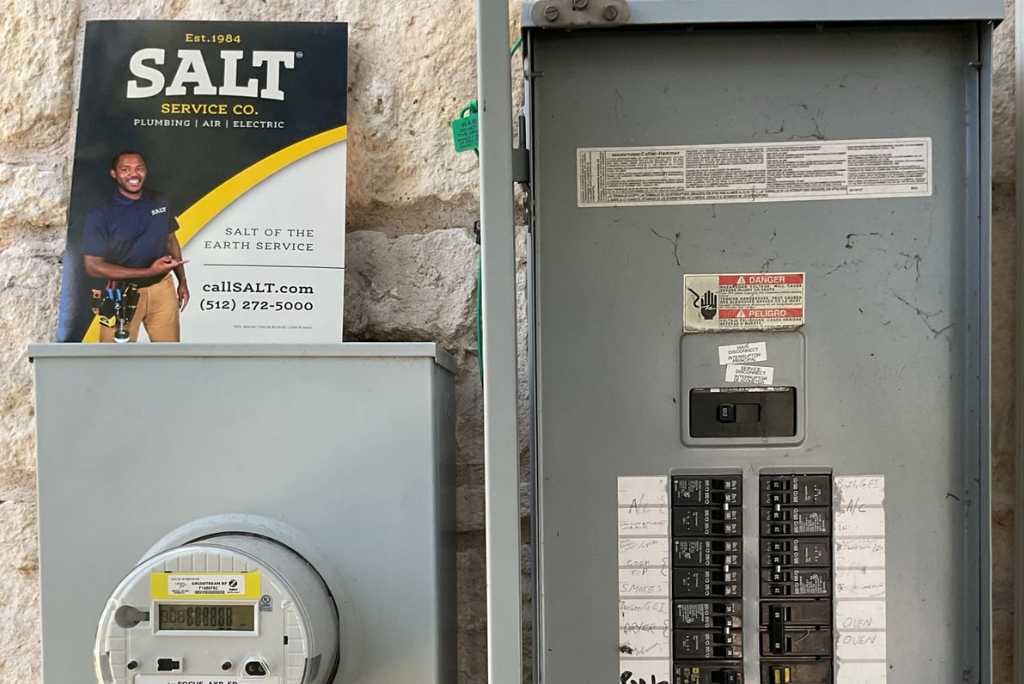
“Is my insurance going to pay for this, or am I stuck with the entire bill?”
Homeowners insurance will cover electrical panel replacement only when the damage results from a sudden, accidental event such as a lightning strike, electrical fire, or utility surge. Gradual wear, outdated brands like Federal Pacific or Zinsco, and elective capacity upgrades are not covered. The cause of failure, not the cost of the repair, is what determines your claim outcome.
At SALT, our licensed electricians help Austin-area families navigate electrical panel replacement projects every day. Many homeowners discover the problem only after receiving a policy non-renewal letter or failing a home inspection. This guide walks through covered versus denied scenarios, optional policy endorsements, and Central Texas cost and permitting factors.
Start with the single question your insurer will ask first: what caused the damage?
When Does Homeowners Insurance Cover Electrical Panel Replacement?
Insurance companies pay to clean up after disasters, not to prevent them. Coverage hinges on one concept: the damage must be sudden and accidental.
For a claim to apply, the damage must stem from a specific, date-identifiable event. A lightning strike, a fallen tree limb ripping down your service mast, or an immediate electrical fire all fit that definition. Gradual wear, rust, corrosion, or an aging panel are classified as routine home maintenance, which is your responsibility.
When coverage does apply, it falls under your policy’s Dwelling coverage. Your actual payout depends on your deductible and whether your policy pays replacement cost value (RCV) or actual cash value (ACV).
To decide if your panel damage is worth filing a claim, ask yourself three questions:
- Did it happen on a specific day? Was there a clear trigger, like a severe Central Texas storm or a fire?
- Is there sudden, visible damage? Look for scorch marks or melted wire casings, not slow rust.
- Did an electrician document the cause? Insurers require professional validation.
Power surges are a common gray area. External surges from a utility company or lightning are generally covered. Internal surges from overloaded circuits are not.
Policy language varies, so always confirm details with your agent before filing. A professional diagnostic inspection from a licensed SALT electrician can help you determine your best next step.
Covered Scenarios: When Insurance Pays for Panel Replacement
Picture a sudden thunderstorm rolling through Hutto. A crack of lightning strikes nearby, your lights flicker, and you smell burnt ozone coming from a charred panel in your utility closet. In sudden events like that, homeowners insurance typically covers the replacement.
Adjusters look for specific, sudden perils rather than gradual wear. Your policy likely covers replacements caused by:
- Lightning Strikes: Direct or nearby surges that destroy your home’s system.
- Electrical Fires: Sudden failures originating inside the panel.
- Falling Objects: Storm-damaged tree limbs tearing down service lines.
- Utility Surges: Downed lines or blown transformers. Investing in whole home surge protection benefits can reduce your exposure to future claims.
- Sudden Water Discharge: A burst plumbing pipe soaking the panel wall.
If an emergency strikes, follow this same-day playbook to protect your claim:
- Stay Safe: Avoid standing water. Shut off the main power if safe, then call us at (512) 956-7842.
- Take Photos: Document charred breakers and surrounding damage before anything is touched.
- Get a Diagnostic Report: Have a licensed SALT electrician write a report linking the damage to the event, not to age.
Your insurer pays the replacement cost minus your deductible. If the repair cost is close to your deductible, paying out of pocket prevents your premium from rising.
Why Insurance Claims Get Denied: The Wear-and-Tear Exclusion
Many homeowners assume insurers will cover an outdated or hazardous panel to prevent a house fire. They won’t. Your homeowners policy is a safety net for sudden, accidental catastrophes, not a home maintenance plan.
Expect a denial if your situation involves:
- Age and wear: A panel that is simply old or constantly tripping.
- Corrosion: Rust, moisture damage, or years of thermal cycling.
- Neglect: Loose wiring connections or overloaded circuits.
- Capacity upgrades: Increasing from 100-amp to 200-amp service for EV chargers or remodels.
- Recalled brands: Replacing a Federal Pacific or Zinsco panel without an active, covered loss event.
- Pre-existing defects: Code violations uncovered during a real estate inspection.
- Faulty workmanship: Damage caused by unlicensed or unpermitted installations.
DIY or unpermitted work is the fastest way to lose a claim. If unlicensed work triggers a failure, your insurer can deny the entire claim. Always hire licensed professionals and keep your city permits and inspection records on file.
One exception applies. If a covered storm or fire destroys your system, a feature called Ordinance or Law coverage may help pay for required code upgrades during the repair. Professional electrical inspections for panel assessment can document your system’s condition before any claim becomes necessary.
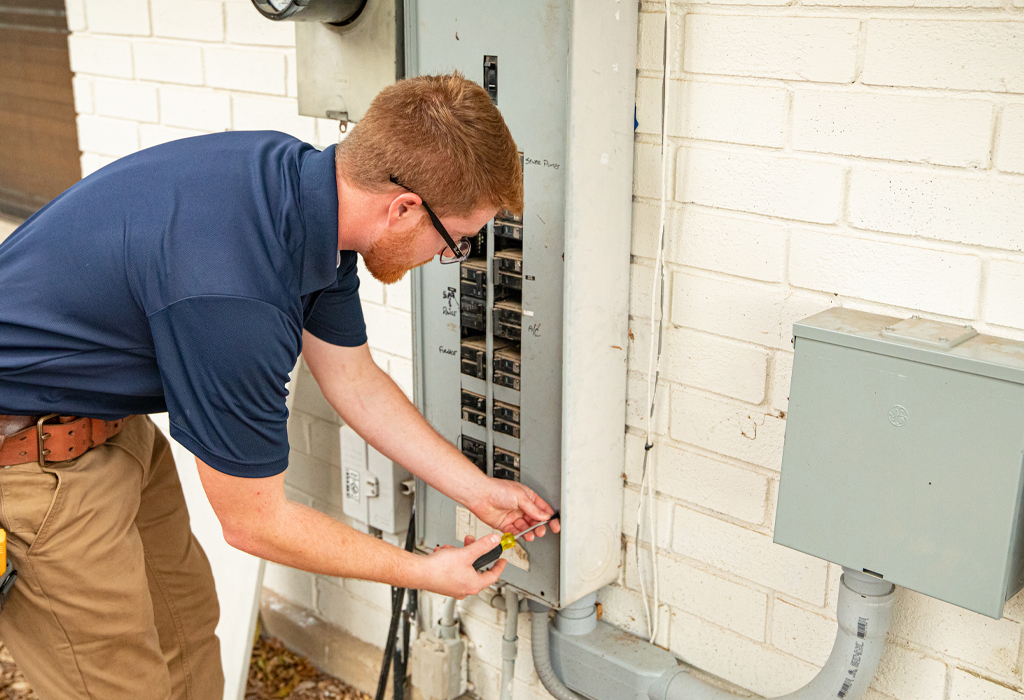
What to Do When Your Insurer Flags Your Electrical Panel
No active loss, but your insurer or a four-point inspection flagged your electrical panel. Since no sudden damage occurred, insurance will not cover the replacement. The cost is yours, and failing to act can trigger policy non-renewal or mortgage default.
Follow this five-step action plan:
- Contact your agent: Get the exact compliance deadline and confirm what paperwork they require.
- Get quotes: Schedule two or three estimates from licensed electricians to compare scope and pricing.
- Ask for an extension: If the deadline is tight, a signed contract and scheduled installation date may buy you 30 extra days.
- Replace the panel: Hire a licensed professional to secure permits, perform the work, and pass city inspections.
- Send proof: Email your agent the paid invoice, closed permits, and before-and-after photos.
Buying or selling a Central Texas home? Keep these points in mind:
- No waiting: Insurers won’t write a new policy with a flagged panel, which can stall your closing.
- Negotiate early: Have the seller replace it, or secure a credit to address panel replacement immediately after closing.
Policy Endorsements That Can Cover Your Electrical Panel
Standard homeowners policies require a specific external peril, like a lightning strike, to trigger a claim. Three optional endorsements can expand that coverage significantly:
- Equipment Breakdown Coverage: Covers sudden, internal mechanical or electrical failures, such as an internal arc fault. Ask your agent about the deductible, coverage limits, and whether your panel is explicitly included.
- Ordinance or Law Coverage: Applies only after a covered loss. If building codes require upgrades during a repair, this endorsement covers mandated additions like AFCI protection or new service disconnects.
- Service Line Coverage: Covers physical damage to underground utility lines running from the street to your home. This helps if an underground failure impacts your panel.
Review your policy declarations page and call your insurance agent today to confirm which endorsements you carry.
What Drives Electrical Panel Replacement Costs in Austin?
Key Factors That Affect Your Total Investment
Panel replacement costs in Austin vary widely depending on whether your home needs a simple like-for-like swap or a full service capacity upgrade. Several factors drive the final number:
- Service size: Upgrading from legacy 100-amp to 200-amp or 400-amp capacity.
- Meter base condition: Replacing deteriorated meter enclosures or aging service entrance cables.
- Grounding and bonding: Updating old rods and water line connections to pass inspection.
- Breaker requirements: Installing mandatory AFCI and GFCI breakers to meet current codes.
- Utility coordination: Managing municipal permit fees, applications, and scheduling with Austin Energy or Oncor.
- Physical accessibility: Difficult panel locations, drywall repairs, or underground trenching.
Permits and Timelines in Central Texas
Austin projects require local permits, city fees, and close coordination with Austin Energy or Oncor. The primary scheduling bottleneck is the utility company’s power disconnect and reconnect window, so precise planning keeps your household downtime to a minimum.
When you schedule electrical services in the Austin area through SALT, our team handles all local permits and utility coordination. We provide clear, upfront pricing options and flexible financing to keep your home’s upgrade on track.
Choosing the Right Path for Your Electrical Panel Replacement
Whether homeowners insurance covers your electrical panel replacement depends entirely on your situation. Use this three-path framework to plan next steps:
- Path 1: A sudden event damaged your panel. Focus on safety first. Document the damage with clear photos and get a diagnostic report from a licensed electrician. Compare the repair estimate against your deductible before filing.
- Path 2: Your insurer flagged a Federal Pacific or Zinsco panel. Treat this as a time-sensitive compliance project. You must replace the panel to maintain coverage. Keep your closed permits and paid invoice as proof.
- Path 3: You want to expand electrical capacity. Plan this as a standard home improvement for EV chargers, hot tubs, or heat pump additions. Expect to pay out of pocket since insurers don’t cover elective upgrades. Review evaluating electrical panel upgrades to understand your options before calling for quotes.
Before calling an electrician, have these details ready:
- Photos of your panel and its brand name, plus your home’s approximate age.
- A list of new high-draw appliances you plan to add.
- Any safety warning letters or correspondence from your insurance company.
If you need help navigating this process, schedule an electrical panel evaluation with SALT Service Co. or call our Central Texas team today.
Call (512) 575-3309Frequently Asked Questions About Homeowners Insurance and Electrical Panels
Will homeowners insurance cover electrical panel replacement due to age?
No. Standard policies don’t cover replacement due to old age, wear, or obsolescence. Insurers treat aging components as a routine maintenance responsibility. Coverage only triggers if an external covered peril, such as lightning or fire, physically damages the system. Routine wear, slow corrosion, or loose connections that develop over years will be denied.
Does homeowners insurance cover an electrical panel upgrade?
Elective upgrades, such as increasing capacity from 100-amp to 200-amp service, are not covered. These are classified as home improvements. Capacity increases for EV chargers, hot tubs, or home additions are your financial responsibility. Partial assistance may apply under Ordinance or Law endorsements, but only to meet code requirements while repairing a covered loss.
Will my insurer deny or cancel my policy for having a Federal Pacific or Zinsco panel?
Yes, many carriers will deny coverage, refuse to renew, or issue strict replacement deadlines for homes with Federal Pacific (FPE) or Zinsco panels. These panels are documented fire hazards, and insurers won’t assume that liability. Pay for the replacement yourself and submit the licensed electrician’s paid invoice and closed permits to clear the underwriting hold.
What should I do first if lightning or a power surge damages my electrical panel?
Your immediate priority is home safety. Don’t touch a damaged panel in emergency electrical situations without calling a licensed professional first. Avoid standing water, stop resetting tripped breakers if you smell burning, and call a licensed professional to inspect the damage. Document damage with clear photos and secure a written cause-of-loss report from your electrician, then file your claim promptly and coordinate the adjuster’s visit.
Is equipment breakdown coverage the same as homeowners insurance?
No. Equipment breakdown coverage is an optional endorsement that protects against sudden, internal mechanical or electrical failures. Standard policies only cover external perils like fire or storms. Check your policy declarations page to verify the deductible, coverage limits, and whether your panel and wiring are included.
How much does it cost to replace an electrical panel in Austin, and how long does it take?
A standard panel replacement in Austin typically ranges from $2,000 to $4,500, with the installation itself taking about 4 to 8 hours. The final price depends on your required amperage, structural accessibility, and necessary code upgrades, while total downtime is dictated by municipal permit schedules and utility disconnect timelines. The SALT Service Co. team handles all local permitting, utility coordination, and same-day installation.
Ready to get started? Contact our team today.
Schedule Service