




SALT Plumbing Air & Electric installs standby and whole-home generators throughout Austin and Central Texas, handling the gas line, the electrical tie-in and the concrete pad as one job instead of three. A permanently installed generator needs both an electrical permit and a plumbing permit in Austin, and SALT is licensed for both, so one company does the work on one schedule.

The short version: standby generator installation with SALT typically runs $2,000 to $18,000, and whole-home generator installation runs $8,000 to $85,000, with most whole-home projects under $30,000. SALT holds TECL #26149 (electrical) and LIC# M-44221 (plumbing), so the gas line is not subcontracted. Most installs take three to six weeks from consultation to final load test, with one to two days of work on site.
Both ranges include jobs where SALT supplies the generator and jobs where the homeowner already owns one, so where a project lands depends on equipment, generator size, gas line distance and any panel or meter upgrades.
| Installation type | Typical SALT price range (SALT-supplied or homeowner-supplied generator) |
|---|---|
| Standby generator installation | $2,000 to $18,000 |
| Whole-home generator installation | $8,000 to $85,000 (most under $30,000) |
The biggest swings in an Austin quote are the generator’s size, how far the gas line runs from the meter, whether the electrical panel or gas meter needs an upgrade, and whether the homeowner already supplies the generator. For the work in your approved quote, the number on the quote is the number on the invoice. If a main panel upgrade or gas meter upsize is needed, SALT prices it separately before any work begins.

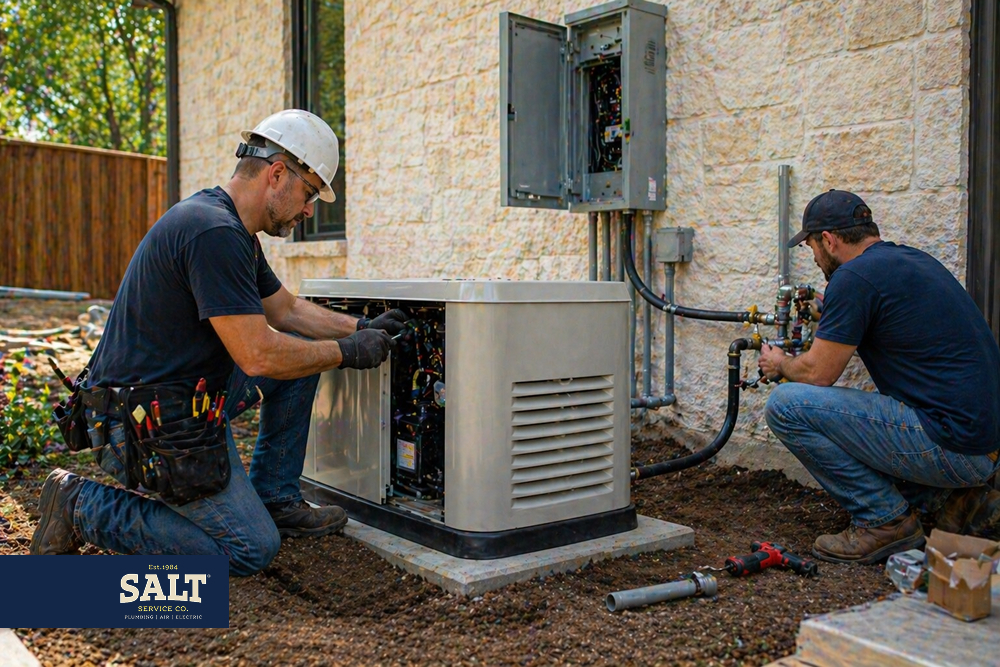
A SALT generator installation in Austin is turnkey: When SALT supplies the generator, one quote covers the equipment, the site work, both trades and both permits. If you already own a generator, the quote covers the installation, site work, both trades and both permits. When comparing quotes from Austin contractors, check each line, because a quote that leaves out the gas plumbing or the permits is not comparable to one that includes them.
On-site electrical load and fuel assessment to size the system
Automatic transfer switch and panel connections
Concrete pad and unit placement with proper clearances
Gas line from the meter to the unit, sized for the generator
City electrical and plumbing permits, pulled by SALT
Commissioning, a full load-transfer test and a homeowner walkthrough
A main panel upgrade or a gas meter upsize is priced separately when the assessment shows it is needed, since neither applies to every home. Many Austin homeowners also add whole-home surge protection while the panel is open. For more backup power options, visit the SALT generator hub.
Generator size in Austin depends on the connected electrical load, not square footage. A smaller home with two A/C units and a well pump can need more capacity than a larger home with one. SALT runs a load calculation at the assessment instead of guessing from floor area.
| Generator size | Typically covers |
|---|---|
| 11 to 14 kW | Essential circuits: refrigerator, lights, outlets, one smaller A/C zone |
| 18 to 20 kW | Most of a home with one central A/C unit |
| 22 to 26 kW | Whole-home coverage, including central A/C |
| 28 kW and up | Large or all-electric homes, two or more A/C units, well or pool pumps |
Central air conditioning is the largest load in a Central Texas home, and running it through an outage puts most Austin whole-home installs in the 20 to 26 kW range. Oversizing costs money without adding protection, and undersizing means the generator trips when the compressor starts. If the panel is near capacity, an electrical panel upgrade may be part of the plan.

Most Austin homes with natural gas service run a standby generator on natural gas, because the utility line keeps fuel flowing for the length of the outage with no tank to refill. Homes without gas service, or in parts of Central Texas where it is not available, run on liquid propane.
Natural gas: SALT checks whether the meter can feed the generator alongside the furnace, water heater and range, and coordinates a meter upgrade with the utility if needed.
Propane: Runtime depends on tank size. SALT sizes the tank to the runtime the household wants and lays it out to meet local setback rules.
Siting and noise: Units keep a five-foot clearance from windows and doors, and placement keeps weekly exercise cycles within HOA noise rules.
Fuel choice changes the generator model, the gas line size and the permit, so SALT settles it at the assessment, before equipment is ordered. Review the generator installation checklist to prepare.


A standby generator installation in Austin needs two trade permits, an electrical permit and a plumbing permit for the gas work, and the City of Austin requires a licensed trade contractor on each. SALT holds both licenses: TECL #26149 for electrical and LIC# M-44221 for plumbing. Many electrical contractors hold only the electrical license and subcontract the gas line.
For an Austin homeowner, that means one company is accountable for the whole system, one schedule instead of two, both permits pulled by the company doing the work, and one warranty conversation instead of a dispute over whether a fault is electrical or plumbing. A good question for any generator contractor: who pulls the plumbing permit, and do they work for you? At SALT, the same family-owned company serving Central Texas since 1984 handles both, alongside its full electrical services team.

A permanently installed standby generator in Austin requires permits and inspections: an electrical permit for the transfer switch and panel connection, and a plumbing permit for the gas line. Inside city limits, permits are issued by the City of Austin Development Services Department, and SALT pulls both and schedules the inspections.
Inspection matters because a transfer switch ties directly into the service panel, and backfeeding the grid during an outage endangers utility line crews. SALT verifies transfer switch requirements with Austin Energy and with co-ops such as Pedernales Electric Cooperative. Homes in Round Rock, Georgetown, Hutto, Cedar Park and Pflugerville fall under their own city or county authority across Travis and Williamson counties, and SALT handles permitting in each.
A SALT generator installation in Austin usually takes three to six weeks from the first consultation to the final load test, with only one to two days of physical work on site. Most of that time is permitting and utility coordination, not labor.
Load and fuel calculation, equipment selection and a flat-rate quote.
SALT files the electrical and plumbing permits and coordinates any meter upgrade.
One to two days to set the pad and unit, run the gas line and wire the transfer switch.
Inspections, then a full load-transfer test and a walkthrough of the system.
A standby generator is permanently installed, starts on its own within seconds of an outage and runs from the home’s gas supply. A portable generator costs less and powers a few circuits, but someone has to be home to start and refuel it. For an Austin household that needs air conditioning or medical equipment through a multi-day outage, a standby system is the practical choice.
| Standby generator | Portable generator | |
|---|---|---|
| Starts | Automatically, in seconds | By hand |
| Runs central A/C | Yes, when sized for it | Rarely |
| Fuel | Natural gas or propane | Gasoline, refilled by hand |
| Runtime | Continuous on natural gas | Hours per tank |
| Permits | Electrical and plumbing | None for standalone use |
| Needs someone home | No | Yes |
Never connect a portable generator to a home’s wiring without a properly installed transfer switch or inlet, and never run one indoors or in a garage. Carbon monoxide from portable generators causes deaths every storm season.
A standby generator needs professional service at least once a year, along with the weekly self-test most units run on their own. Annual service covers the oil and filters, spark plugs, battery and a load test. A dead starting battery or stale fuel, not engine failure, is the most common reason a generator fails during an Austin outage.
SALT installs Generac generators and handles diagnostics, non-warranty repairs and routine maintenance. Factory warranty claims and warranty-covered repairs often have to go through an official Generac Independent Authorized Service Dealer, and SALT will tell you up front when that applies. Generator maintenance is scheduled separately from the SALT+ membership, which covers A/C and heating tune-ups plus electrical and plumbing safety inspections. Learn more about Generac generator service and repair.

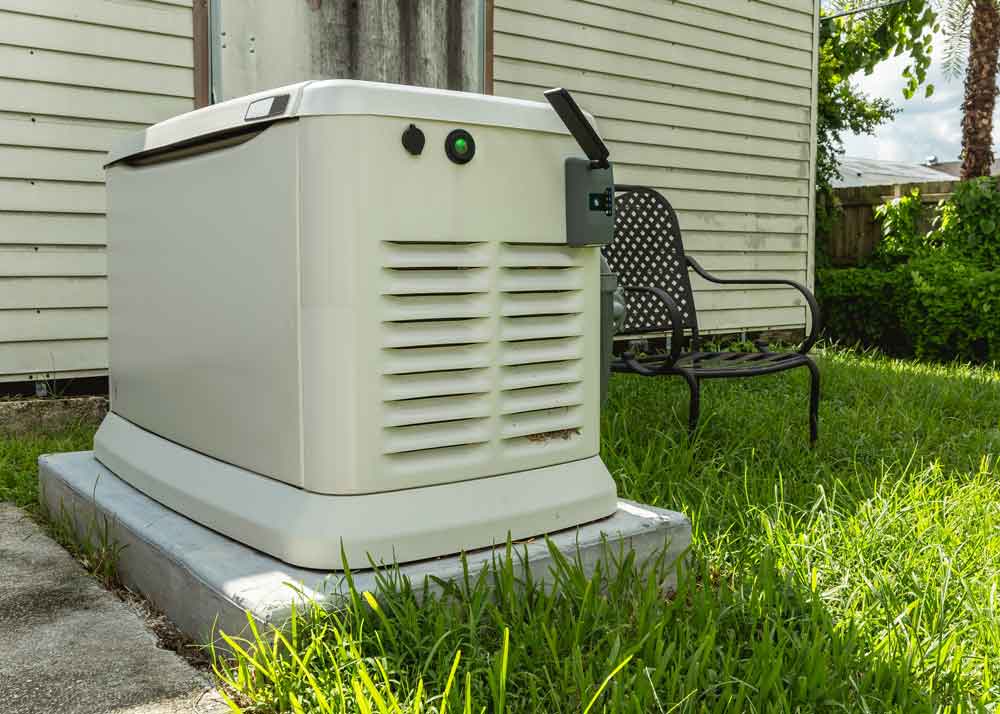
SALT offers no money down and 0% financing for up to 12 months on the purchase of a Generac generator for approved applicants. There is also $599 off the purchase of a whole-home Generac generator. Generator specials cannot be combined with any other offer and expire 30 days from the posted date, so check the current terms before you book.
Financing is set up at the quote, so Austin homeowners see the monthly figure next to the total before deciding. See all current specials. Shopping by brand? See our Generac generator installation page.
Day-to-day reliability in Austin is good. The reason to install a standby generator is the outages those averages leave out. Austin Energy reported 0.98 outages per customer and about 77 minutes of outage time per customer for the second quarter of fiscal 2026, roughly half the Texas average of 153 minutes. Those figures exclude major event days, which is exactly when a whole-home generator earns its keep: the February 2021 winter storm and the 2023 ice storm left parts of Central Texas without power for days.
Households with medical equipment, well pumps, young children, older relatives or a home office carry the most risk from a long outage. Source: Austin Energy FY2026 Q2 Operations Update. Read more about power outages in Austin.

With SALT, standby generator installation typically costs $2,000 to $18,000, and whole-home generator installation typically costs $8,000 to $85,000, with most whole-home projects under $30,000. Generator size, gas line distance, panel or meter upgrades and whether the homeowner supplies the generator drive the final price.
SALT runs the gas line in-house. A standby generator in Austin needs both an electrical permit and a plumbing permit, and SALT holds both licenses, TECL #26149 and LIC# M-44221. Many electrical contractors subcontract the gas work to a separate plumber.
Yes. A permanently installed standby generator needs an electrical permit for the transfer switch and panel connection and a plumbing permit for the gas line. Inside Austin city limits, both come from Development Services, and SALT pulls both and schedules the inspections.
Size depends on connected electrical load, not square footage. Running central air conditioning through an outage puts most Austin whole-home installs in the 20 to 26 kW range, but well pumps, pool equipment, EV chargers and second A/C units change the answer. SALT calculates it on site.
Often not without an upgrade. A standard residential meter may not feed a large generator at the same time as a furnace, water heater and range. SALT runs a fuel load calculation and coordinates a meter upgrade with the utility, or sets the generator up for propane.
About three to six weeks from consultation to final load test, with one to two days of work on site. Permitting and utility coordination take most of that time. Larger units can add equipment lead time, which SALT confirms at the quote.
SALT installs Generac generators and handles diagnostics, non-warranty repairs and maintenance. Factory warranty claims and warranty-covered repairs often need to go through an official Generac Independent Authorized Service Dealer, and SALT will let you know when that applies.
Yes. SALT installs and services standby generators in Round Rock, Georgetown, Hutto, Cedar Park, Pflugerville and across Travis and Williamson counties, and handles the permits for each city or county.

SALT assesses your home’s load and fuel supply on site, then gives you one flat-rate number covering the gas line, electrical tie-in, both permits and, when SALT supplies it, the generator itself. Call (512) 956-7842 or book online.