





A slow overnight charge can leave your EV short on range every morning. SALT Service Co. handles licensed EV charger installation in Austin for Tesla and universal Level 2 systems, managing the panel evaluation and rebate paperwork from start to finish.
We provide upfront, flat-rate pricing throughout Travis and Williamson counties, with same-day appointments available seven days a week from 8 a.m. to 8 p.m.
Family-Owned Since 1984: Over 40 years of trusted home service experience across Central Texas.
Licensed Electricians: Fully credentialed, background-checked, and insured under TECL #26149.
2,000+ Google Reviews: A 4.9-star average rating across Central Texas.
Upfront Flat-Rate Pricing: Clear written quotes provided before any work starts.
Lifetime Guarantee: Complete protection on repairs and installations for active SALT+ members.
A dedicated Level 2 EV charger delivers up to 40 miles of range per hour, replacing slow wall outlets and public charging stops with reliable overnight power. Professional installation means your vehicle is ready to go every morning without disrupting your routine.
EV chargers draw a continuous high-amperage load, and Austin’s triple-digit summer garage heat adds extra thermal stress to your panel. Correct wire gauge, precise breaker pairing, and code-compliant torque specs prevent hotspots and tripped breakers under heavy use.
For ongoing peace of mind, SALT’s optional SALT+ membership plan includes an annual electrical inspection alongside your HVAC and plumbing checks.
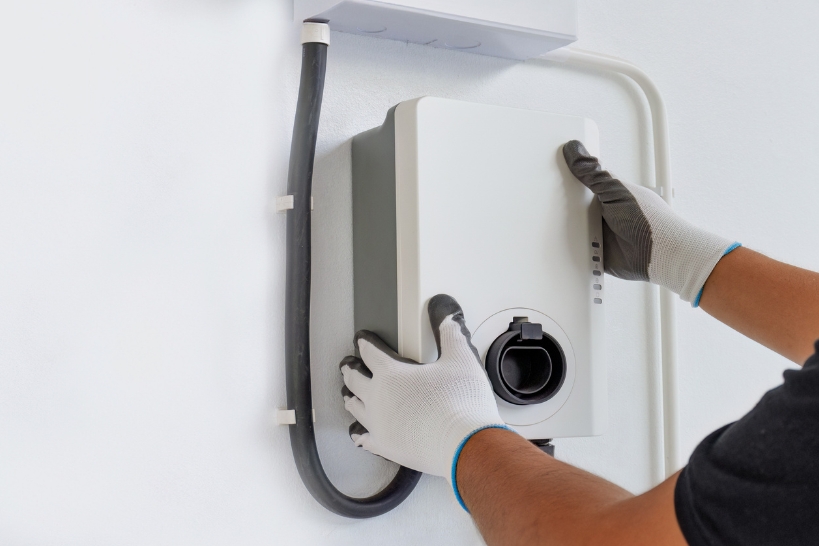
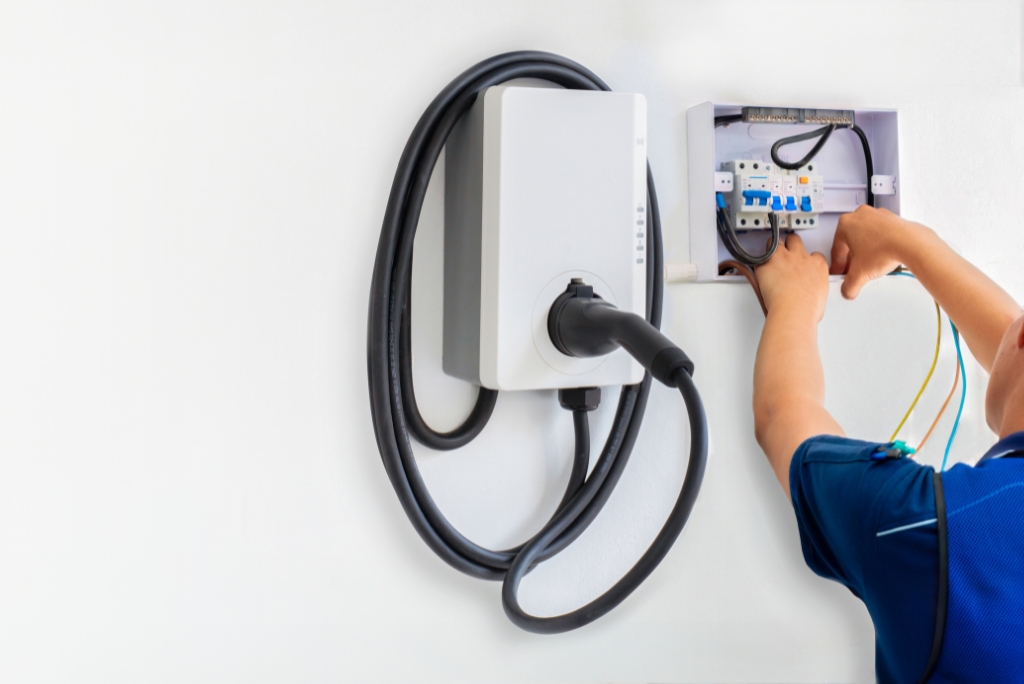
Most EV charger installations in Austin run $800 to $2,500. If your panel needs an upgrade to handle the added load, plan on $1,800 to $3,500 or more. Your final price depends on the distance from your panel to the charging location, the amperage you need, and whether extra electrical work is required.
Key factors that determine your total cost:
Distance from your main panel to the charging location
Surface conduit or underground trenching, if needed
Circuit amperage target: 40A vs. 48A dedicated breaker
Equipment format: NEMA 14-50 plug-in outlet vs. hardwired charger
Existing panel capacity and available breaker space
Permit and inspection fees appear as separate line items based on Austin’s local code requirements. Once your charger is running, EV charging costs and efficiency come down mostly to your utility rate and driving habits.
If a panel upgrade adds to your total, financing options can break the cost into manageable payments.
Austin Energy covers 50% of your charger equipment and installation cost, up to $1,200 for Power Partner-compatible chargers or up to $900 for standard Level 2 chargers. The utility also pays a $50 bill credit for enrolling in the Power Partner EV program, plus $25 after one year of participation. Funding is limited and awarded first-come, first-served, so apply soon after installation.
The federal tax credit for home EV chargers (Section 30C) expired for residential installations placed in service after June 30, 2026. It is no longer available for new projects. Confirm current program terms with a licensed tax professional before you count on it in your budget.
Claiming the Austin Energy rebate requires a permitted installation by a licensed electrician and itemized invoices. Unpermitted work disqualifies your application. SALT pulls the required municipal permits and provides itemized invoicing under TECL #26149 to keep your rebate application straightforward.
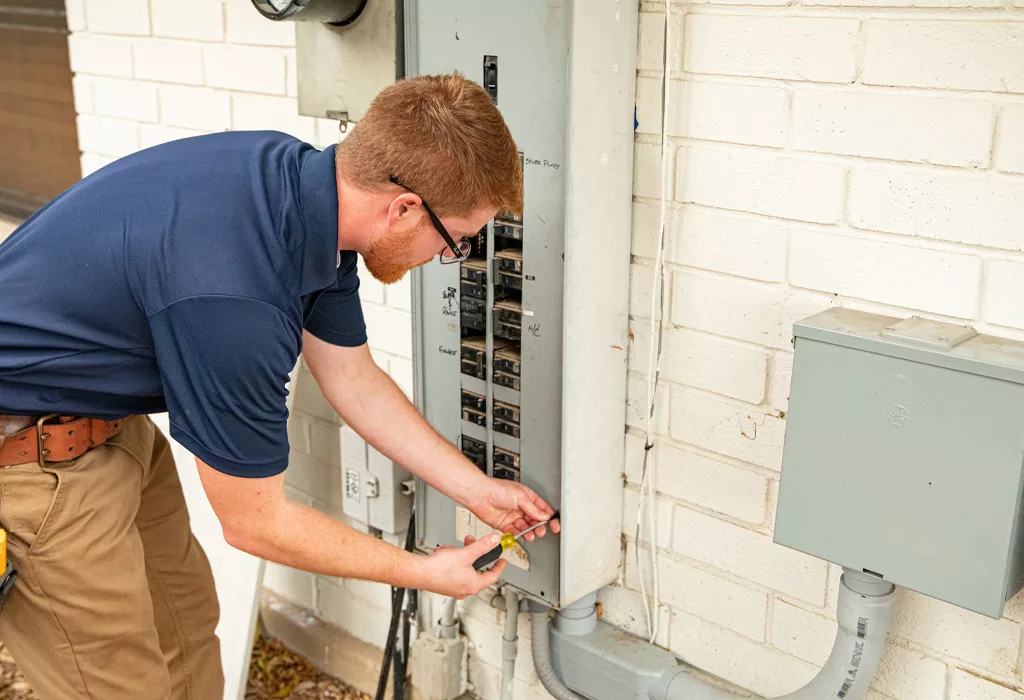
A Level 2 charger draws a continuous high-amperage load for hours at a time, so your panel needs enough spare capacity to handle it safely. Our electricians run a load calculation comparing your main service size (100A, 125A, or 200A) against major draws like central air conditioning and electric dryers.
Many older Austin homes still run on 100A service, which often cannot support a 48A charger without exceeding safe limits. A load calculation reveals your real options:
Confirming panel capacity before installation avoids surprise costs later. If your evaluation points to a full electrical panel upgrade, our team scopes and permits that work in the same visit.
Level 2 is the practical choice for most Austin drivers. Level 1 outlets add only 3 to 5 miles of range per hour, too slow for a full overnight recharge, while a 240-volt Level 2 system restores a full battery by morning. Curious how EV chargers work under the hood? A quick look at the tech behind each level makes the choice easier.
Level 1 vs. Level 2:
Level 1 works for short commutes; Level 2 delivers full overnight recovery for daily driving.
Tesla vs. Universal:
Universal chargers fit any EV, while Tesla units use native NACS connectors.
Hardwired vs. Plug-In:
A plug-in NEMA 14-50 outlet offers flexibility, but a hardwired connection holds up better to Central Texas heat and sustained current.
Outdoor installations need weather-rated enclosures, protective conduit, and GFCI breaker integration to meet local code. SALT verifies equipment compatibility and panel capacity before you buy.
The City of Austin requires an electrical permit and inspection for Level 2 EV charger installations. Operating under TECL #26149, SALT manages the entire permitting process as part of our master electrical services.
Here is how our process works:
Scheduling: Book a convenient appointment time online or by phone.
Assessment: We evaluate panel capacity, confirm load calculations, and plan conduit runs.
Installation: We secure permits, run dedicated wiring, and mount your unit.
Walkthrough: We test voltage, walk you through operation, and coordinate the city inspection.
Straightforward garage installs are often finished in one visit. Complex jobs with long wire runs, trenching, or a panel upgrade can take longer. For a broader check of your home’s wiring, our electrical safety inspection covers your full system.


SALT Service Co. installs code-compliant EV chargers throughout Austin and the surrounding area, with licensed electricians handling the permit, the paperwork, and the panel work from start to finish. Homeowners outside the city core can also explore our dedicated electrical services in Round Rock and nearby communities.
Your total cost depends on your panel’s available capacity and the distance between your breaker box and the charging location. Routing conduit through finished walls, adding a subpanel, or upgrading to 200A service all affect final pricing. We run a full load calculation and give you a written, flat-rate quote before any work starts, so there are no surprise charges. If your project needs extra electrical work, financing options can break the cost into manageable payments.
Yes. The City of Austin requires a residential electrical permit and a final safety inspection for every Level 2 EV charger installation. A permit confirms your wiring, breaker sizing, and grounding meet current National Electrical Code standards. SALT manages the full permitting process, from filing paperwork to scheduling the city inspection. A permitted, licensed installation is also required if you plan to claim local utility rebates.
Not always. It depends on your home’s existing capacity and available breaker space. An electrician runs a load calculation that accounts for major draws like central air conditioning and water heaters. If your panel is near its limit, adjusting the charger’s output amperage or adding a smart load-management switch can often support overnight charging without a full panel replacement.
DIY installation is not recommended. EV chargers draw heavy current for hours at a time, and getting the wire gauge, breaker sizing, or connection torque wrong creates real shock and fire risks. A licensed electrician confirms every component meets code and safety standards, and hiring a credentialed pro also protects your vehicle’s warranty and your home insurance coverage.