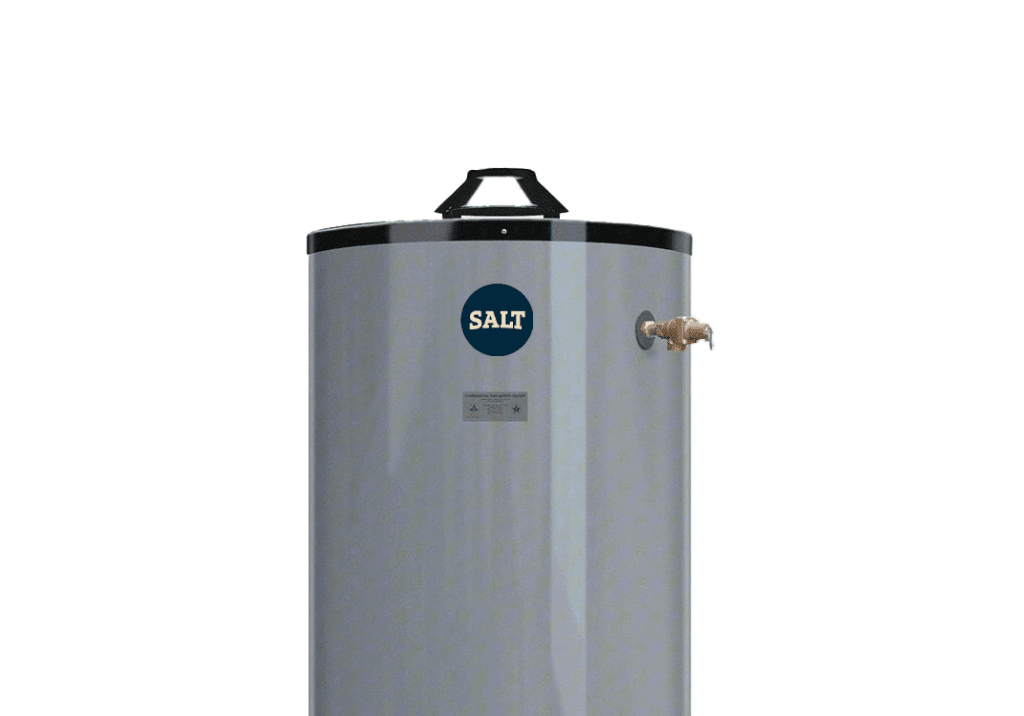





Tankless Water Heater Installation & Repair
in Austin, TX
Austin homeowners and property owners throughout the metro rely on SALT Service Co. for expert plumbing services, including tankless water heater installation, repair, and replacement. Whether you need same-day service on an existing unit or want to upgrade to a high-efficiency system, our licensed plumbing team delivers precise work at flat-rate, upfront pricing.
Family-owned and operated since 1984, SALT holds a Master Plumber license (LIC# M-44221). Our service areas span Austin and surrounding cities, including Round Rock, Cedar Park, Leander, and Georgetown.
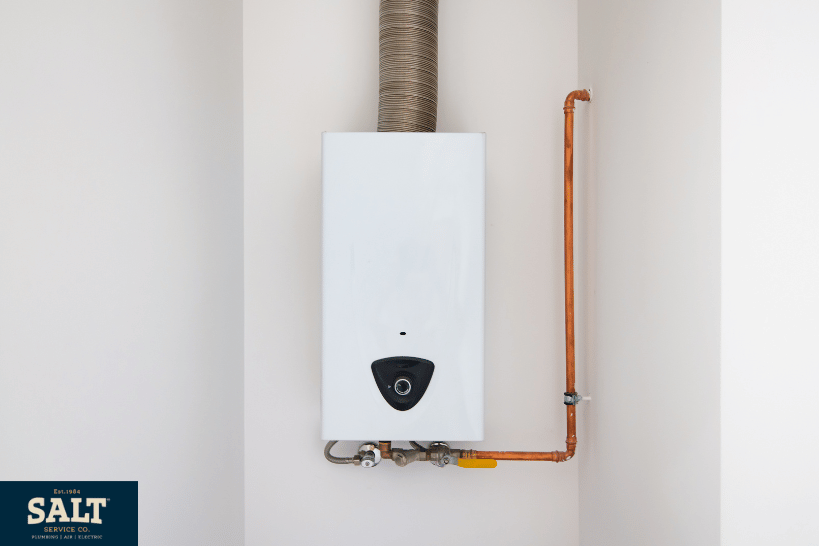
Tankless Water Heater Installation Costs in Austin
Installing a tankless system requires evaluating your home’s infrastructure to meet local building codes and make sure your new unit delivers reliable hot water on demand. Every property in Central Texas presents distinct structural factors that determine the overall scope of work.
Key variables that affect your final installation quote:
- Gas Line Sizing: Upgrading from a standard half-inch to a three-quarter-inch fuel line to supply high-output burners.
- Venting Modifications: Installing dedicated PVC or polypropylene venting, as older metal flues cannot be reused.
- Water Hardness Protection: Adding scale-inhibitor filters or water softeners to protect heat exchangers from Austin’s mineral-heavy water.
- Recirculation Systems: Integrating pumps or crossover valves to reduce hot-water wait times in larger floor plans.
- Permits and Drainage: Routing condensate neutralization drains and filing required municipal inspection permits.
SALT provides upfront, flat-rate quotes before starting any work. Schedule an on-site evaluation to inspect your gas line capacity, venting route, and permit requirements for an accurate proposal.
Why Most Austin Homes Need a Gas Line Upgrade for Tankless
High-capacity gas tankless units require far more fuel at peak demand than standard tank units. A traditional tank draws roughly 40,000 BTUs per hour, while a whole-home tankless system demands up to 199,000 BTUs. Older Austin homes frequently have a half-inch gas branch line that cannot supply this volume without a severe pressure drop.
Upgrading requires running a three-quarter-inch or one-inch line from the gas meter or manifold directly to the unit. Sizing is code-driven, based on line length, pipe material, and the total BTU load of all gas appliances.
A common quote surprise happens when an installer assumes an existing half-inch line is adequate without running a calculation. On installation day, they discover the pipe starves the heater and tack on unexpected fees. SALT evaluates gas capacity during our initial assessment, locking in your scope and flat-rate price before work starts.
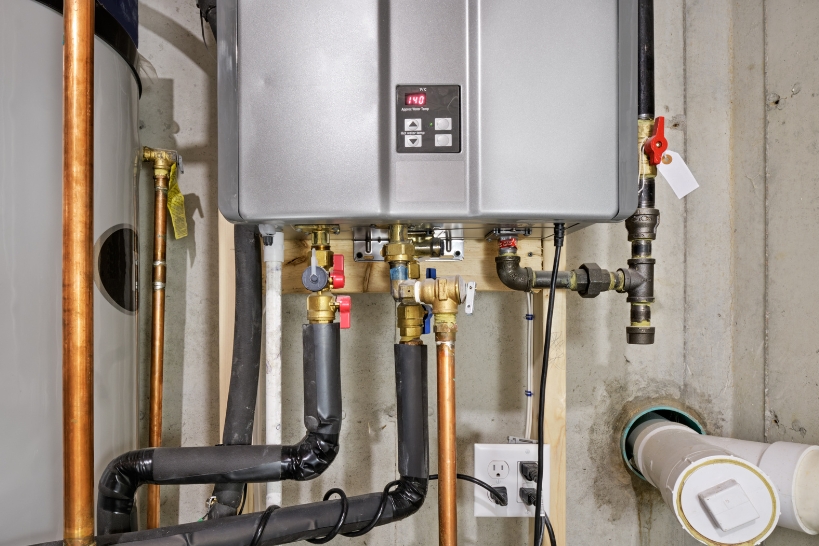
Tankless vs. Tank Water Heaters for Austin Homes
Tankless systems deliver continuous hot water and last 15 to 20 years. Standard tanks hold 40 to 50 gallons and last 8 to 12 years. The right choice depends on your infrastructure, budget, and how long you plan to stay in the home.
Key differences for Central Texas homeowners:
Supply
Tankless units heat water on demand with no storage limit. Tank units hold a fixed volume and can run out during back-to-back showers or high-demand periods.
Space and cost
Wall-mounted tankless units save floor space but require infrastructure retrofits. Tank replacements cost less upfront and connect to existing plumbing.
Hard water and freezes
Austin's mineral-heavy water requires annual flushing for tankless heat exchangers. Standard gas tanks run during power outages; exterior tankless models require freeze protection.
SALT’s water heater services cover both tank and tankless systems. Rather than defaulting to the most expensive option, we evaluate your gas lines, electrical panel, and hot water demand before recommending a system.
Tankless Installation, Repair & Replacement in Austin
Installation
Upgrading your system starts with evaluating peak household water demand to calculate proper unit sizing. SALT establishes a code-compliant venting plan, assesses existing gas and electrical capacity, manages all municipal permitting, and conducts final testing during commissioning.
Repair
Mineral buildup in Austin water often leads to scale-related error codes, ignition or sensor failures, condensate line blockages, or recirculation loop issues. Our plumbers run a complete diagnostic before recommending repairs. We arrive ready for same-day service, backed by a $100 credit guarantee if an eligible installation is not completed same-day.
Replacement
Replacing a unit makes sense when equipment age, frequent component breakdowns, or severe heat exchanger damage increases long-term costs. SALT presents clear options comparing repair value against a new unit, accounting for your water heater lifespan and replacement timeline. Our team installs and services major brands, including Rinnai, Navien, and Rheem.

Austin Hard Water and Your Tankless Heat Exchanger
Central Texas tap water contains high mineral levels, typically 7 to 12 grains per gallon according to Austin Water quality reports. As water rapidly heats inside a tankless unit, calcium and magnesium form scale over the narrow passages of the heat exchanger. Scale acts as an insulator, forcing the unit to burn more fuel and causing temperature fluctuations, low water pressure, or error codes.
Without pre-treatment, a tankless unit in Austin requires professional descaling every 6 to 12 months. Adding a whole-home water softener slows mineral accumulation and extends these maintenance intervals. A standard service includes a chemical flush, cleaning the cold-water inlet filter screen, and inspecting system controls.
Homeowners who want ongoing care without manual tracking can join a SALT+ membership, which covers annual plumbing inspections and routine flushing to keep your system running efficiently year-round.
Austin Energy Rebates and Tankless Financing Options
Upgrading to a high-efficiency tankless system comes with real ways to lower your upfront costs. Through Austin Energy, qualifying tankless installations may be eligible for rebates up to $600, depending on Uniform Energy Factor ratings, approved equipment, and permit documentation. Verify current eligibility and amounts at austinenergy.com before submitting.
To cover remaining project costs, SALT offers flexible financing options, including 0% interest for up to 18 months on qualifying work with approved credit. Our licensed plumbers help with equipment selection and sizing to make sure your system qualifies for available local incentives.


Get Expert Tankless Water Heater Service Today
Ready to upgrade your water heater or need same-day repair? SALT’s licensed plumbers serve Austin and the surrounding metro, delivering flat-rate pricing and same-day availability on tankless water heater installation, repair, and replacement.
Frequently Asked Questions About Tankless Water Heaters in Austin
How long does a tankless water heater installation take?
A direct replacement typically takes four to six hours in a single day. Retrofit installations that require running a larger gas line, installing new exterior venting, or managing city permitting usually take a full working day. Our plumbers evaluate your current setup beforehand so you know the exact project schedule before work begins.
Do I need a bigger gas line for a tankless water heater?
Most whole-home gas tankless units require upgrading from a standard half-inch fuel line to a three-quarter-inch line. Tankless systems demand a rapid surge of fuel to heat water on demand, which can starve an undersized pipe when other gas appliances run at the same time. A professional gas load calculation based on line distance, pipe diameter, and total BTU demand is the only accurate way to determine your needs.
What size tankless water heater do I need?
Proper sizing depends on your peak household gallons-per-minute demand, total fixture count, and incoming winter water temperatures. DIY sizing estimates often result in undersized equipment that cannot maintain temperature when multiple showers run at once. SALT calculates your actual concurrent water usage on-site to match your household with the correct unit capacity.
How often should I descale or flush my tankless unit in Austin?
Due to heavy mineral content in local tap water, you should descale your unit every 6 to 12 months without a water treatment system in place. Installing a whole-home water softener reduces mineral scale buildup and can safely extend your maintenance intervals. A regular flushing schedule protects the heat exchanger and preserves your equipment warranty.