




Installing an electric tankless water heater is a smart upgrade for homeowners seeking efficient performance, continuous hot water, and more usable space. Unlike traditional water heaters, tankless models heat water only when needed—reducing energy waste and eliminating the standby losses of storage tanks.
However, installing one of these bad boys isn’t just a matter of swapping devices. It’s a precise process requiring both plumbing knowledge and electrical expertise.
Below, we break down how we approach installing electric tankless water heaters, offer maintenance tips, and explain why hiring a professional plumber is quite vital to getting the job done right.

Step-by-Step: How Our Experts Install an Electric Tankless Water Heater
1. Evaluate Your Electrical System
Most electric models require a significant amount of power, typically ranging from 120 to 200 amps. That’s more than many older electrical panels are equipped to handle.
Before beginning, our team performs a full evaluation of your electrical service. We:
- Measure available amperage and determine if your panel can handle the load.
- Identify if dedicated circuits are available or if panel upgrades are necessary.
- Assess wiring conditions to ensure compatibility with the tankless water heater’s requirements.
This assessment makes sure your new unit runs safely and efficiently without overloading your system.
2. Choose the Right Unit
Not every tankless water heater suits every home. Selecting the right unit depends on several factors:
- Flow rate needs: Determine how much hot water is needed at once, especially if multiple showers or appliances could run at the same time.
- Groundwater temperature: Colder climates require more energy to heat water to a usable temperature, which affects sizing.
- Electrical capacity: Choosing a unit that fits within your home’s electrical limits avoids overloads and ensures efficient performance.
The right water heater depends on how—and where—you use hot water. If you’re planning a bathroom remodel or adding new fixtures, let us know. We can make sure your system is sized for current and future needs.
3. Prepare the Installation Site
Installing a tankless heater takes planning. Once the old unit is removed, we prepare the area for secure and code-compliant mounting.
- Shut off the water supply and electricity at the mains.
- Clear wall space near existing plumbing and electrical access points.
- Install mounting hardware or brackets per manufacturer guidelines.
Some units are mounted indoors, while others are suited to garages or dedicated utility spaces. We ensure there’s enough clearance for ventilation, servicing access, and safe operation.
4. Electrical Wiring and Circuit Connection
This is one of the most critical—and dangerous—parts of the installation process. Electric tankless heaters need one or more dedicated breakers and properly sized wiring.
- We install new circuit breakers as required.
- Electrical connections are made using heavy-gauge wiring, plus correct grounding and bonding.
- All work is performed to meet or exceed NEC (National Electrical Code) guidelines.
Cutting corners on this step risks tripping breakers, system failure, or worse—electrical fire. That’s why this part should always be handled by a licensed electrician.
5. Water Line Setup
Once the electrical connections are confirmed, we move on to the water lines. This step integrates the tankless unit into your home’s plumbing system.
- Cold water is piped into the inlet side of the unit.
- Hot water exits through the outlet and connects to existing distribution lines.
- Shutoff valves are installed on both lines for easy maintenance.
- A pressure relief valve may also be added for safety.
We use high-quality fittings and unions to allow for easy service and inspection in the future. This setup is critical for smooth daily operation and long-term reliability.
6. Testing and Calibration
Every tankless water heater installation must be tested under load. After turning on the power, we:
- Program the digital thermostat to the desired temperature (usually 120°F for most homes).
- Open multiple hot water fixtures to check flow and temperature stability.
- Monitor for leaks or error codes from the unit.
Any irregularities are addressed immediately, ensuring you have working hot water before we finish.
7. Final Safety Check
Before walking away from a job, we review every component of the installation process.
- Recheck all wiring, connections, and breakers.
- Confirm correct gauge wire and breaker sizes.
- Inspect for water leaks, unusual noises, or signs of strain.
- Ensure the system is grounded, bonded, and operating within manufacturer specifications.
This last step is a final assurance that your new electric water heater is installed to last.
Benefits of an Electric Tankless Water Heater
Switching to a tankless system offers more than just hot water—it changes how your home uses energy and space.
Endless Hot Water
Traditional tanks can run out, especially during back-to-back showers or heavy appliance use. Tankless heaters never “run out” because they heat water as it flows.
Energy Savings
Electric tankless water heaters heat water only when you turn on the tap. That eliminates standby energy loss and often results in lower utility bills over time.
Space Efficiency
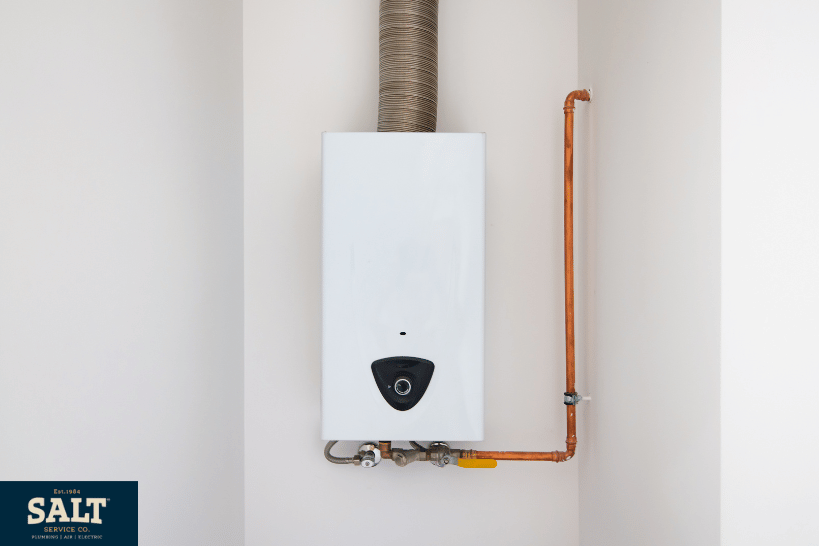
Tankless units are small, wall-mounted, and may be installed in tight places where bulky tanks won’t fit. They’re ideal for townhouses, garages, or homes with limited space.
Longevity
Most tank water heaters last 8–12 years. Compare that to the 20+ year lifespan of a properly maintained electric tankless water heater, and the upgrade becomes even more appealing.
Cleaner Water
Traditional tanks can collect rust and sediment over time. Since tankless heaters don’t store standing water, the water you get is cleaner and fresher.
Maintenance Tips for Long-Lasting Performance
Tankless heaters require less maintenance than traditional models, but regular upkeep still matters. Here’s how to keep your system running efficiently:
- Flush the system annually to clear out mineral buildup with white vinegar or a descaling solution.
- Inspect electrical connections to ensure there’s no corrosion, heat damage, or loose wiring.
- Test the pressure relief valve once a year to confirm it opens and closes properly.
- Schedule professional maintenance every 1–2 years to check flow sensors, filters, and internal elements.
A little preventive care goes a long way toward preserving performance.
Why Electrical Expertise Matters
Installing an electric tankless water heater isn’t just about plugging it in and turning on the water. These systems demand precise, compliant electrical work to operate safely.
Safe Wiring and Grounding
Without grounded wiring, even a small surge could damage the unit or present a shock hazard. Our experts make sure your system stays safe long-term.
Proper Breaker Sizing
Oversized or undersized breakers result in frequent tripping—or worse, a fire hazard. Matching amperage to the water heater’s demand is essential.
Compliance With NEC
We follow all local code and National Electrical Code standards to prevent complications with permitting, insurance, or fire inspections.
Prevention of Overloads or Short Circuits
Improvising electrical connections or failing to balance circuit loads can shut down your household power. Our electricians install according to specs to protect both the unit and your home.

Contact Salt Service Co. Today
Thinking about going tankless? It’s best to go with a pro.
Salt Service Co. specializes in safe, efficient electric tankless water heater installations in Austin, TX. Our licensed plumbers and electricians work as a team to assess your home, make needed upgrades, and complete the job professionally—so you can enjoy reliable hot water for years to come.
Whether you’re replacing an outdated unit or building a new home, we’re here to help. Call us today to schedule a consultation or inspection.
Frequently Asked Questions
How long does it take to install an electric tankless water heater?
Most installations are completed in 4 to 8 hours. If electrical upgrades or plumbing modifications are needed, it may take slightly longer.
How much does it cost to install an electric tankless water heater?
The total cost ranges from $1,800 to $3,000, depending on the unit, labor, and whether you need upgrades to electrical systems or plumbing.
Is my home compatible with an electric tankless water heater?
Most modern homes are. If you have an older home, our team can assess whether your electrical panel supports the system or if upgrades are needed.
What are the main benefits of switching to a tankless water heater?
You’ll enjoy endless hot water, more space, energy savings, and a longer-lasting, cleaner water heating system.
What maintenance does a tankless water heater require?
Flush it annually, inspect the valves and wiring, and schedule professional checks every couple of years—all of which protect your investment and keep the unit efficient.