

Managing a household budget requires a keen eye on recurring expenses. Among these, energy and water costs are often the most variable. While you cannot control the rates that your local utility companies charge, you have complete control over how much you consume.
So many homeowners operate under the misconception that lowering costs requires drastic lifestyle changes. They assume they must sacrifice comfort or shiver in the dark to save a few dollars. Fortunately, that is not the case.
True efficiency is simply about eliminating waste. It is about ensuring your home’s systems work smarter, not harder. Learning how to keep your utility bills low focuses on optimizing your home’s performance so you only pay for what you actually use. By making a few strategic adjustments, you can maintain a comfortable environment while keeping your monthly expenses in check.

Manage Your Heating and Cooling
Your heating and cooling system is the biggest energy consumer in your home. It works hard to fight the weather outside. If you ignore it, it will eat up nearly half of your energy budget.
Start with the thermostat. Many of us find a temperature we like and leave it there forever. This is a costly mistake. You do not need the house at 72 degrees when nobody is home. You do not need it that warm when you are sleeping under heavy blankets, either.
Invest in a programmable or smart thermostat. These devices learn your schedule. They automatically dial back the energy usage when you leave for work. They bring the temperature back up right before you walk through the door.
If you don’t want to buy new tech, just adjust your habits. Lower your thermostat by seven to ten degrees for eight hours a day. This simple action can save you up to 10% a year on heating and cooling.
Related Article: Energy Efficient Thermostat Settings for Summer
Stop Air Leaks and Improve Insulation
Imagine trying to fill a bucket that has holes in the bottom. No matter how much water you pour in, you are losing it. Your home works the same way. If you have air leaks, your heater is working overtime to warm the neighborhood.
Walk around your house on a windy day. Feel for drafts around windows and door frames. Check the attic hatch and the basement. These are escape routes for your climate-controlled air.
The fix is usually cheap and easy. A tube of caulk or a roll of weatherstripping costs very little. Seal those gaps. If you have an older home, check your insulation levels in the attic. Insulation acts like a thick winter coat for your house. If the “coat” is too thin, the heat escapes right through the roof.
Lower Your Water Heating Costs
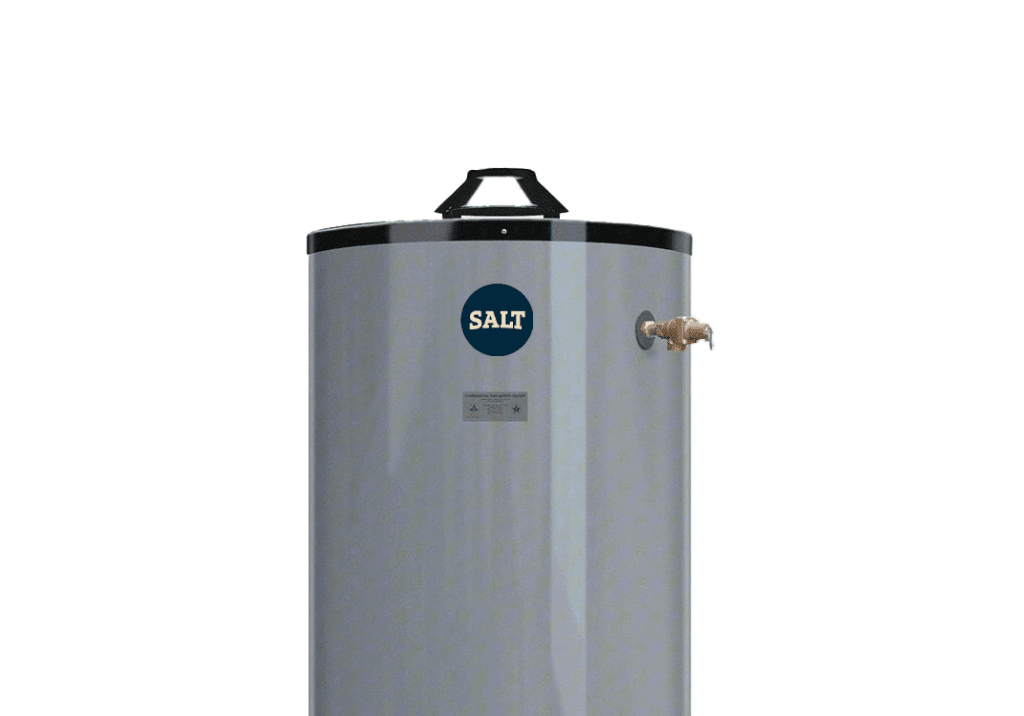
Your water heater is likely the second biggest energy hog in the house. It sits there, keeping a massive tank of water hot 24 hours a day, just in case you need it.
Check the temperature setting. Manufacturers often set them to 140 degrees by default. That is hot enough to scald you. It also wastes energy maintaining that extreme heat. Turn the dial down to 120 degrees. The water will still be plenty hot for showers and dishes, but the unit won’t have to work as hard.
You can also buy a “jacket” for your water heater. This is an insulation blanket that wraps around the tank. It keeps the heat inside so the burner doesn’t cycle on as often.
Upgrade Your Bathroom to Save Water
Sometimes, maintenance isn’t enough. If your home has old fixtures, you might be fighting a losing battle. This is particularly true in the bathroom. Older toilets and showerheads were not designed with efficiency in mind. They use gallons more water per minute than modern versions.
This is where a strategic renovation comes into play. Bathroom remodeling is often viewed as a purely cosmetic project. We think of new tile, a pretty vanity, or better lighting. But a remodel is actually one of the best ways to permanently lower your utility costs.
When you update your bathroom, you have the opportunity to replace the “guts” of the room. Here is where you gain efficiency:
- Low-Flow Toilets: Modern toilets use a fraction of the water per flush compared to models from the 90s.
- Aerated Faucets: These mix air with water to maintain pressure while cutting usage in half.
- Efficient Showerheads: You get a great shower experience without wasting 50 gallons of hot water.
- LED Vanity Lighting: Bright, clean light that uses almost no electricity.
By updating the plumbing infrastructure during a remodel, you also eliminate slow leaks you might not know about. A remodel isn’t just an expense; it’s an investment in a cheaper monthly bill.
Use Kitchen Appliances Efficiently
The kitchen is a hub of energy consumption. The refrigerator is always on. The dishwasher runs daily. The oven heats up the whole room.
Focus on the refrigerator first. It needs to breathe. If the coils on the back or bottom are covered in dust, the motor has to run longer to keep food cold. Vacuum those coils once or twice a year. Also, check the rubber seal on the door. If it’s cracked, cold air is seeping out.
When using the dishwasher, skip the “heated dry” cycle. It uses a massive amount of electricity to bake your dishes dry. Instead, open the door when the wash cycle ends and let them air dry. It costs nothing.
Switch to LEDs and Unplug Electronics
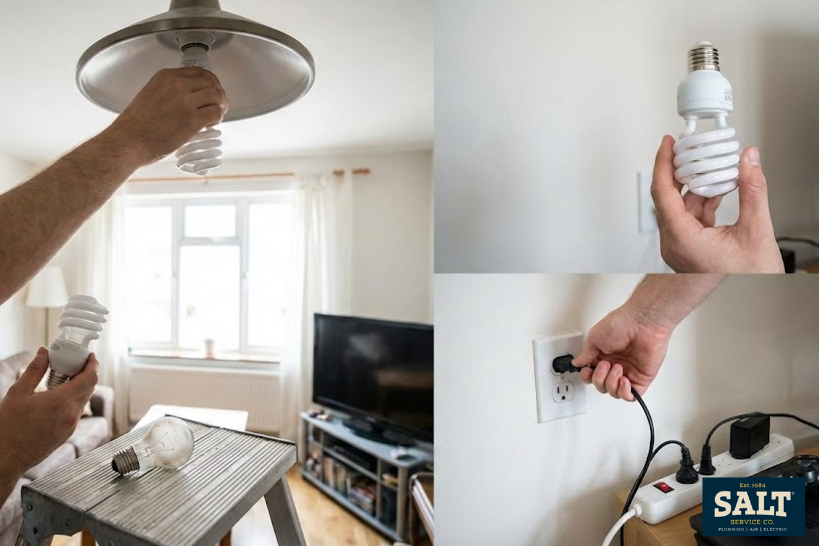
Lightbulbs are the easiest win. If you still have incandescent bulbs, throw them out. They turn 90% of their energy into heat, not light. LED bulbs run cool and last for years. Replacing your five most-used bulbs can save you substantial money over the course of a year.
Then there are the “energy vampires.” These are electronics that suck power even when they are turned off. Televisions, game consoles, and coffee makers often have standby modes. They are waiting for a signal, and that waiting requires power.
If you aren’t using a device, unplug it. If that is too much hassle, use a power strip. You can plug your TV, sound system, and streaming box into one strip. When you go to bed, flip the switch on the strip. It cuts power to everything at once.
Daily Habits That Cost Nothing
You don’t always need to buy new equipment or caulk windows to save money. Sometimes, you just need to change your routine. These behavioral shifts are free, but the savings add up quickly.
Here are a few habits to adopt immediately:
- Wash Laundry in Cold Water: Heating water accounts for 90% of the energy used by a washing machine. Modern detergents work perfectly in cold water.
- Run Full Loads Only: Whether it is the dishwasher or the washing machine, wait until it is full. Running half-loads wastes water and electricity.
- Shorten Your Showers: Cutting just two minutes off your daily shower saves hundreds of gallons of hot water per month.
- Use Natural Light: Open the blinds during the day. Turn off the overhead lights. Let the sun do the work.
- Close Blinds at Night: In the winter, windows get cold. Close the curtains at night to add a layer of insulation against the glass.
Consistency is Key
Trying to figure out how to keep your utility bills low can feel overwhelming if you try to do everything at once. Don’t stress yourself out. Pick two or three things from this list. Maybe you switch to cold water laundry and lower your water heater temperature.
Once those become a habit, add another. Maybe next month you seal the windows. Over time, these small actions compound. You will notice the difference. Your home will run more smoothly. Your appliances will last longer because they aren’t overworking. And most importantly, that envelope in the mailbox won’t look so scary anymore.
If you are ready to tackle the plumbing side of efficiency or want to discuss a bathroom remodel that saves you money in the long run, we are here to help. Contact SALT Service Co. today to schedule a consultation. Let’s make your home work for you.