

Modern plumbing acts as the unseen circulatory system of a home, efficiently transporting waste to keep living spaces sanitary and functional. While this engineering marvel usually works without complaint, it relies heavily on proper care to maintain performance.
Homeowners often overlook the intricacies of their drainage system until a slow sink or a complete stoppage disrupts their daily routine. Unfortunately, neglecting these systems can lead to significant water damage and costly emergency repairs.
Most plumbing failures do not happen instantly. Instead, they result from cumulative habits and minor misuse over weeks or months. Small amounts of debris gather inside the pipes, eventually narrowing the passage until water can no longer pass.
Understanding how different materials interact with the plumbing infrastructure is the first step toward a healthier home. By adopting specific habits in the kitchen and bathroom, residents can effectively maintain their systems.
This guide explores the mechanics of pipe maintenance and offers strategies for preventing clogs & blockages in drains.
Managing Kitchen Waste and Grease
Kitchen sinks frequently clog due to a build-up of Fats, Oils, and Grease (FOG). Warm FOG solidifies as it cools in the pipes, creating a sticky obstruction that catches other debris.
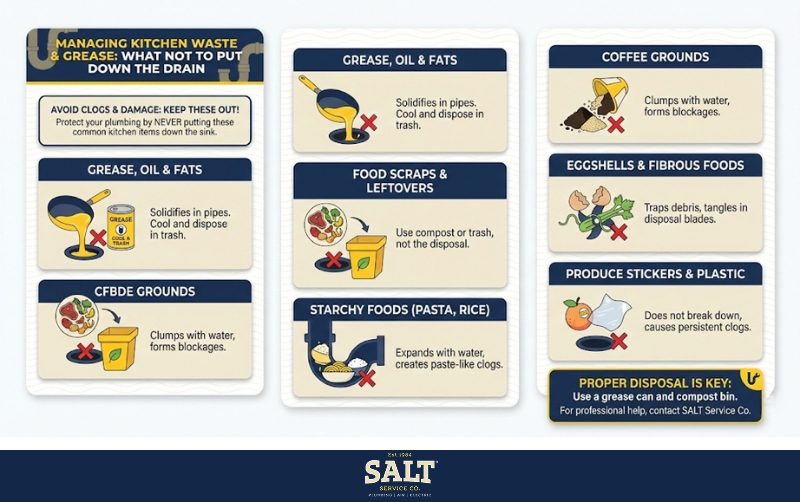
Incorrect garbage disposal use also contributes to clogs. Disposals only shred food; they don’t liquefy it. Fibrous materials tangle the blades, and starches swell into flow-restricting pastes. To prevent blockages, certain items must always be thrown in the trash or compost, not the sink.
- Grease and Cooking Oil: Pouring hot oil down the drain allows it to harden like candle wax inside the pipes, eventually closing off the line entirely.
- Coffee Grounds: Grounds do not dissolve in water; instead, they settle in the U-shaped trap beneath the sink to create dense, heavy sediment.
- Eggshells: The disposal grinds shells into sand-like granules that stick to grease deposits and form heavy, abrasive clogs.
- Fibrous Vegetables: Celery, corn husks, and onion skins contain tough strands that can tangle around disposal impellers and cause motor burnout.
- Starchy Foods: Pasta, rice, and potato peels absorb water and expand within the pipe, forming a glue-like substance that catches other waste.
- Stickers: Produce labels often wash off fruit and vegetables during cleaning, where the adhesive allows them to stick to pipe walls and trap solids.
Best Practices for Bathroom Plumbing
Bathroom plumbing faces a different set of challenges compared to the kitchen. The waste here involves hygiene products, organic matter, and soap residue. Furthermore, bathroom drain lines are often smaller in diameter than kitchen stacks, making them more susceptible to rapid blockages. Preventing issues in this area requires strict attention to what enters the toilet, sink, and bathtub.
Hair Mitigation
Hair accumulation stands as the most frequent cause of bathroom drain failure. Although a single strand seems insignificant, the dozens of strands lost during a daily shower accumulate quickly. These strands don’t wash away easily. They actually catch on the mechanical parts of the pop-up stopper or snag on minor rough spots inside the pipe.
Once a small clump forms, it acts as a net that catches soap and lint, causing the blockage to grow.
Installing a mesh drain strainer or hair catcher offers a simple, effective defense. These inexpensive devices sit over the drain opening to trap solids while allowing water to pass, protecting the P-trap below.
The Flushable Wipe Myth
Marketing claims often mislead consumers regarding “flushable” wipes. While these products may physically flush down the toilet, they rarely disintegrate like traditional toilet paper. Toilet paper consists of pulp designed to break down into a slurry upon contact with water. In contrast, wipes contain synthetic fibers that maintain their structure even when wet.
When a wipe enters the sewer line, it can snag on tree roots or rough joints, acting as a physical barrier. If these wipes encounter grease in the main line, they form massive obstructions known as “fatbergs.” The toilet handles human waste and toilet paper only; wipes, cotton balls, dental floss, and feminine hygiene products belong in the waste bin.
Soap Scum Accumulation
Bar soap contains animal fats or vegetable oils, along with talc and other solids. When these ingredients mix with hard water, the minerals in the water combine with the fatty acids to create a curd known as soap scum.
This insoluble substance coats the inside of the drainpipe, reducing the smooth flow of water and acting as a binder for other debris.
Over time, the buildup constricts the pipe diameter significantly. Switching to liquid body wash or liquid hand soap can mitigate this issue, as these formulations generally lack the fatty acids that create scum.
Related Article: How to Turn Off the Water to Your Toilet
Routine Maintenance & Safe Cleaning Methods
Reactive plumbing care often leads to stress and urgent service calls, whereas proactive maintenance creates peace of mind. Waiting for a drain to stop completely before taking action is an ineffective strategy. Regular maintenance keeps pipes open and extends the lifespan of the entire plumbing system. However, the method of cleaning matters significantly, as some popular techniques cause more harm than good.
Avoiding Chemical Openers
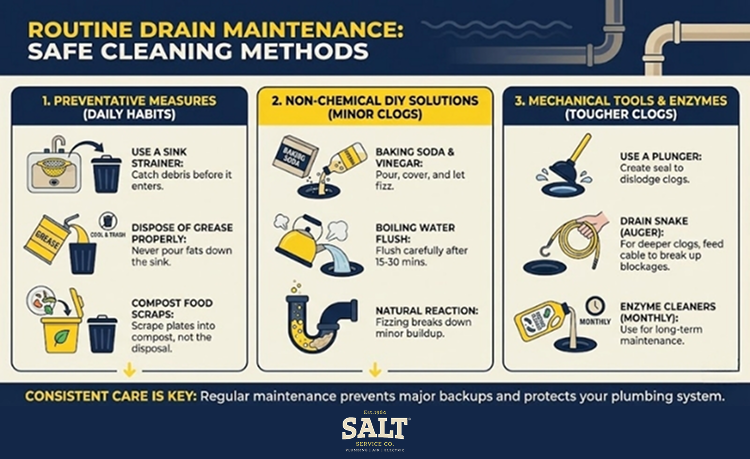
Commercial liquid drain openers use harsh chemicals like sulfuric acid or lye to clear clogs by generating heat. While effective, this heat can damage PVC pipes and joints.
In metal pipes, the acid accelerates corrosion and causes leaks. These caustic liquids also pose a safety risk for plumbers if the clog is not cleared.
Enzymatic Cleaners
Biological enzymatic cleaners offer a safer, non-corrosive solution for clear drains. Living bacteria and enzymes digest organic waste—grease, hair, and food—converting it into water and carbon dioxide. Apply the cleaner before bed to allow overnight action. Monthly use prevents clogs and blockages without damaging plumbing.
The Hot Water Flush
Hot water serves as a simple yet powerful tool for managing grease and soap buildup.
Over time, oils coat the interior of the pipes, and cold water causes these oils to harden. A weekly hot water flush helps liquefy this sludge and push it through the system.
It’s a simple process, really. It only involves heating a large pot of water until it’s hot (although not to a boiling point), then pouring it down the drain.
Addressing Main Sewer Line Problems
Drainage issues can originate outside the home in the main sewer line, which connects all household plumbing to the city sewer or a septic tank. A blockage here impacts the entire property, as all drains feed into this single pipe. Tree roots are a common cause, entering cracks in old clay or concrete pipes to form a dense, waste-trapping mesh.
Signs of a main line issue include multiple fixtures backing up simultaneously, or strange behavior like a shower backing up when a toilet is flushed—indicating wastewater has nowhere to go. Professional plumbers use a cleanout port and specialized tools like hydro-jetters to cut through roots and scour pipe walls, restoring proper function.
The Balance Between Daily Care and Professional Intervention
Plumbing systems aren’t designed with fragility in mind. However, that doesn’t mean they’re prone to destruction. They rely on gravity, clear pathways, and consistent care to operate correctly.
Preventing clogs and blockages can basically be done by adopting mindful habits, like the ones we mentioned above.
However, if you currently have a blockage that you can’t undo, professional drain cleaning may be required.
For a professional drain cleaning in Austin, TX, from SALT Service Co., call now!