




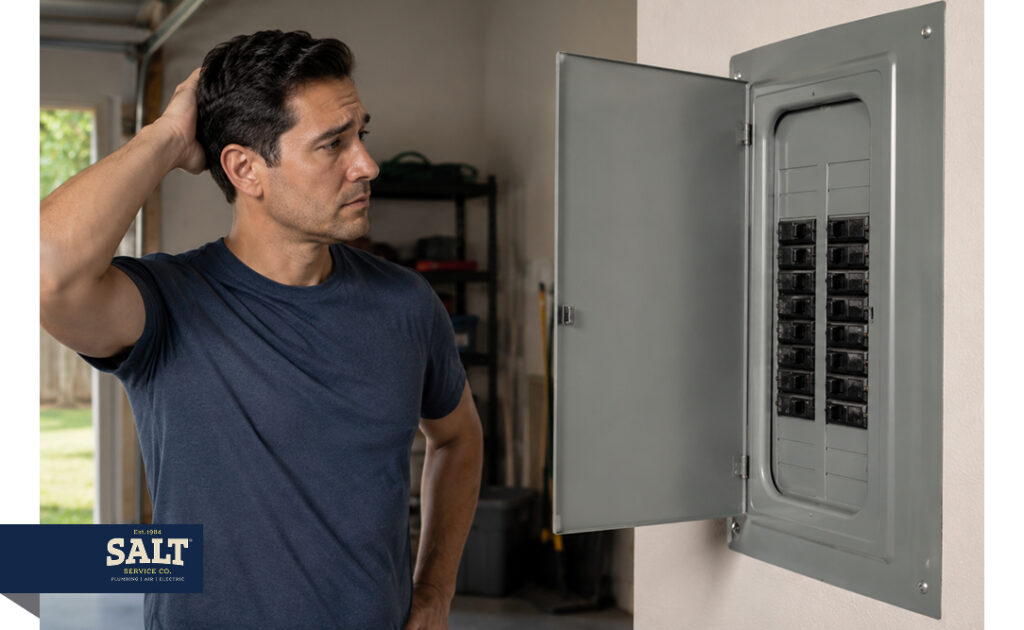
You are in the middle of making dinner in Round Rock or working in your Austin garage when the power suddenly cuts out. You head to the panel, flip the switch, and five minutes later, it happens again. When a breaker keeps tripping, it is more than a nuisance. It is your electrical system’s way of sounding an alarm.
Resetting it repeatedly is tempting, but forcing a breaker to stay on can lead to wire damage or even an electrical fire. This troubleshooting guide provides a safe path to narrow down the cause. You’ll learn how to distinguish between a simple circuit overload and more serious issues like a short circuit or ground fault. We also cover why AFCI and GFCI breakers in newer Central Texas homes often trip for no apparent reason, and how to identify a failing breaker. These steps will help you decide when a quick fix is possible and when it is time to call a licensed electrician.
Start by understanding what that breaker is trying to protect you from.
Why Your Breaker Keeps Tripping (And Why That’s Good News)
A tripping breaker is actually your electrical system working as designed. Think of it as a bodyguard that cuts power before wiring overheats or poses a fire risk. While frustrating, the breaker is doing exactly what it was built to do.
Most trips come from four causes:
- Overload: Too many high-draw appliances (like a space heater and microwave) on one circuit.
- Short Circuit: A hot wire touches a neutral wire, causing a sudden surge.
- Ground Fault: Electricity leaks toward the ground — common in damp areas like kitchens.
- Arc-Fault: AFCI breakers detect dangerous sparking signatures from damaged wiring.
Stop and call SALT right away if you notice any of these warning signs:
- Burning smells, buzzing, or scorch marks near the panel.
- A breaker that trips instantly when reset.
- Moisture near the panel or outlets.
If any of these apply, skip the trial and error. Schedule professional electrical troubleshooting to keep your family safe.
How to Diagnose Why Your Breaker Keeps Tripping
If your breaker trips the moment you flip the switch, you are dealing with a different problem than a breaker that holds for 20 minutes while you run a space heater. The timing of the trip is your first diagnostic clue.
Trip-Timing Guide
- Instant Trip: Likely a short circuit or ground fault. Keep the breaker off and call a professional right away.
- Seconds to Minutes: Classic circuit overload. High-draw appliances like hair dryers or microwaves are pulling too much amperage.
- 30 to 90 Minutes: Often signals a weak breaker, loose wire connection, or a high-draw device heating up gradually.
- Random Timing: Typically caused by AFCI nuisance tripping or intermittent wiring issues.
To isolate the problem, unplug everything on the circuit and turn off all lights. Reset the breaker. If it stays on, plug devices back in one at a time until it trips. Document exactly what was running and how long it took — that’s your trip recipe. If you cannot find the trigger, a professional electrical inspection can locate hidden wiring issues. For property managers, this documentation helps technicians solve the problem on the first visit.
Why Your Newer Austin Home’s Breaker Keeps Tripping
If your breaker keeps tripping in a newer Austin renovation, your panel likely features AFCI (Arc-Fault) and GFCI (Ground-Fault) technology. National Electrical Code updates have expanded required protection coverage significantly over recent code cycles. Modern homes need this specialized protection on every circuit.
These devices are more sensitive than older standards. GFCIs prevent shocks by monitoring current leaks in moisture-prone areas. AFCIs identify sparking signatures to prevent electrical fires. Electronics like LED drivers, smart dimmers, and laptop power supplies can create electrical noise that mimics an arc. Never assume a trip is a fluke — the breaker may be catching a real fault in your electrical wiring.
Troubleshooting Steps for AFCI and GFCI Breakers
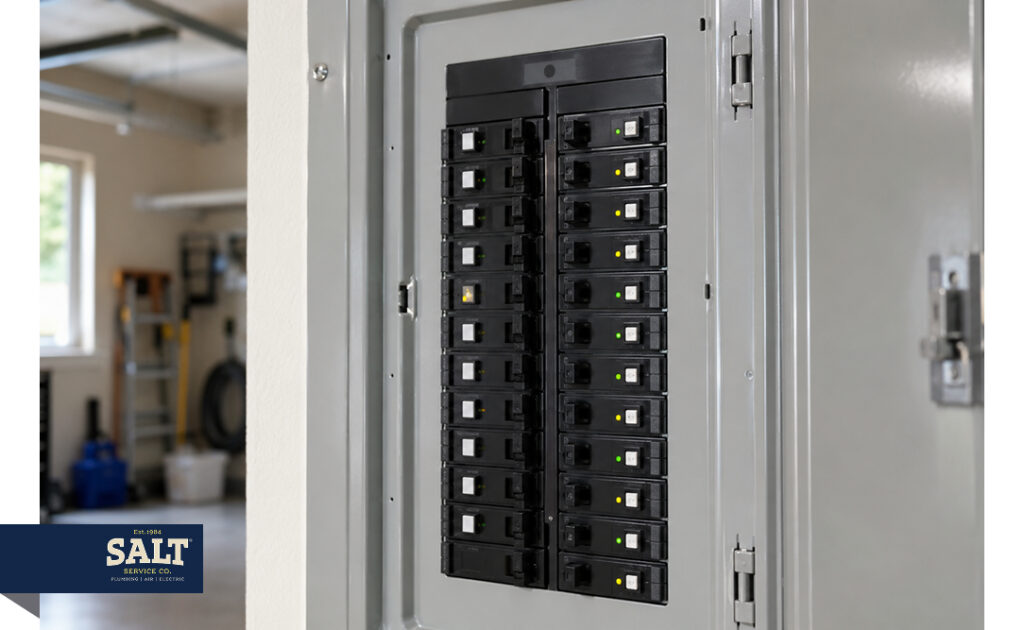
- Check Diagnostics: Modern breakers use blink codes to record the last-trip cause. Look for an indicator light near the test button.
- Capture the Pattern: Take a photo of the blink sequence and the breaker brand to share with your SALT technician.
- Test Compatibility: Move high-interference devices like treadmills or stacked power bricks to a different circuit to see if the tripping stops.
The 30-Minute Trip: Why Modern Loads Make Your Breaker Keep Tripping
You plug in your electric vehicle, and everything seems fine. Then, 45 minutes later, your breaker keeps tripping. This delayed reaction is a classic sign of a continuous load problem. The National Electrical Code specifies that any device running for three or more hours should draw no more than 80% of a circuit’s capacity. If it draws more, heat builds in the wiring until the breaker trips to prevent a fire.
Common Central Texas triggers:
- Level 2 EV chargers on undersized or loose wiring.
- Kitchen appliances (air fryers and coffee makers) sharing one circuit.
- Garage freezers running alongside high-draw power tools.
- Heat pump auxiliary heat during a Central Texas freeze.
Move portable heaters to different circuits and reduce EV charging amperage until a professional evaluates the system. Persistent issues often require a dedicated circuit, a line serving only one appliance. SALT’s electrical services cover panel upgrades, circuit additions, and full diagnostics to handle modern power demands safely.
How to Safely Resolve a Tripping Breaker
You do not need to be an electrician to narrow down why a breaker keeps tripping. Your goal is to determine whether you are dealing with a simple overload or a more serious wiring fault before calling for help. Follow these five steps:
- Stop repeated resets. One reset confirms the trip. If it happens again, leave it off to prevent permanent wire damage or fire risk.
- Watch the timing. Instant trips usually mean a short circuit. Delayed trips often point to an overload from too many appliances.
- Isolate the load. Unplug all devices on the circuit. Plug them back in one by one until the breaker trips again.
- Note the details. Record the breaker brand, any blinking indicator lights, and exactly what was running when the power cut out.
- Know when to stop. If the panel feels hot, smells like ozone, or the cause stays invisible, stop troubleshooting immediately.
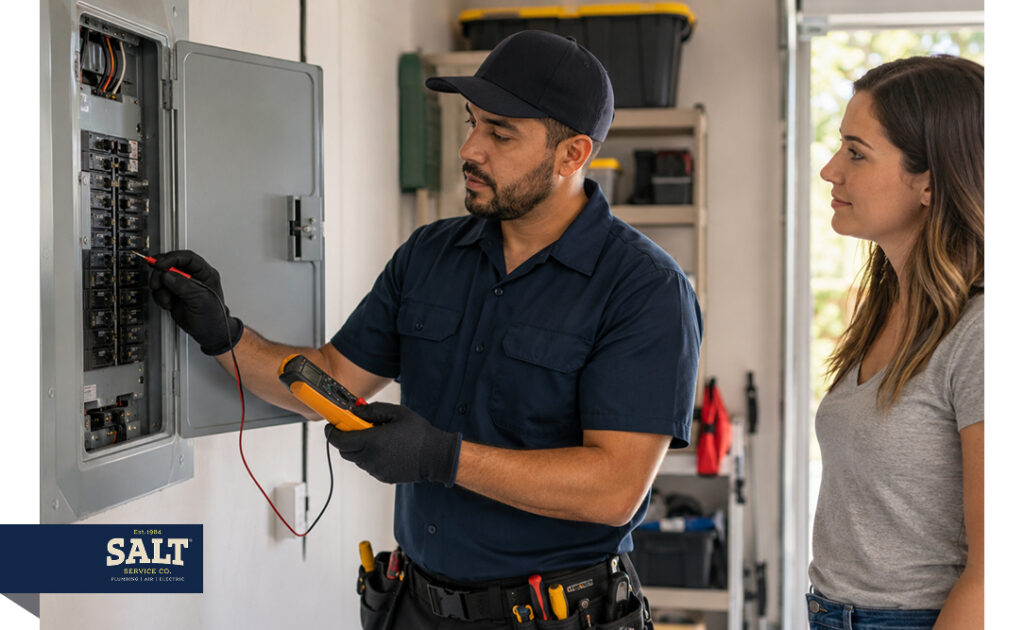
A licensed electrician goes further than a visual check by using thermal imaging and diagnostic testing to find hidden loose connections or damaged insulation. If you need a licensed electrician in Austin to pinpoint the cause and recommend the safest fix, SALT Service Co. is ready to help.
Frequently Asked Questions About Tripping Breakers
Is it safe to keep resetting a breaker every time it trips?
No. A breaker is a safety device designed to cut power before wiring overheats or causes a fire. If you force a reset without fixing the underlying cause, you risk damaging your electrical system or causing a dangerous arc. If a breaker trips a second time after one reset, leave it off and call a professional.
Why does my circuit breaker keep tripping when nothing is plugged in?
A breaker that trips with nothing plugged in often points to hidden loads like hardwired light fixtures, attic fans, or a garage freezer on the same circuit. It can also indicate a loose wiring connection or a damaged outlet inside your walls. In newer Austin homes, sensitive AFCI breakers may trip due to electrical noise from electronics on a completely different circuit. These faults require professional diagnostic tools to locate.
How do I know if the breaker itself is bad vs. a wiring problem?
A failing breaker often feels spongy, fails to click into place, or is hot to the touch. Most breakers last 25 to 30 years, but frequent tripping can wear out the internal spring mechanism. That said, most tripping issues are caused by external wiring problems or circuit overloads. If the breaker is over two decades old, replacement is often a smart preventative step.
What does a blinking light on an AFCI or GFCI breaker mean?
A blinking light on an AFCI or GFCI breaker provides a diagnostic code identifying the cause of the last trip. Different blink patterns indicate specific issues: a ground fault, an arc fault, or a failed internal self-test. Take a photo of the light pattern and the breaker label to share with your electrician. This helps a SALT technician quickly determine if you have a dangerous wiring spark or a nuisance trip.
Why does my breaker trip when it rains or when the AC turns on?
Rain-related trips usually happen when moisture enters outdoor outlets, landscape lighting conduit, or compromised pipes. If the trip happens when your air conditioner starts, the system may be pulling high inrush current that exceeds the circuit’s capacity. This often signals a failing AC compressor or a loose electrical connection at the outdoor disconnect box. In both cases, moisture or high power draw creates a path for electricity to leak.
Should I replace the breaker myself?
You should not attempt to replace a circuit breaker yourself unless you are a licensed electrician. Working inside a live electrical panel carries the risk of lethal electric shock, even when the main breaker is off. Modern building codes also require specific AFCI or GFCI protection that must match your home’s wiring. An incorrect installation can create a fire hazard or code violations that complicate your home’s future sale.
If you are tired of guessing why the power keeps cutting out, schedule a diagnostic visit with the licensed team at SALT Service Co. They have been serving Austin since 1984 and can pinpoint the problem with upfront, flat-rate pricing.