





A pipe bursting sounds like a sudden crack followed by the steady rush of water into your walls. In Central Texas, where 70-degree afternoons can plummet into hard freezes by midnight, homeowners are often caught off guard by how quickly plumbing reaches a breaking point. Most local homes are slab-on-grade builds with water lines running through uninsulated attics or along exterior walls. If the power goes out, you cannot rely on central heat to keep those lines safe.
This guide provides a practical plan to protect pipes during a freeze in Texas, covering:
- A Texas-specific pre-freeze checklist
- How to run water correctly (drip vs. stream)
- Managing tankless heaters during power outages
- What to do if your pipes already froze
At SALT, we serve Central Texas with a commitment to education first. We want you to act with confidence even if the lights go out. To safeguard your home, you must first understand which pipes are at the highest risk.
Texas Freeze Protection: Identifying Your Home’s Highest-Risk Red Zones
Do you know which pipe in your house is most likely to fail tonight? In Central Texas slab-on-grade builds, the answer isn’t in a basement. Instead, it is often directly above your head or hidden behind a thin garage wall. Because most Austin and Hutto homes lack subterranean protection, supply lines frequently run through unconditioned attics or along exterior walls where only a layer of brick stands between your plumbing and a 15-degree wind chill.
To effectively protect pipes during a freeze in Texas, you must prioritize these high-vulnerability red zones first:
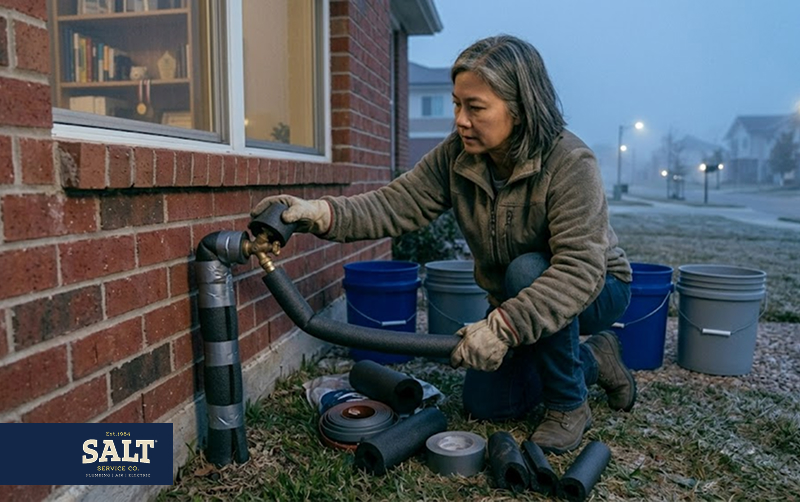
- Hose Bibs and Spigots: These are the primary culprits for pressure-related bursts.
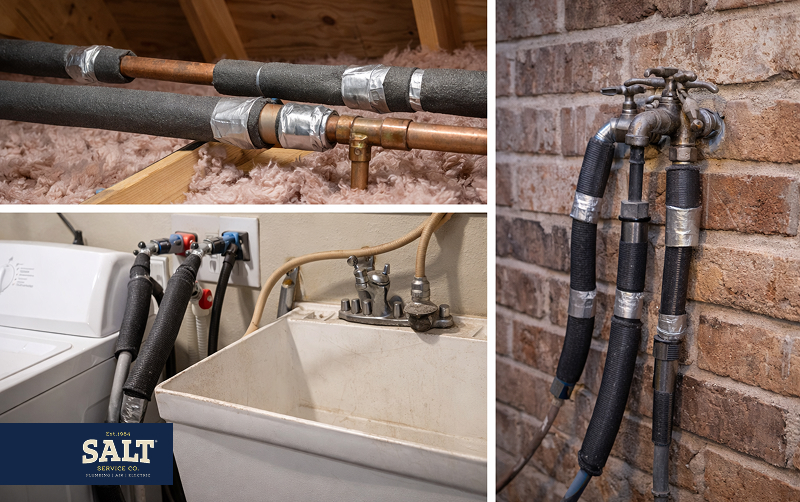
- Attic Supply Lines: These are the most dangerous because a leak here damages ceilings, insulation, and flooring simultaneously.
- Exterior Wall Sinks: Any kitchen or laundry sink located on a wall facing the outside is at risk.
- Outdoor Equipment: Tankless units mounted on exterior walls, pool pads, and irrigation backflow preventers.
Take ten minutes for a walkthrough before the temperature drops. Identify every fixture on an exterior wall and check your garage for exposed laundry lines. Open your attic access to see if pipes are buried under insulation or sitting exposed to cold air. Property managers should prioritize vacant units and exterior-mounted water heaters, as these lack the ambient heat of an occupied home. While PEX piping can tolerate expansion better than rigid copper, the brass fittings and valves remain vulnerable to cracking. Identifying these zones allows you to focus your efforts where they matter most before moving into the step-by-step prevention checklist below.
The 60-Minute Pre-Freeze Checklist: Essential Steps to Protect Pipes During a Texas Freeze
Imagine walking into your kitchen to find water cascading from the ceiling because an attic pipe reached its breaking point. This is a common reality during a Central Texas hard freeze, but you can prevent it with less than an hour of preparation. Use this checklist to secure your plumbing before temperatures drop.
- Locate Damage-Limiters: Test your main water shut-off valve to confirm it turns easily and teach everyone in the house its location. Identify your water heater shut-off (gas or electric) so you can isolate the unit quickly if a leak occurs elsewhere.
- Secure Outdoor Fixtures: Disconnect and drain all garden hoses. Install insulated covers on every outdoor spigot. These protect the metal fixture, though the pipe behind the wall still relies on internal home heat to stay thawed.
- Insulate Exposed Lines: Apply foam pipe insulation to lines in the garage, attic, or crawlspace. Use caulk or expandable foam to seal gaps where pipes enter exterior walls to block freezing air.
- Adjust Interior Heat: Keep the thermostat steady overnight. Open cabinet doors under sinks on exterior walls to circulate warm air. Safety tip: move cleaning chemicals to a high shelf before leaving cabinets open around pets or children.
If you cannot find your shut-off or spot a vulnerable line, a professional plumber in Austin, TX can help you secure your system before the ice arrives.
Not sure where your shut-off valve is or how to operate it? Watch this quick walkthrough:
Protect Pipes During a Freeze in Texas with the Pencil-Thin Stream Rule
Does a slow, rhythmic drip actually prevent frozen pipes? Many Central Texas homeowners rely on a standard drip, but a single drop is often exactly where ice starts to form. This can act as a plug that allows pressure to build until the pipe bursts. To truly protect pipes during a freeze in Texas, you need a steady, pencil-thin stream of water.
This rule of thumb works because constant movement pulls ground-warmed water – usually 50 to 60 degrees – from the city main into your home’s vulnerable lines. If you are choosing which faucets to run, prioritize these high-risk areas:
- Run both hot and cold: Hot water supply lines are just as likely to freeze as cold ones. Adjust the faucet to pull a thin, constant stream from both.
- Target exterior walls: Focus on sinks located on walls facing the outside, as these are the first to lose heat.
- Find the end of the line: Choose the fixture furthest from your water meter. This means water travels the longest possible path through your internal plumbing.
- Check the garage: Laundry hookups in uninsulated garages are high-risk zones. If you have a sink there, keep it running.
Since most Austin-area homes sit on concrete slabs, you cannot access or wrap many pipes. Combining the pencil-thin stream with open cabinet doors is your best defense. While it feels wasteful, a slightly higher water bill is a bargain compared to the average $5,000 insurance claim for a burst pipe.
Once temperatures stay consistently above freezing and your indoor heat is stable, you can safely turn the faucets off. This strategy works well while your heater is active, but a total power outage requires a different level of preparation for specialized equipment.

Grid Failure: The Texas Emergency Plan for Outdoor Systems
Approximately 70% of exterior tankless water heaters in Central Texas rely on electric heating elements to prevent internal freezing. When the grid fails, your priority shifts from comfort to damage control: removing water from vulnerable places before it expands.
The Emergency Decision Tree
- If power is on: Continue moving water with a pencil-thin stream as described above.
- If power is out (4+ hours): Isolate and drain vulnerable systems.
Outdoor Equipment Protection
- Tankless Units: Shut off gas and power. Close service valves, open drain ports, and open an indoor hot faucet to empty the unit.
- Pools: If pumps stop, wrap exposed equipment in heavy blankets or insulation.
- Sprinklers: Shut off the main irrigation supply and insulate the backflow preventer. This component is the most common burst point in Austin yards.
Managing an emergency is easier with a proactive plan. If you are unsure how to safely drain your systems, our team is here to help. Schedule a professional inspection with SALT Service Co. to get your home ready before the next hard freeze.
How to Build Your 10 PM Freeze Action Plan
Central Texas homes are built for the heat, meaning plumbing often sits in unconditioned attics or thin exterior walls. Since a slab foundation offers no natural insulation for these lines, your strategy must focus on bringing heat in and keeping water moving. While PEX piping handles expansion better than copper, no pipe is truly freeze-proof because metal valves and brass fittings remain high-risk failure points.
Follow this repeatable framework whenever the forecast takes a turn:
- Prioritize high-risk zones. Walk your home to identify sinks on exterior walls, laundry lines in the garage, and exposed attic pipes. These are your red zones where a lack of insulation leads to the quickest breaks.
- Protect with heat and flow. Open cabinet doors to let room warmth reach hidden plumbing. Use the pencil-thin stream rule for both hot and cold lines at the faucet furthest from your meter. Constant movement prevents the pressure spikes that cause pipes to shatter.
- Prepare for failure. If the power goes out, the anti-freeze protection in outdoor tankless units will fail. Shift to damage control by shutting off the water and draining the unit to empty the heat exchanger.
If you need help locating your main shut-off valve or winterizing your equipment before the next hard freeze, reach out to the SALT family at callsalt.com/contact-us.
Frequently Asked Questions
How do I know if my pipes are frozen or just low water pressure?
You can tell your pipes are frozen if a fixture has no flow or only a trickle while other faucets in the house work normally. Other signs include visible frost on exposed lines in the garage or a bulging appearance in the pipe itself. Always check both the hot and cold sides of the faucet to see if the blockage is isolated to a single line. If you suspect a break, shut off your water immediately to prevent flooding.
Should I drip one faucet or all of them during a Texas freeze?
You should drip every faucet located on an exterior wall and the fixture located furthest from your water meter. Run a pencil-thin stream of both hot and cold water rather than a slow drip. This keeps ground-warmed water moving through both lines, which prevents the pressure buildup that leads to shattered pipes. Focus on the kitchen and laundry rooms, as these often have plumbing on the coldest walls.
What is the safest way to thaw frozen pipes?
The safest way to thaw a pipe is using a hair dryer, a heating pad, or towels soaked in hot water. Keep the faucet open slightly while working so the melting ice and steam have a way to escape. Never use an open flame, torch, or any electrical device near standing water, as these create significant fire and shock hazards. If you cannot reach the frozen section or suspect the pipe has already cracked, call a licensed plumber.
Does shutting off the main water stop pipes from freezing?
No, simply turning off the main valve does not stop freezing because water remains trapped inside the lines. To protect the system this way, you must shut off the water and then drain the entire system by opening every faucet until they run dry. If a fixture is damaged once the water is back on – such as a toilet that won’t stop running – you may need to replace internal components that were warped by the ice.
What can I do if I am in an apartment and cannot access the main shut-off?
If you are a renter, focus on keeping your indoor heat at a steady temperature and opening all cabinet doors to circulate warmth. Contact your property manager before the freeze to ask for the specific location of your unit’s shut-off valve or to confirm their emergency protocols. Many local service providers, including SALT Service Co., work directly with property managers to handle large-scale emergencies when communal lines are at risk.