





You open your Austin Water bill and see a total that makes your heart sink, or you notice a strangely warm patch of tile in the hallway. These are often the first quiet clues of a slab leak. Unlike a standard dripping faucet, a slab leak occurs in pressurized water pipes buried deep beneath your home’s concrete foundation. This makes it a hidden threat to both your monthly budget and your home’s structural integrity.
In this guide, we cover:
- Common slab leak signs Austin homeowners should watch for
- Local causes like shifting Central Texas clay and high water pressure
- A clear playbook for what to do if you suspect a leak
Before you can fix the problem, you must understand exactly how these hidden leaks impact your foundation.

What Is a Slab Leak? Identifying Slab Leak Signs in Austin Homes
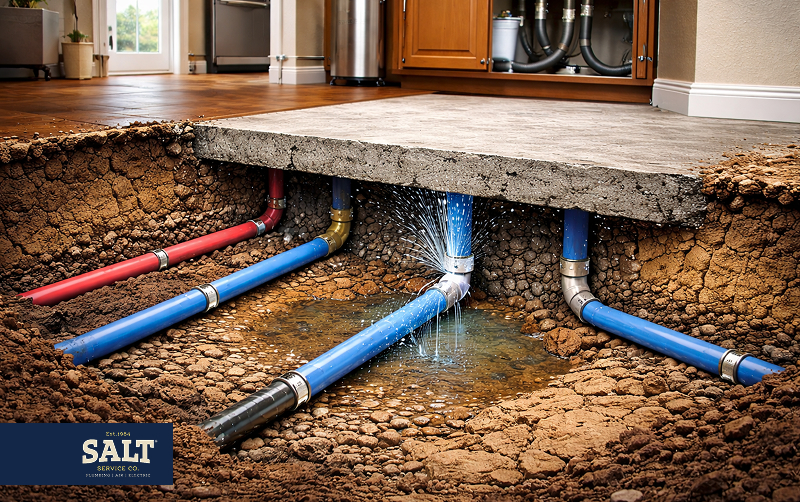
You might expect a major pipe failure to announce itself with a loud burst, but slab leaks are often silent disasters. A slab leak occurs when the plumbing lines buried beneath or through your home’s concrete foundation fail, often causing structural damage long before you see water.
These leaks fall into two broad categories:
- Pressurized supply lines: These carry fresh water in. Leaks here often trigger high water bills, low pressure, or warm spots on the floor.
- Drain and sewer lines: These carry waste away. Issues are harder to detect and usually appear as foul odors or slow backups.
If ignored, the consequences for your home are serious:
- Soil saturation and erosion cause the foundation to shift or crack.
- Trapped moisture triggers mold growth and musty smells under flooring.
- Repair costs escalate as restoration expands to flooring, drywall, and cabinets.
In Austin, the ground under your home can be a major part of the story.
Why Austin’s “Blackland Prairie” Soil Leads to Slab Leaks
Imagine feeling a warm patch on your kitchen tile while walking to the fridge. In Central Texas, this is often the first hint of a slab leak. Most Austin homes use slab-on-grade foundations that are vulnerable to our region’s “Blackland Prairie” clay. This soil expands and shrinks aggressively during moisture cycles, putting immense pressure on buried lines.
Five factors drive these leaks locally:
- Soil Movement: Clay expansion stresses joints and slab penetrations.
- Foundation Settlement: Shifting slabs can bend or snap pipe connections.
- Pipe Corrosion: Aging copper in established neighborhoods eventually thins and fails.
- High Water Pressure: Strong municipal pressure acts as a force-multiplier on weak points.
- Abrasion: Pipes rubbing against concrete or aggregate wear through over time.
Local nuances like mature shade trees can pull moisture unevenly, causing localized soil shifts. Additionally, inconsistent foundation watering during droughts can destabilize ground or hide early leak clues.
Now let’s look at the common slab leak signs Austin homeowners notice first.
How to Spot Slab Leak Signs in Austin: A Homeowner Checklist
Did you know a single pinhole leak in a pressurized water line can waste over 3,000 gallons of water daily? You don’t need to guess if your foundation is at risk. Use these high-signal clues to determine if you are dealing with a standard plumbing issue or a hidden slab leak.
- Sudden Bill Spikes: A significant jump in your Austin Water statement often signals a constant, hidden flow.
- Running Water Sounds: Hearing faint rushing or hissing when all faucets are off is a primary indicator of a line break.
- Warm Floor Spots: Heat felt through tile or laminate suggests a hot water line is leaking beneath the slab.
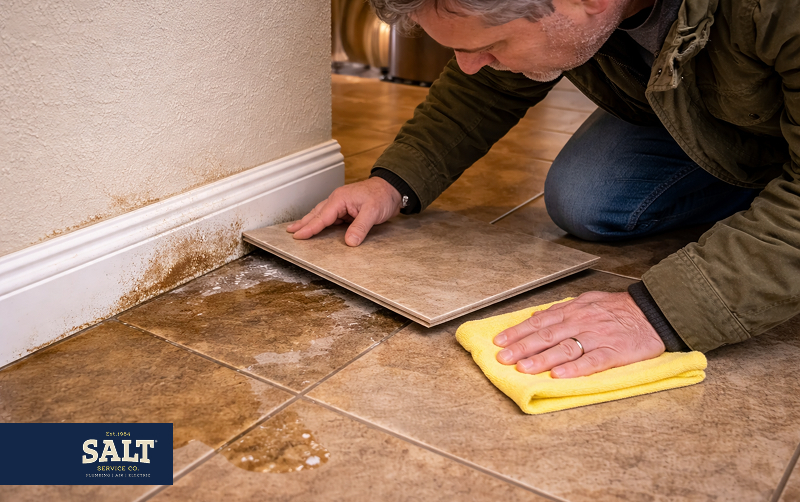
- Visible Floor Damage: Look for damp carpet, bubbling wood planks, or tiles that have become loose.
- Musty Smells: Persistent mold or mildew odors localized near baseboards.
- Low Pressure: A noticeable drop in water flow across multiple fixtures simultaneously.
- Foundation Shifts: New drywall cracks or interior doors that suddenly begin to stick.
Before assuming a slab leak, perform these two Austin reality checks. First, rule out faulty toilet flappers or irrigation leaks. If moisture is isolated to a single cabinet, you likely only need a leaky faucet repair. Second, remember that warm floors can result from HVAC ducting or the Texas sun. If symptoms are concentrated near your mechanical closet, you might be facing a water heater repair issue instead.
If you see two or more of these signs, schedule professional slab leak detection before damage worsens.
The Austin Homeowner’s Playbook for Potential Slab Leaks
Do you know what to do if you suspect water is moving beneath your Austin home? Your priority is to limit damage and get an accurate diagnosis instead of guessing the leak’s location. A methodical plan protects your property and supports potential insurance or Austin Water billing claims.
- Check the water meter. Turn off all faucets and appliances. If the meter’s leak indicator moves while the house is silent, you have an active leak.
- Shut off the main. If the leak seems fast, close the main valve immediately. Note if floor temperatures change or the sound of rushing water stops once the water is off.
- Document the damage. Take photos of damp spots or cracks. Keep copies of high water bills and note when you first noticed slab leak signs in Austin.
- Call the right party. Contact Austin Water or 311 for city-side issues. If the leak is past the meter, call a licensed plumber.
- Plan for billing relief. Austin Water often provides adjustments with proof of professional repair. Save your plumber’s detailed invoice to verify current requirements.
Emergency Red Flags:
- Rapid water pressure loss
- Visible indoor flooding or pooling
- Water near electrical outlets or appliances
- Strong, sudden mold odors
SALT’s plumbing services cover advanced detection, repair, and restoration coordination. For backups or foul odors, we also provide camera inspections through our drain services.
Professional Detection: Confirming Slab Leak Signs in Austin
Imagine a technician scanning your living room floor with a tablet until a bright purple heat map reveals exactly where a hot water line has failed. This is the difference between guessing and precision. SALT Service Co. uses non-invasive methods to confirm the slab leak signs Austin homeowners notice before they cause major foundation damage.
To pinpoint leaks without unnecessary demolition, our professionals use high-tech tools:
- Acoustic Listening: High-sensitivity microphones pick up the specific sound frequency of water escaping pressurized pipes.
- Thermal Imaging: Infrared cameras detect heat blooms from hot water leaks under concrete or flooring.
- Pressure Testing: Specialized gauges isolate plumbing lines to determine which pipe segment is losing pressure.
- Video Inspection: HD cameras identify cracks or root intrusion in sewer and drain lines.
Once the leak is located, repair options usually include:
- Spot Repair: Targeted slab access for isolated, accessible failures.
- Reroute: Running new lines through walls or the attic to bypass the slab entirely.
- Trenchless Lining: Sealing damaged drain pipes from the inside without excavation.
Repair complexity depends on pipe depth, location, and flooring type. A precise diagnosis means technicians only cut once. This professional accuracy often saves homeowners $2,000 to $5,000 in unnecessary restoration and flooring costs.
How to Navigate Slab Leak Detection in Austin
Finding signs of a slab leak can feel like an emergency, but your response should be methodical to protect your home and your budget. Use this three-part framework to handle the situation:
- Confirm: Verify the leak with a meter test and map out symptom patterns like hot spots, foundation cracks, or sudden spikes in water usage.
- Contain: Turn off your main water valve and document the damage immediately for insurance claims or Austin Water billing adjustments.
- Correct: Invest in professional detection before any concrete is broken.
The most cost-effective approach is prioritizing acoustic or thermal detection to pinpoint the failure. This keeps the repair targeted and avoids the high expense of unnecessary demolition. SALT Service Co. is a family-owned team providing upfront pricing and video summaries of our work throughout Austin, Williamson, and Travis counties. Schedule a professional slab leak inspection with SALT today to get clear answers for your home.
Frequently Asked Questions About Slab Leaks
What are the most common slab leak signs in Austin, TX?
The most frequent indicators include a sudden spike in your water bill, warm spots on your floor, and the sound of water running when all faucets are closed. You might also notice damp flooring, a drop in water pressure, or new foundation cracks. Seeing multiple symptoms at once suggests a high probability of a sub-slab failure that requires immediate attention.
Can I perform slab leak detection myself?
You can perform a first-pass check by turning off all water and watching your meter for movement. You can also feel for hot spots on the floor and listen for hissing sounds near baseboards. While these steps confirm a leak exists, professionals use acoustic and thermal equipment to find the exact failure point to avoid unnecessary and expensive demolition.
How much does it cost to repair a slab leak in Austin?
Slab leak repairs in Central Texas typically range from $2,000 to $5,000 for detection and repair. Your final cost depends on the pipe depth, flooring type, and the chosen repair method. In some cases, rerouting a new line through the attic is more cost-effective than digging through your concrete foundation and restoring the surface.
Does homeowners insurance in Texas cover slab leak repairs?
Most Texas homeowners insurance policies cover the damage caused by the water and the cost to access the leak, but they often exclude the pipe repair itself. Coverage varies significantly based on your specific endorsements for utility lines or foundation protection. Review your policy early and keep all repair receipts to support your potential insurance claim.
How do I get a water bill credit from Austin Water after a repair?
Austin Water offers high-bill adjustments for customers who repair hidden leaks within a specific timeframe. You must submit a formal application along with an itemized invoice from a licensed plumber to verify the work. Many local companies, including SALT Service Co., provide the detailed documentation required to help you qualify for these city credits.
Is a high water bill always caused by a slab leak?
No, high bills are often caused by running toilets, faulty irrigation valves, or dripping outdoor faucets. These issues can waste thousands of gallons monthly without affecting your slab. If your meter moves while the house is quiet but you have no foundation symptoms, check your fixtures or irrigation system before assuming it is a slab leak.
If you would rather have an expert confirm it.