





You plug in your phone or flip the bedside lamp, but nothing happens. You check the garage panel and every breaker looks normal, yet you are still left wondering: why is my outlet not working? This is a common Austin frustration, but most dead outlets are either a simple reset or a clear safety red flag.
This guide provides a homeowner-safe troubleshooting flow to help you identify simple reset issues, upstream GFCI or AFCI protection trips, and device failures. Along the way, we will flag exactly when to stop and call a licensed SALT electrician to keep your family safe. Our goal is to provide the confidence to handle basic checks and the wisdom to know when a professional is required.
We will start with a few safety-first checks that require no tools or specialized electrical knowledge.
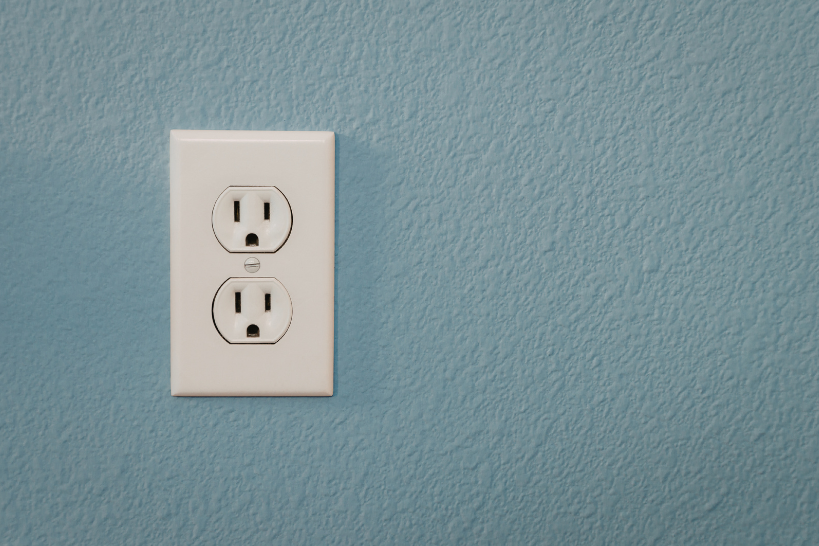
Warning Signs: When to Stop Troubleshooting a Dead Outlet
A dead outlet is often just the final symptom of a hazardous connection hiding behind your drywall rather than the problem itself. If you are asking why your outlet is not working, check for these “stop-sign” warning signs that require a professional SALT electrician immediately:
- Burning smells, smoke, or sparks when plugging in devices.
- Sizzling, buzzing, or crackling sounds coming from the wall.
- Scorch marks or cover plates that feel hot to the touch.
- Repeatedly tripping breakers or a GFCI that will not reset.
Unplug all devices from the outlet and avoid opening the electrical box. Property managers should treat these symptoms as urgent safety issues and document all findings to protect residents and the property.
Why Is My Outlet Not Working? 5 Steps to Restore Power
You plug your phone into a bedroom outlet and see no charging icon, yet the lamp across the room works perfectly. This specific outlet seems dead. Before scheduling a professional repair, run this fast checklist to see if it is a simple fix.
- Test the device. Plug a known-good lamp into the dead outlet. Often, the issue is a frayed phone cord or a burnt-out bulb rather than the outlet itself.
- Flip wall switches. Many Central Texas homes use “half-hot” outlets where a wall switch controls the top or bottom plug. Flip nearby switches and test both positions.
- Reset GFCI outlets. Check nearby outlets and reset any GFCI plugs in bathrooms, kitchens, or garages. A single tripped GFCI can kill power to standard outlets several rooms away.
- Inspect the breaker panel. Look for a handle resting in the middle position. To reset it properly, you must flip it fully OFF then back ON.
If these steps fail, the culprit is likely a hidden upstream GFCI or a tripped AFCI breaker requiring professional diagnostic tools.
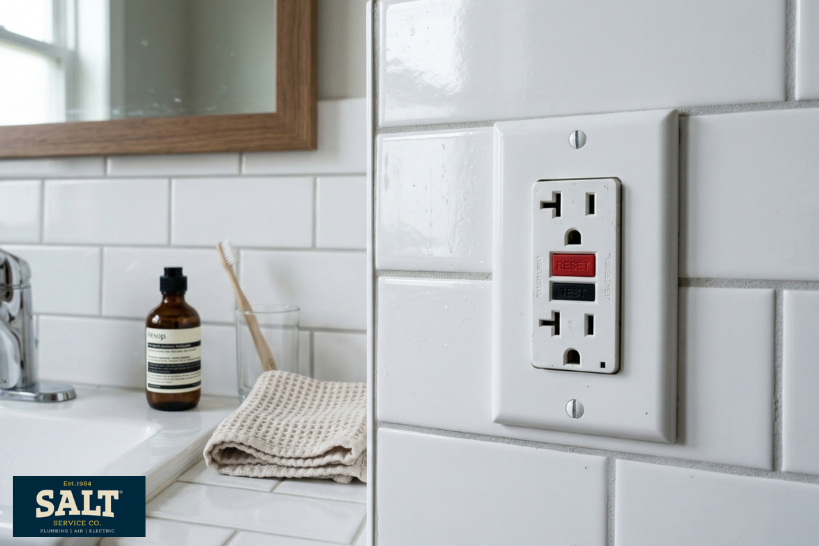
The Hidden Culprit: How One GFCI Protects Multiple Outlets
Did you know a dead outlet in your bedroom might be controlled by a reset button in your bathroom? This is called “downstream” protection. In Central Texas homes, one GFCI outlet, the kind with the reset button, often protects multiple standard outlets on the same circuit. If the “parent” GFCI trips, every outlet connected to it loses power.
Check these common reset locations:
- Bathrooms & Kitchens: Including islands and under-sink cabinet areas.
- Garages & Outdoors: Often triggered by Austin’s high humidity or rain.
- Laundry & Mechanical Spaces: Near washers, water heaters, or HVAC units.
Press RESET firmly. If it pops back out, unplug everything on that circuit and try once more. If it still won’t reset, stop and call a licensed electrician to diagnose the safety fault.
If you’ve ruled out upstream GFCI issues, the next step is confirming if your breaker is a standard or AFCI/GFCI model.
Why Is My Outlet Not Working? Check Your Breaker Panel First
Did you walk to your electrical panel only to find a breaker handle hanging loosely in the middle? A tripped breaker isn’t a failure; it is your home’s safety system preventing a fire.
To reset it, pull the handle completely to OFF before flipping it back to ON. If the breaker has a “TEST” button, it is a specialized safety device:
- GFCI: Prevents shocks, typically in wet areas like kitchens or bathrooms.
- AFCI: Detects dangerous sparking (arcing) from damaged or loose wiring.
If it trips again immediately, stop resetting it. This indicates a dangerous overload or short circuit. Learn more on our circuit breaker service page. If the breaker is fine but the outlet stays dead, testing the unit itself is the next step.
How to Test an Outlet: Interpreting Your Multimeter Results
In a healthy 120V receptacle, you typically see 110 to 125V from hot-to-neutral and hot-to-ground, with only 0 to 2V from neutral-to-ground. While a three-light tester is a fast tool for flagging “open ground” or “reversed polarity” errors, a multimeter provides the specific numbers needed for a professional-grade diagnosis.
Before probing, follow the Live-Dead-Live safety protocol. Prove your meter works on a known live source, test the target outlet, then re-verify the meter on the live source to guarantee the tool is functioning correctly.
Focus on these three readings:
- Hot-to-Neutral: Confirms the primary power path.
- Hot-to-Ground: Confirms the safety path to the earth.
- Neutral-to-Ground: Should be near zero.
Watch for phantom voltage. If you see mid-range readings like 40V or 90V with no load, energized wires running parallel to de-energized ones may be creating a “ghost” charge. Use a Low Impedance (LoZ) mode or test the outlet with a small load, such as a lamp, to confirm reality.
If an outlet shows 120V but fails under load, you likely have an open neutral where the return path is broken. These patterns usually signal a loose connection in the circuit chain or a faulty outlet.
Switched Outlets and Loose Wires: Recognizing Physical Outlet Failure
Imagine plugging in a vacuum and getting no power until you flip a wall switch. This “half-hot” setup is common in Central Texas homes. Before assuming a mechanical failure, check nearby switches to see if the outlet is intentionally switched.
If the outlet is truly dead, “back-stabbed” wiring is a frequent culprit. Many builders push wires into spring-loaded holes instead of securing them under side-terminal screws. Over time, thermal expansion causes these springs to lose their grip. This creates a loose neutral or an intermittent circuit.
Watch for safe physical cues like plugs that feel loose, audible buzzing, or a faceplate that feels warm. Scorched plastic or discoloration indicates a fire hazard requiring professional replacement. For Austin property managers, proactively swapping worn outlets during unit turns is a “salt of the earth” strategy to prevent emergency calls. If a new receptacle does not restore power, the fault likely sits deeper in your home’s wiring.
Your Action Plan for Restoring Power to Your Outlets
A dead outlet is often your home’s safety system working correctly. Because Central Texas builders frequently daisy-chain circuits, a tripped GFCI in a garage can kill power to a bedroom across the house. Use this framework to decide your next step:
- Monitor: If a single reset fixes the issue, note the location for future reference. You likely just temporarily overloaded the circuit.
- Stop: If a breaker or GFCI trips a second time, or if you notice heat, burning smells, or scorch marks, leave the power off. This indicates a deeper electrical fault or a potential fire hazard.
- Document: Before calling a professional, identify exactly which outlets are dead and whether any new appliances or heavy rains preceded the failure.
If troubleshooting doesn’t restore power, SALT Electrical Services offers expert diagnostics and outlet repairs throughout the Austin area. We help guarantee your home’s wiring remains safe, stable, and up to code.
Frequently Asked Questions About Dead Outlets
Why does my multimeter show 40 volts on a dead outlet?
This is usually phantom or ghost voltage caused by electromagnetic induction between parallel wires. A high impedance multimeter picks up this stray energy even when the circuit is technically dead. To confirm the circuit is off, use a meter with a Low Impedance (LoZ) mode or test the outlet under a small load like a lamp.
Why did my outlet stop working if the breaker hasn’t tripped?
The most common cause is a tripped GFCI outlet located upstream on the same circuit. Because outlets are often daisy-chained, a tripped reset button in a garage or bathroom can kill power to standard outlets in other rooms. It is also possible a wire has come loose at another receptacle further up the chain.
Why does only the top half of my outlet work?
This is likely a half-hot or switched outlet configuration where one plug is always energized and the other is controlled by a wall switch. This setup is common in living rooms to allow for easy lamp control. Try toggling nearby wall switches to see if the dead half responds to the switch position.
Why won’t my GFCI outlet reset when I press the button?
A GFCI that refuses to reset usually indicates an active ground fault or a safety hazard on the circuit. It could also mean the outlet itself has reached the end of its lifespan and the internal mechanism has failed. Unplug every device on that circuit and try the reset button one more time.
Is it safe to replace a dead outlet by myself?
You can replace an outlet yourself if you are fully confident in identifying the correct circuit and verifying the power is off. However, many homeowners prefer professional help if they see melted plastic or scorched wires. Expert teams, including the electricians at SALT, guarantee new outlets are properly torqued to meet modern safety codes.
What should I tell an electrician before they come to fix an outlet?
Identify which specific outlets are dead and whether you noticed any burning smells or heard popping sounds. Note if the breaker trips immediately after being reset or if any GFCI buttons in the house are stuck. Providing these details helps the technician narrow down the issue quickly, which often leads to a faster repair.
If you would rather have a licensed pro troubleshoot it safely, visit our electrical services hub to schedule a diagnostic visit for your repairs or upgrades.