





Ductless mini-splits are well-suited to small homes because one outdoor condenser feeds independent indoor heads, letting you cool only the rooms you use, with no duct losses. Their variable-speed compressors and dedicated Dry Mode control humidity without the noise or wasted energy of window and portable units, which is ideal for additions, converted garages, and rooms that never cool evenly.
By the end of this guide, you will know whether a mini-split fits your comfort goals, how to size it correctly, and what to ask an installer before committing.
Before you start, gather:
- Approximate room square footage, ceiling height, and sun exposure
- Assessment of your electrical panel capacity and installation budget
- A list of your current cooling pain points
Since 1984, SALT Service Co. has kept Central Texas homes cool. If you are in the Austin area, see our AC installation services.
Start by defining what better summer comfort actually means in your specific space.
Map Out Your Small-Home Comfort Goals
To find the right system, start by identifying the main problem you need to solve:
- Clammy at 74 degrees F: Feeling sticky even when the air is cold.
- Bedroom never cools: Uneven temperatures and stubborn hot spots.
- Window unit is loud: Roaring equipment that drowns out your TV.
Small homes feel discomfort faster because low air volume leads to rapid temperature swings, while daily cooking and showers quickly build up moisture.
Ductless mini-splits handle this with Dry Mode, a dedicated dehumidification setting. It pulls water vapor directly from the air, cutting the sticky feeling, eliminating musty odors, and making sleep easier. You get total climate control without a bulky window unit or a floor-hogging portable AC hose.
Before choosing a system, write down your one-sentence comfort goal. Example: Quietly keep the bedroom comfortable overnight without feeling damp.
Map Your Home Into Practical Cooling Zones
In Central Texas, summer is its own kind of test. Austin-area homes routinely push past 100°F for weeks at a stretch, and older central-Austin bungalows, garage apartments, and room additions almost never cool evenly off a single central system. A ductless mini-split lets you cool that one stubborn space, whether it’s the converted garage, the sunroom, or the added-on primary suite, without overworking the AC carrying the rest of the house.
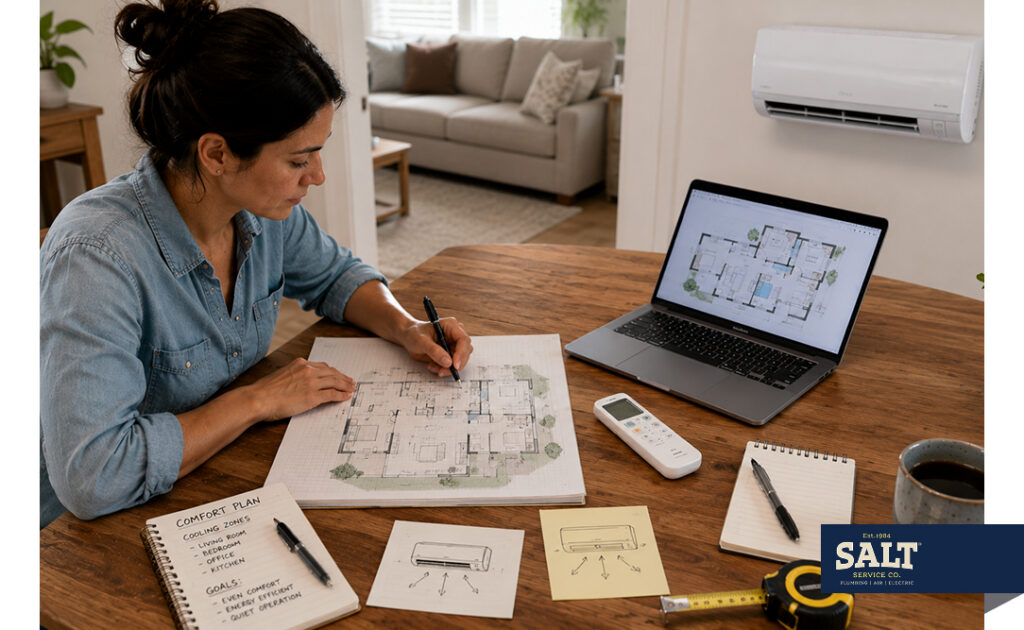
Planning your layout on paper prevents you from overbuying equipment. With a ductless mini-split, one outdoor condenser powers one or more indoor heads. Each indoor unit runs independently, so you can set different temperatures in every room.
Ask yourself these questions before sketching your layout:
- Do you need different temperatures in the bedroom versus the living area?
- Do you keep doors closed to rooms that trap heat?
- Do you have a hot problem area, like a sunroom?
A single-zone system works best for open layouts. Choose a multi-zone system of 2 to 3 zones if bedrooms are separated. Avoid wasting energy on unused rooms, but do not starve your main living space.
Verification Check: Sketch a quick floor plan mapping your 1 to 3 cooling zones before calling an installer.
Gather Sizing Details to Avoid the Oversizing Trap
Oversizing a mini-split in a small home is far worse than undersizing it. While capacity is measured in BTUs, square footage is only a rough starting point. An oversized unit short-cycles, turning on and off rapidly. It cools the space too quickly without removing moisture, leaving you with cool but clammy air.
Before calling a pro, gather these details for an accurate load estimate:
- Dimensions: Measure room-by-room square footage and ceiling heights.
- Windows: Count windows and note west-facing rooms with high sun exposure.
- Insulation: Note whether your home is a drafty historical build or a tight, modern envelope.
- Habits: Identify moisture-heavy habits like daily cooking or frequent showers.
When you contact an installer, ask for a Manual J load calculation and a room-by-room recommendation rather than just a brand name.
Now that you know your ideal size and configuration, compare mini-splits against the alternatives you might otherwise buy.
Compare Mini-Splits Against Window and Portable AC Units
For most small homes, the real alternatives are window units or portable hose units. Compare them across four criteria:
- Energy Use: Mini-splits avoid duct losses and modulate output. Window and portable units cycle fully on and off, spiking electric bills.
- Noise: Mini-split indoor heads run almost silently. Window and portable units rumble loudly right next to your bed or desk.
- Space: Wall-mounted heads preserve square footage. Window units block natural light, and portable units clutter floors with hot exhaust hoses.
- Comfort: Mini-splits deliver consistent, zoned airflow. Window units create one freezing blast point while leaving the rest of the room warm.
If you plan to stay multiple summers and want whole-room comfort rather than cold air aimed directly at you, a mini-split is the better upgrade. If your current system is struggling, learn about AC repair options.
Plan Your Mini-Split Placement for Optimal Airflow
In compact rooms, indoor unit placement controls your comfort. Because air travels shorter distances in small spaces, direct drafts cause discomfort quickly if the unit is installed in the wrong spot.
Use this quick placement checklist before your installation:
- Avoid drafts: Do not aim discharge air directly at your bed, desk, or couch.
- Confirm clear paths: Mount the unit where airflow can wash the room with an unobstructed line of sight.
- Prevent blockages: Avoid blocking airflow with tall furniture, and keep clearance open for filter maintenance.
- Watch doorways: Do not aim the unit at an open door if you want to cool that specific room.
Depending on your space, you can choose high-wall units, low-wall floor consoles, or flush ceiling cassettes. For the outdoor unit, allow 24 inches of clearance for maintenance and keep it away from bedroom walls to avoid vibration noise.
Success Check: Mark 1 or 2 potential indoor mounting locations per zone to discuss with your installer.

Decide Between DIY and Professional Installation
DIY mini-split kits are popular because they promise quick savings and fast installation. However, a mistake can void your manufacturer warranty or cause a costly refrigerant leak. Critical steps like refrigerant commissioning, high-voltage electrical wiring, and proper condensate drainage require precise execution to prevent water damage and system failure.
Is DIY right for you?
- DIY fits if: The kit is designed for DIY, you are experienced with electrical work and wall penetrations, and you are comfortable owning the performance outcome.
- Professional installation is best if: You want maximum efficiency, clean line-hide aesthetics, fewer callbacks, and immediate support when Central Texas heat peaks in the summer.
Before committing, ask any installer: What sizing method, placement plan, electrical requirements, condensate routing, timeline, and deliverables are included?
Ready to make the call? Explore AC replacement options or browse our air conditioning services overview.
Summer Mini-Split Pro Tips
- Use Dry Mode: Switch to Dry mode on humid days to remove moisture without overcooling.
- Avoid Setbacks: Do not turn the unit off when leaving. Recovery runs spike energy bills.
- Direct Airflow Upward: Point louvers up to mix air layers and prevent cold drafts from blowing on you.
- Wash Filters Monthly: Clean filters every thirty days to prevent dust from choking airflow and reducing efficiency.
- Clear the Condenser: Keep plants two feet away from the outdoor unit so it rejects heat efficiently.
Frequently Asked Questions About Summer Mini-Splits
Are ductless mini-splits good for small homes?
Yes, especially if you want room-by-room control, lack existing ductwork, or need to avoid wasting energy on unused spaces. Best-fit examples include tiny homes, compact single-story homes, home additions, and converted garages.
Are mini-splits energy efficient in the summer?
Mini-splits avoid the significant energy loss that comes with leaky, uninsulated ductwork. Their variable-speed compressors and zone control keep electric bills low, provided the system is sized correctly, installed in a good location, and filters are kept clean.
Do mini-splits help with humidity in summer?
Yes, especially in dedicated dry mode. They excel at managing moisture in tight spaces. If your home still feels humid, check your settings, confirm the system is not oversized, or consult a technician about supplemental dehumidification.
Where should the indoor unit go in a small bedroom?
Mount it where it will not blast cold air directly onto your bed. Prioritize a clear path for airflow and easy access for future filter cleanings. Depending on your room layout, an installer can propose low-wall consoles or flush ceiling options.
Can I install a mini-split myself or should I hire a professional?
Hiring a professional protects your equipment performance, manufacturer warranty, and local building code compliance. If you are unsure about handling high-voltage wiring or refrigerant lines, booking an assessment is the safest choice.
What if I already have central AC? Does a mini-split still make sense?
Yes. A mini-split is a great solution for problem rooms that never stay cool, home additions, or converted garages. It lets you cool targeted areas without overworking your main system. Learn about our AC installation services or see the full AC service overview.
If you want a straight answer for your home’s layout and summer comfort goals, contact the team at SALT Service Co. today.