

You watch the water swirl slowly around your kitchen sink, eventually disappearing after a few minutes. It is a minor annoyance until the morning you find two inches of standing water greeting you before your first cup of coffee.
In Central Texas, a slow drain is rarely a fluke. Recognizing the common signs you need drain cleaning early is the best way to avoid messy backups and expensive emergency repairs. Catching a blockage while it is still a small delay keeps your home clean and your plumbing bill manageable.
In this comprehensive guide, you’ll learn:
- The most common early signs of a developing drain clog
- What causes slow drains in kitchens, bathrooms, and laundry lines
- How to tell the difference between a local blockage and a main sewer line issue
- When a simple DIY fix is safe and when it’s time to call a professional
Start with what is happening at the fixture, then zoom out to your whole home.
Why Is My Sink Draining Slowly? Matching Causes to Your Fixtures
Have you ever wondered why a bathroom clog feels different than a kitchen backup? It’s usually because they rarely share the same root cause. A “slow drain” is defined simply as water that pools in the basin before eventually exiting. This is the critical transition phase between a healthy plumbing system and a total blockage.
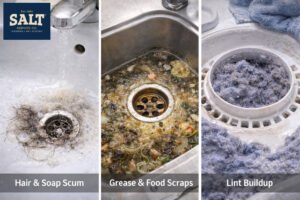
Identifying the culprit depends on the specific fixture:
Bathroom Sinks and Showers:
- Hair, soap scum, and grooming product residue.
Kitchen Sinks:
- Cooking grease, organic food particles, and coffee grounds.
Laundry Lines:
- Clothing lint and heavy detergent buildup.
If your drain clears but slows down again within days, sticky residue is likely still lining the pipe walls and catching new debris. Recognizing these early signs is the best way to prevent a messy, mid-weekend emergency backup.
7 Common Signs You Need Drain Cleaning
Have you noticed your kitchen sink takes twice as long to clear as it did last month? One slow drain is a nuisance, but a pattern is your clue that a whole-house backup is brewing. Use this checklist to identify the signs you need drain cleaning before a minor clog becomes a plumbing emergency.
Persistent Slow Drains
- If water drains more slowly each week, buildup is gradually narrowing the inside of your pipes. What starts as a minor delay can quickly progress into a complete blockage.
Recurring Clogs
- If you’re plunging the same sink or tub repeatedly, the problem likely extends beyond the immediate trap. Temporary relief usually means the obstruction is deeper in the line.
Standing Water
- Water pooling in sinks, tubs, or showers is a clear sign that flow is severely restricted. Even if it eventually drains, the obstruction is already significant.
Water Backups
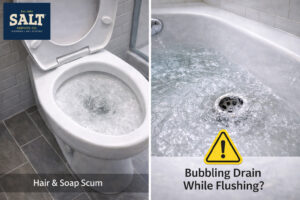
- If running one fixture causes water to rise in another, you may have a shared line obstruction. For example, flushing a toilet might cause water to bubble up in a nearby shower.
Lazy Flushes
- If water rises unusually high in the bowl or drains sluggishly after flushing, airflow may be restricted in the system. This can signal a developing downstream blockage.
Drain Flies
- Small flies hovering near drains often indicate organic buildup inside the pipe. These pests feed and breed in the sludge lining the walls.
Failed DIY
- If chemical cleaners, plungers, or small hand snakes only solve the issue temporarily, the blockage likely extends beyond reach. Repeated short-term fixes usually mean a deeper cleaning is necessary.
Is Your Plumbing Talking? Decoding Gurgling Drains
You flush the master toilet, and a hollow “glug-glug” echoes from the guest tub across the hall. This isn’t just a plumbing quirk; it’s a mechanical signal that air and water are fighting for space. Gurgling occurs when a blockage creates a vacuum, forcing displaced air to bubble through the water in your P-trap to escape.
Use this guide to decode the depth of the issue:
Single-fixture gurgle
- This typically points to a local clog forming in that specific drain.
Gurgles when other fixtures run
- This indicates a restriction in a shared branch line where two rooms connect.
Multiple fixtures gurgling
- Treat this as a “system-level” warning for a main sewer line or vent stack issue.
If these sounds are new and increasing, it is time to determine if the blockage is a simple localized fix or a serious main line threat.
What Your Drain Odors Are Trying to Tell You
Have you noticed an unpleasant, lingering scent wafting from your sink lately? While some odors result from simple organic buildup, others point to deeper issues like sewer gas leaks.
Most smells fall into two categories:
Organic Buildup
- Sour or rotting odors near the fixture usually stem from biofilm or food particles. Cleaning the stopper and strainer area often solves this.
Sewer-Like Odors
- Persistent, sulfurous smells may indicate a dry P-trap or venting problems.
If a guest bathroom or floor drain smells, run water for 30 seconds to refill the U-shaped trap. This creates a water seal that blocks toxic gases. If odors persist or cause nausea, ventilate the area and call for a professional inspection. Smells and sounds matter, but the biggest diagnostic clue is how many drains are affected.
How to Spot a Whole-House Emergency
A standard sink branch line is only 2 inches wide, while your home’s main sewer line is typically 4 inches in diameter. Despite that extra capacity, a main line obstruction can impact every fixture in your home at once. Pinpointing the location determines which fixes will work and how fast you must act.
Local branch-line clog notifications:
- Only one sink or tub drains slowly.
- Other toilets and drains in the house function normally.
- No backups occur in other rooms when running water.
Main line clog red flags:
- Multiple fixtures across different rooms back up simultaneously.
- Flushing a toilet makes a nearby shower drain gurgle or bubble.
- Water backs up in a tub or shower during laundry cycles.
- Standing water is visible near your outdoor cleanout pipe.
- An unusually green, soggy patch appears in your yard along the sewer route.
If you notice main line symptoms, stop running water immediately to prevent sewage from backing up through your lowest drains. Next, we will cover what you can safely try yourself.
When to Fix and When to Call the Professionals at SALT
Did you know chemical cleaners often cause more pipe damage than the clogs themselves? Before pouring corrosives down your drain, follow this safer sequence:
- Clear Debris: Remove hair and soap film from strainers and stoppers.
- Flush: Use hot tap water to melt grease buildup. Avoid boiling water, which can damage seals.
- Plunge: Ensure a vacuum seal using the correct plunger (flat for sinks, flange for toilets).
- Snake: Use a hand snake for local clogs. Never force the cable if you feel resistance.
Stop DIY and call SALT if sewage backs up, multiple fixtures fail, or clogs recur. These indicate main line or root issues home tools cannot reach.
Use This 60-Second Drain Checklist to Decide What to Do
Plumbing issues rarely remain minor. A single slow sink can quickly evolve into a house-wide backup, so identifying the source of the blockage is your first priority. By distinguishing between a simple hair clog and a deep sewer line obstruction, you save both time and money. Use this framework to choose your path:
Isolated Issue:
- If the problem is limited to one fixture for the first time and there are no foul odors or backups, start with safe DIY steps like a hand plunger or clearing the stopper.
Recurring Clog:
- If you clear the same drain repeatedly, the pipe walls likely have heavy grease or scale buildup. DIY tools cannot scrub these walls clean. You need professional cleaning or hydro jetting to break the cycle.
System-Wide Symptoms:
- If multiple fixtures gurgle or water backs up in the tub when you run the laundry, treat this as a main-line emergency. Stop running water immediately and seek professional help.
Ignoring these early warnings often turns a routine maintenance visit into an expensive emergency restoration. If you are in the Austin area and want an expert diagnosis, learn what to expect from our drain services and schedule a cleaning when you are ready.
Frequently Asked Questions
Are chemical drain cleaners safe to use regularly?
No, liquid chemical drain cleaners are generally not safe for regular maintenance because they use harsh corrosives that can damage your plumbing. These products generate heat that can soften PVC pipes or accelerate corrosion in older cast iron lines. For routine maintenance, mechanical removal with a drain snake or enzymatic cleaners is a much safer alternative that will not compromise the structural integrity of your pipes.
Why does my tub gurgle when I flush the toilet?
A tub gurgles during a toilet flush because of air displacement caused by a restriction or a venting issue in your plumbing system. When water rushes down the toilet line, it pushes air ahead of it. If that air cannot escape through the roof vent, it forces its way out through the nearest P-trap. While an occasional glug might be a localized hair clog, consistent gurgling across multiple fixtures usually points to a main sewer line blockage.
How can I tell whether I need snaking or hydro-jetting?
Drain snaking is best for clearing localized clogs like hair or small objects, while hydro-jetting is required for heavy grease, scale buildup, or tree roots. Snaking simply pokes a hole through a blockage to restore flow, whereas hydro-jetting uses high-pressure water to scrub the pipe walls clean. SALT Service Co. technicians typically use a camera inspection first to determine which method is most effective and safe for your specific pipe material.
How often should drains be cleaned to prevent clogs?
Most residential drains should be professionally cleaned every 18 to 24 months to prevent the accumulation of grease, soap scum, and hair. This frequency can vary depending on the age of your plumbing and household habits, such as how much food goes down the disposal. For households with older pipes or heavy usage, an annual inspection can help identify slow-moving buildup before it results in a total system backup.
What are the most common slow draining sink causes in kitchens?
The most common causes of slow kitchen sinks are solidified cooking grease, fibrous food scraps, and soap scum that coats the interior of the pipes. Over time, these materials catch smaller particles like coffee grounds to create a thick sludge. You can prevent this by never pouring oil down the sink and using a mesh strainer to catch organic debris before it enters the plumbing trap.
When is a clogged drain considered an emergency?
A clogged drain becomes an emergency when sewage backs up into your home, multiple fixtures are blocked simultaneously, or there is an immediate risk of water damage. If water is rising in your tubs when you flush the toilet, you likely have a main line failure that requires immediate attention to prevent biohazard contamination. In these situations, you should stop running all water and call for 24/7 emergency service to clear the obstruction.