

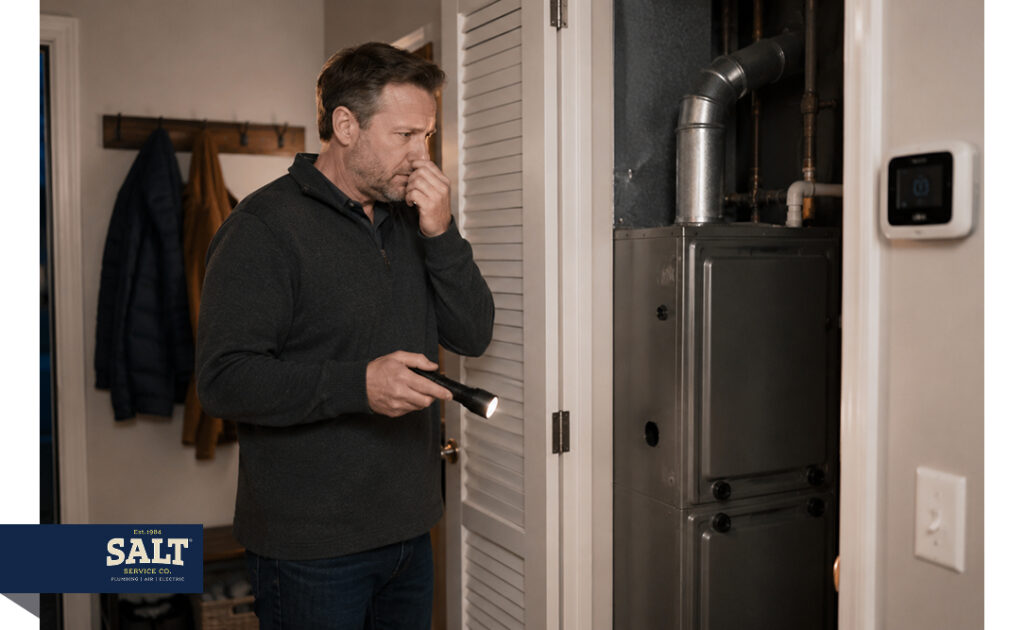
The first cold snap hits Central Texas, and you finally flip the thermostat to heat. As the system kicks on, you catch a faint burning smell or a strange rattling from the vents. Is that just dust burning off, or is something actually wrong? Furnace breakdowns are inconvenient, but the real risks — house fires and carbon monoxide leaks — are dangers no family should face unprepared.
Most of these hazards are preventable. A few solid furnace safety tips and one professional inspection per year can keep your home safe all winter. This guide walks through a homeowner-friendly checklist for every season, explains the warning signs for fire and carbon monoxide, and clarifies which tasks you can handle yourself versus which ones require a licensed tech. If you are in Central Texas, the team at SALT Service Co. is here to help.
Common Furnace Safety Hazards: How to Spot the Red Flags
The most dangerous furnace failure often comes without a sound or smell. Carbon monoxide is colorless and odorless, so safety depends on noticing subtle operational shifts before they turn into emergencies. Furnace safety hazards range from gas leaks and fire risks to heat damage caused by restricted airflow.
If you notice any of the following, shut the system down and call for help right away:
- Persistent Burning Odors: Metallic or acrid smells that last beyond the initial dust burn at the start of the season.
- Off-Color Flames: Gas flames should burn steady and blue. Yellow or orange flickering signals incomplete combustion.
- Unusual System Noises: Buzzing, popping, or loud rattling that wasn’t there before.
- Electrical Issues: Repeatedly tripped breakers or blown fuses tied to your heating system.
Fuel type also changes your risk profile. Gas and oil furnaces carry combustion risks including CO poisoning. Electric models don’t produce CO, but they still pose fire hazards from high-voltage faults or overheating elements.
The Furnace Safety Checklist: A Year-Round Guide
Imagine a Saturday morning in a Hutto household where the utility closet has become a catch-all for moving boxes and bags of pet food. If those items are leaning against your furnace cabinet, you’re one ignition cycle away from a house fire. This structured checklist addresses the most common hazards before they become emergencies.
Monthly Tasks (5 to 10 Minutes)
- Check or Replace Filters: Inspect your filter every 30 days. Households with pets or high dust levels should replace filters every 1 to 3 months to prevent overheating.
- Clearance Check: Maintain at least 3 feet of clear space around the unit. Move flammable chemicals, gasoline, or cardboard away from the burner.
- Test Alarms: Press the test button on every smoke and CO detector in your home. Check batteries and confirm units are within their 10-year lifespan.
- Listen and Smell: Stand near the unit during a full heat cycle. Listen for rattling and check for metallic or sulfur-like odors.
Seasonal Tasks (Before the First Cold Front)
- Unblock Vents: Confirm that rugs, furniture, or curtains are not blocking floor registers or return vents.
- External Flue Check: Inspect the vent termination outside your home for bird nests or debris. Clear visible blockages but do not disassemble the piping.
- Thermostat Verification: Confirm the system switches to heat mode and reaches the set temperature without short cycling — rapidly turning on and off.
Annual Professional Service
Safety components like the heat exchanger, safety switches, and gas pressure require a professional inspection. Schedule a furnace tune-up early in the fall to avoid peak demand and stay current with manufacturer warranty requirements.
Safety for Homes with Kids and Pets
Keep the utility room secured with a childproof lock. Avoid placing pet beds or blankets near the unit — they are highly flammable and can be pulled against the air intake, causing the system to choke and overheat.

Carbon Monoxide Safety: What Every Homeowner Needs to Know
According to the CDC, more than 400 Americans die each year from unintentional carbon monoxide poisoning, often because they didn’t have a working detector. Because CO is invisible and odorless, a proactive defense is the only reliable one. The furnace safety tips below walk through detector placement, visual checks, and what to do when an alarm goes off.
Carbon Monoxide Detector Placement and Maintenance
Install one detector on every level of your home and directly outside each sleeping area. Test these units monthly and replace batteries every six months. Follow manufacturer placement rules to avoid dead-air corners where air doesn’t circulate, and keep detectors away from bathrooms where humidity can interfere with the sensors.
Venting and Flame Checks to Do Monthly
Walk the exterior of your home once a month to confirm exhaust vents are clear of bird nests, leaves, or debris. Inside, observe the burner flame during operation. A healthy flame is steady and blue. A flickering yellow or orange flame means incomplete combustion — call a professional right away. Also check indoor piping for rust or loose connections. Never patch these with tape or sealant.
What to Do When a CO Alarm Goes Off
If an alarm sounds, don’t stop to investigate and don’t open windows. Get everyone outside, including pets, immediately. Call 911 or your gas utility from the sidewalk. Do not re-enter until emergency services give a formal all-clear.
Some smart detectors can send alerts to your phone or trigger an automatic HVAC shutdown. Have a professional verify these features are wired correctly — never assume they work automatically.
Furnace Fire Prevention: Protecting Your Utility Closet
Reaching for a holiday box and realizing it’s leaning against your furnace is more common than it sounds — and it’s a serious fire hazard. Furnaces need space to breathe. SALT recommends a strict 3-foot no-storage zone around your unit. Manufacturer instructions vary, but a clear perimeter is the gold standard.
Keep these items away from your furnace at all times:
- Paint, gasoline, and cleaning solvents
- Cardboard boxes and paper products
- Laundry piles or fabric storage
Airflow Restrictions and Electrical Warning Signs
A dirty filter restricts airflow and forces the system to overheat, stressing the heat exchanger over time. Beyond filters, watch for electrical red flags: a burning plastic smell, visible scorch marks, or a breaker that trips every time the heat kicks on. Turn the system off immediately if you see any of these. Never keep resetting a tripping breaker — that’s a sign of a real electrical fault.
Know Your Furnace Shut-Offs Before an Emergency Happens
In a real emergency, you won’t have time to search for information. Identify these three shut-offs today and make sure every adult in your home knows where they are:
- The Power Switch: Usually looks like a standard light switch on the side of the furnace cabinet or on a nearby wall.
- The Breaker: Find the furnace circuit in your main electrical panel and label it clearly.
- The Gas Valve: Located on the gas line leading directly into the unit. Ask your technician to point it out at your next service visit.
Take five minutes to photograph these locations and save them in a phone album labeled ‘Home.’ Use bright tape or a label maker to mark the furnace switch so anyone can find it in the dark. Keep these controls out of reach of children.
When to Call a Pro Instead of Handling It Yourself
Monthly filter changes and visual vent checks are safe for any homeowner. Gas valve adjustments, heat exchanger inspections, and electrical repairs are strictly for licensed technicians. If your furnace is ever exposed to standing water, do not turn it on. Submerged controls are a major fire hazard. Contact a technician to evaluate your system before restoring service.

Building a Furnace Safety Routine That Sticks
Furnace safety in Central Texas is built on consistent habits, not one-time repairs. Clearing airflow and testing sensors regularly eliminates the most common causes of carbon monoxide leaks and mechanical failures. Use this schedule to keep your system reliable all winter:
Today (10 Minutes)
Clear any boxes or flammable items within three feet of your furnace. Check your air filter and swap it out if it looks gray or clogged. Press the test button on every smoke and CO alarm in your home.
This Weekend
Locate and label your furnace power switch and gas shutoff valve with bright tape or a label maker. Walk the exterior of your home to check that exhaust vents are clear. Inside, confirm no rugs or furniture are blocking your return vents.
This Season
Schedule a professional tune-up to catch hidden wear before it becomes a repair bill. When your technician arrives, ask them to walk you through your system’s specific safety shutoffs so you can locate them fast in an emergency.
Consistent checks prevent major emergencies. Applying these furnace safety tips throughout the year keeps your system in peak shape and your family protected. If you have questions about your heating system or want a professional set of eyes on it before winter arrives, the SALT Service Co. team is ready.
Frequently Asked Questions
How much does a professional furnace safety inspection cost in Central Texas?
In the Austin area, a professional furnace inspection typically runs between $99 and $150 per unit. This covers a full diagnostic of the heat exchanger, gas lines, and electrical connections. SALT+ members receive priority scheduling and a 10% discount on service calls. An annual inspection costs far less than emergency repairs or fire damage repairs, and it keeps your manufacturer warranty intact.
Do I need a carbon monoxide detector if my furnace is electric?
Yes. Even with an electric furnace, you still need CO detectors on every level of your home. Electric furnaces don’t produce CO, but other common sources can — attached garages, gas water heaters, and gas-powered appliances all create combustion byproducts. Relying on your furnace type for safety ignores the other risks already inside most homes.
At what age does a furnace become a safety concern?
Most furnaces reach the end of their safe operating life between 15 and 20 years. Past the 15-year mark, the risk of a cracked heat exchanger rises sharply, which can allow carbon monoxide to enter your vents. If your older unit needs frequent repairs or the cost to fix a safety component exceeds half the price of a new system, replacement is the safer and often more economical call. Newer units also include advanced safety shutoffs that older models lack.
Can a higher MERV filter rating improve furnace safety?
Not necessarily. A filter with too high a MERV rating can actually reduce safety by restricting airflow and causing the furnace to overheat. Most residential furnaces are rated for MERV 8 to 11 filters. Jumping to MERV 13 or higher can trip safety switches or stress the heat exchanger. If you want better air filtration, ask a technician whether your blower motor can handle the added resistance before making the switch.
Does homeowners insurance cover furnace safety hazards?
Most policies cover damage caused by a sudden furnace failure — fire or water damage, for example — but they typically don’t cover the cost of repairing or replacing the unit itself. If your furnace is red-tagged due to a cracked heat exchanger or old age, the repair bill falls on the homeowner. Keeping records of your annual professional maintenance matters here: insurers often look for proof the system was properly maintained before approving claims for secondary damage.