





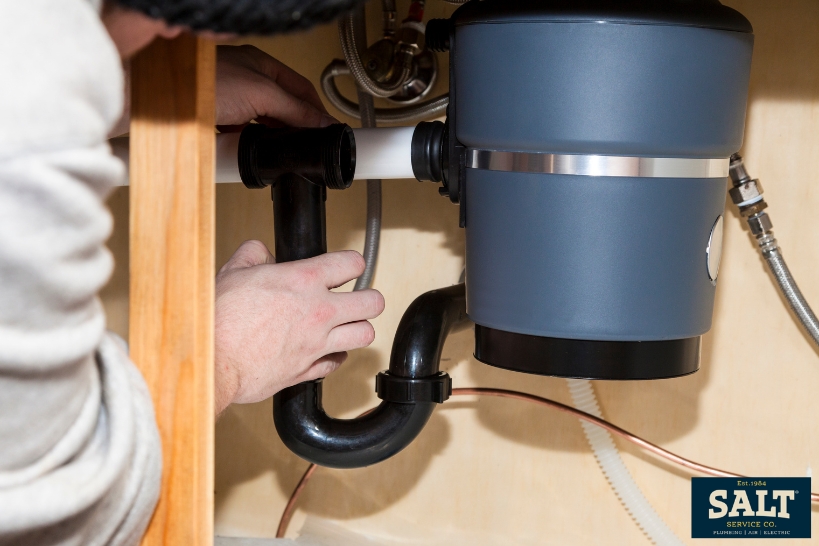
To reset a garbage disposal safely, turn off the wall switch, unplug the unit, let the motor cool for a few minutes, then press the red overload button on the underside once the grinding chamber is clear.
This guide is for homeowners dealing with three common scenarios: no sound (pointing to a tripped breaker or GFCI outlet), a humming motor (indicating a mechanical jam), or a reset button that pops back out immediately (thermal overload). Read each section in order or jump to the symptom that matches.
Before starting, gather a flashlight, tongs or pliers, a 1/4-inch hex wrench, and a wooden dowel. Keep bare hands out of the grinding chamber at every step.
If burning odors, water leaks, or persistent breaker trips appear at any point, stop immediately. SALT provides licensed plumbing and electrical support across the greater Austin area when those hazards arise.
Where is the reset button on a garbage disposal?
The garbage disposal reset button is a small red or black overload-protector button on the bottom or lower side of the unit under the sink. On InSinkErator-style units it typically faces straight down toward the cabinet floor.
When the internal thermal overload trips to protect the motor, this button pops outward roughly 1/4 inch rather than sitting flush with the housing. It is easy to confuse with three other devices that are not the reset button: the wall power switch, the TEST/RESET buttons on an under-sink GFCI outlet, and the main circuit breaker. These are separate devices, each protecting a different part of the system.
Placement varies by manufacturer. InSinkErator and Whirlpool guidance notes that continuous-feed models place the reset button dead-center on the bottom plate or along the lower outer edge near the power cord. If no button is visible from below, check the model manual for side-access locations.
SALT advises greater Austin homeowners to identify the disposal reset button separately from the under-sink GFCI receptacle before assuming the unit has failed. Locating the correct button first saves time and avoids unnecessary service calls.
Do not press the button yet. If the disposal is hot to the touch, hums when switched on, or is jammed with debris, complete the safety clearing sequence first.
How to reset a garbage disposal in five steps
Restoring power before clearing an obstruction can burn out the motor or trip a breaker. SALT recommends that greater Austin homeowners turn the wall switch OFF first, then unplug the unit under the sink or shut off the dedicated circuit breaker before any inspection.
Follow this sequence to reset a garbage disposal correctly:
1. Isolate electrical power: Turn off the wall switch. Unplug the power cord beneath the sink, or switch off the dedicated circuit breaker if the unit is hardwired.
2. Allow the motor to cool: A tripped thermal overload needs a few minutes to cool before it will reset. If the button will not stay in after you press it, wait 10 minutes and try again. Some newer InSinkErator models have no red button and reset automatically after cooling for up to 20 minutes with the switch off.
3. Inspect and clear from above: Shine a flashlight into the grinding chamber. Never put bare hands inside the hopper. Use tongs or needle-nose pliers to pull out visible bones, fruit pits, or silverware.
4. Press the reset button: Firmly depress the red button on the bottom of the housing until it clicks and seats. If the unit hummed previously or the impellers cannot turn freely, stop here and unjam the unit before restoring power.
5. Restore power and test: Plug the unit back in or reset the breaker. Run cold water at full flow, turn on the wall switch, and listen for smooth operation.
A successful reset means the motor runs quietly with water flowing, zero humming, no grinding, no smoke, and no immediate breaker trips. If the disposal runs freely but the sink remains backed up, SALT’s drain cleaning services can resolve downstream plumbing blockages.
Why is my garbage disposal humming but not spinning?
If the disposal hums when switched on but will not spin, the motor has power. The motor is attempting to run, but a foreign object or compacted debris has mechanically locked the grinding plate and flywheel. Pressing the reset button alone will not solve a mechanical jam.
A completely silent disposal points to an electrical interruption instead. Silence typically indicates a tripped thermal overload, a tripped GFCI outlet, an open circuit breaker, damaged wall switch wiring, or motor failure. The next two sections cover both paths.
Do not repeatedly toggle the wall switch or pump the reset button while the unit hums. Supplying current to a stalled motor generates intense heat within seconds. These repeated attempts trigger another overload trip and can permanently burn out the motor windings.
Common physical culprits include:
- Dropped silverware or bottle caps
- Fruit pits and thick bones
- Fibrous materials such as cornhusks or celery
A hum followed by sudden silence means the thermal overload protector shut the unit down to prevent motor damage.
Safety warning: Shut the wall switch off immediately if burning electrical odors, visible smoke, sparks, water leaking from the housing, or a breaker that trips instantly appear. Do not attempt to operate the unit again until those conditions are cleared.
How to unjam a garbage disposal with a hex wrench
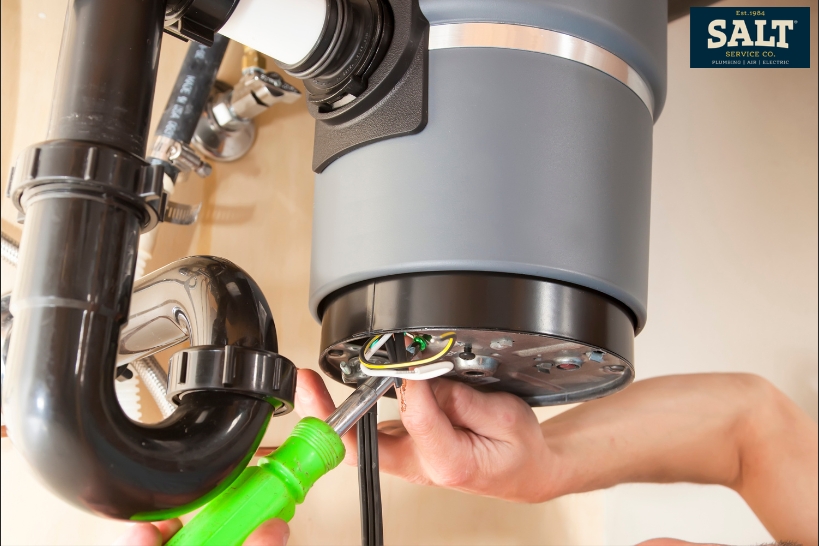
Caution: Switch off the wall control and unplug the unit or trip the breaker before clearing a jam. Never put bare hands inside the disposal hopper.
With the unit de-energized, insert a 1/4-inch hex wrench into the center socket on the underside. Work it back and forth until the grinding plate completes a full 360-degree rotation freely.
Follow this sequence to clear the obstruction:
1. Confirm power isolation: Verify the wall switch is OFF and unplug the power cord or shut off the circuit breaker. Keep hands dry.
2. Clear visible debris: Shine a flashlight down the sink drain. Use kitchen tongs or pliers to pull out loose objects before applying torque from below.
3. Turn the bottom socket: Insert the 1/4-inch hex wrench fully into the center socket. Rock it clockwise and counterclockwise. Stop if heavy resistance or metal binding appears, which can strip the drive socket.
4. Reinspect from above: Once the wrench turns smoothly, look down through the sink opening with a flashlight and lift out any dislodged debris using tongs.
No bottom hex socket? Insert a wooden broom handle through the sink opening, rest it against the turntable lugs, and apply gentle leverage to rock the plate. Never use metal tools from above, which can warp the shredder ring.
Press the red overload reset button only after the plate spins freely. Restore power, run cold water, and switch on the disposal to verify normal operation.
Why won’t the reset button stay in?
If the reset button pops back out, never tape, hold, or force it down. Forcing the switch bypasses a safety control designed to prevent electrical damage and motor fires.
A persistent reset issue points to three distinct causes: the motor is still overheating, the grinding plate remains jammed, or internal components are failing. Follow this troubleshooting sequence:
1. Allow full cooling time: Keep power switched off. InSinkErator advises waiting 10 minutes before pressing the button again if it will not stay in.
2. Confirm the plate turns freely: Disconnect power and inspect the chamber with a flashlight. Use a hex wrench in the bottom socket to verify the plate spins a full 360 degrees without drag.
3. Press the button once firmly: Push the red button until it clicks into place. Never pump or force it repeatedly.
A button that stays seated after cooling and clearing jams confirms a standard thermal-overload trip. If the switch releases again immediately after these checks, treat it as a hard stop signal and stop troubleshooting.
Watch for these severe failure signs:
- An acrid electrical burning odor or scorch marks on the casing
- Water leaking directly from the disposal body or reset area
- A freely rotating plate combined with zero motor response
These symptoms indicate failed motor windings or degraded internal seals requiring unit replacement. SALT diagnoses both disposal equipment and dedicated supply circuits across the greater Austin area, removing the guesswork between plumbing appliance problems and electrical faults.
Schedule a Diagnostic VisitCheck the GFCI outlet and the breaker before you blame the disposal
Safety warning: Never touch cords, outlets, or breakers with wet hands or while standing in water. If water contacted the outlet, leave the circuit off and call SALT immediately.
A silent disposal usually means power never reached the unit. Pressing the red reset button will not help if the electrical supply is interrupted upstream. A GFCI outlet keeps tripping when it detects a ground-fault current imbalance, which can occur if moisture reaches wiring near the sink.
Turn the wall switch OFF, then follow this diagnostic order:
1. Check the GFCI outlet: Look for TEST and RESET buttons on the under-sink outlet. If tripped, press RESET once until it clicks.
2. Test receptacle power: If the cabinet is completely dry, plug in a nightlight to verify voltage. Never dismantle the outlet or touch bare wiring.
3. Inspect the electrical panel: For hardwired units or dead outlets, check the main breaker panel. Find any breaker resting in the middle position, push it firmly OFF, then switch to ON once.
| Device | What It Protects | How to Reset |
| Disposal Reset Button | Motor from thermal overload | Clear jams, let cool, press red button (wait 10 min if it won’t stay in) |
| GFCI Outlet | Users from ground-fault shock | Confirm area is dry, press RESET once |
| Circuit Breaker | Home wiring from overcurrent | Switch fully OFF, then ON once |
Hard stop: If the GFCI or breaker trips again immediately, do not keep resetting it. Repeated attempts risk wiring damage or electrical fires. SALT’s licensed electricians (TECL #26149) handle electrical troubleshooting across the greater Austin area. Call (512) 956-7842.
How many resets is too many?
Pressing the reset button once after clearing a jam or letting the motor cool is standard procedure. One reset per incident is normal and expected. Beyond that, something else is wrong.
A button that trips again during normal use, or re-trips immediately after pressing, means the underlying issue was never resolved. Continued resets overheat motor windings and create electrical hazards over time.
The rule: press the reset once, verify the plate turns freely, and restore power. If it trips again within a few minutes of normal use, stop and diagnose before touching the button a second time. Preventing clogs from fibrous material, grease, and dense bones is the most effective way to reduce how often a reset is needed.
When to stop and call a plumber
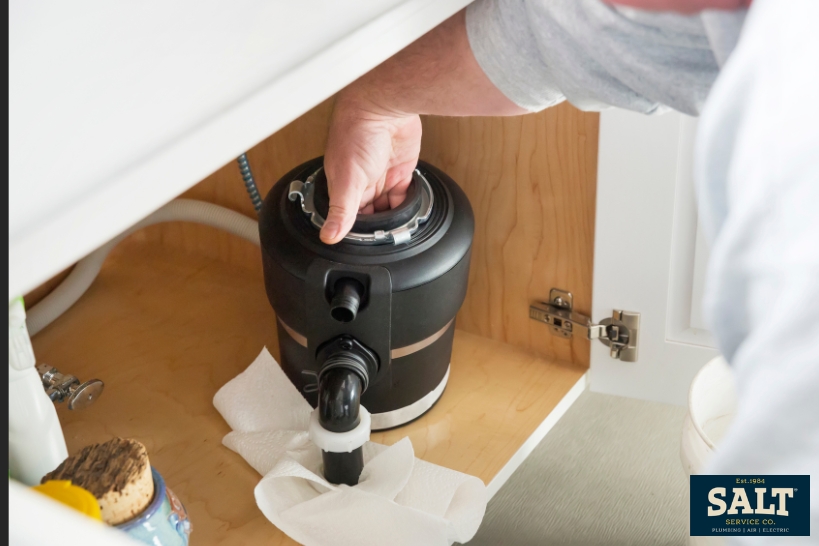
Knowing when a repair exceeds a DIY fix protects both the equipment and the home. Stop troubleshooting and schedule a professional inspection in the greater Austin area if any of the following conditions are present:
- The motor hums even after the grinding plate is freed manually.
- The unit stays silent despite verified power at the outlet and breaker.
- The reset button will not latch after cooling and jam clearing.
- The GFCI outlet or breaker trips instantly when turned on.
- Smoke, sparks, housing leaks, a cracked casing, or persistent sink backups appear.
Garbage disposals cross two trades. Leaks, cracked housings, and stubborn blockages require licensed plumbing services. Recurring breaker trips, dead power, and wiring faults need qualified electrical troubleshooting. Common signs of a shared drain blockage include a clogged toilet on the same drain stack, gurgling drain sounds, or multiple slow drains in the home.
SALT Service Co. holds Texas licenses in both plumbing (LIC# M-44221) and electrical (TECL #26149), allowing one technician to address either failure point safely on the same visit across the greater Austin area.
How SALT prices garbage disposal service in the greater Austin area
SALT prices plumbing and electrical work at a flat rate, quoted in writing and approved before any work begins. A technician assesses the motor, the reset circuit, the GFCI supply, and the dedicated breaker, then gives you the total up front. Check SALT’s current specials for available discounts on service and repair.
Most disposal problems fall into a clear category after a short on-site inspection: a stuck flywheel, a worn thermal overload switch, a failed motor, or an upstream electrical issue. A single visit typically closes the diagnostic and, if the repair is straightforward, completes the work on the same trip.
To book a visit or get answers before scheduling, call (512) 956-7842 or use SALT’s contact page at callsalt.com.
Book a Diagnostic VisitFrequently asked questions
Do I need to turn off the breaker before resetting a garbage disposal?
Turn off the wall switch first, then unplug the unit under the sink if the cord is accessible. If the disposal is hardwired into the electrical system, or if tools are needed to clear a jam, shut off the breaker at the main panel. SALT advises greater Austin homeowners never to inspect or unjam a unit while electrical power remains connected.
How long should I wait before pressing the reset button?
Give the motor a few minutes to cool before pressing the red reset button. If the button will not stay in, InSinkErator recommends waiting 10 minutes and trying again. Some newer InSinkErator models have no reset button and instead reset automatically after cooling for up to 20 minutes with the switch off.
What size hex wrench does a garbage disposal use?
Most standard disposals use a 1/4-inch hex wrench or the offset metal wrench included with the unit from the factory. Insert the wrench into the center hole on the underside to manually free the flywheel. If the model lacks an underside hex socket, use a wooden broom handle through the sink opening to rock the grinding plate.
Is a humming garbage disposal dangerous?
A humming garbage disposal is a fire and burnout risk if left switched on. The hum indicates the motor is receiving electricity but cannot spin due to a mechanical jam. Turn off the wall switch immediately. If smoke, a burning electrical odor, water leaks, or tripping breakers appear, stop toggling the switch and contact SALT right away.
Can I reset a garbage disposal myself, or should I hire someone?
Most homeowners can safely handle one reset per incident after clearing a simple jam and allowing the motor to cool with power disconnected. Preventing clogs from fibrous material and hard food waste is the best long-term strategy. However, if the reset button refuses to latch, the housing leaks, or the breaker trips repeatedly, professional service is the safer choice. Greater Austin residents can contact SALT Service Co. at (512) 956-7842 for licensed plumbing and electrical support.