




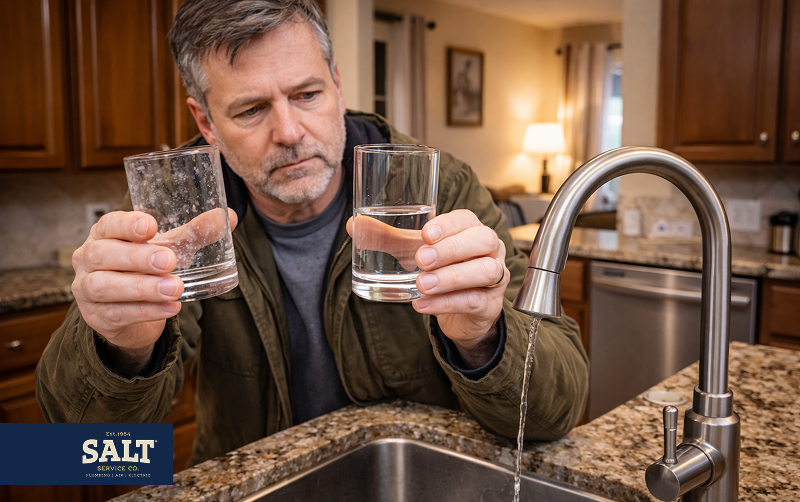
Trying to fix hard water stains, or improve the taste and smell of your tap water? Many Austin homeowners deal with both, but a water softener and a water filtration system solve different problems.
In Central Texas, hard water often leaves behind scale on fixtures, spots on dishes, and soap that does not lather well. At the same time, some homes also deal with chlorine taste or city water odors. This guide explains the difference between water softener vs. water filtration systems, when you may need one or both, and how to choose the right setup for your Austin home.
The Difference Between Water Softener vs. Water Filtration
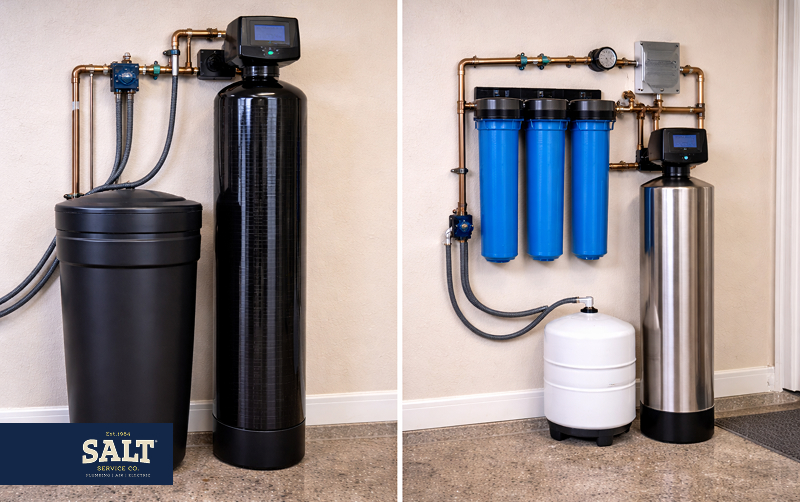
Water softeners and water filtration systems solve different problems. A water softener is designed to remove hard minerals like calcium and magnesium through ion exchange, which helps reduce scale buildup on fixtures, improve soap lather, and protect appliances like your water heater. However, it does not remove chlorine, chloramine, or other chemical contaminants.
Water filtration targets impurities instead of hardness. Carbon filters help reduce chlorine taste and odor, sediment filters catch particles like sand or rust, and reverse osmosis systems can reduce a wide range of dissolved contaminants. For many Austin homeowners, the right choice depends on whether the main issue is hard water, water quality, or both.
Problem >> Solution Mapping:
- White scale and water heater sediment: You need a softener or conditioner.
- Chloramine taste and “swimming pool” odors: You need a carbon stage (often catalytic carbon).
- Total drinking-water purity: You need an under-sink RO system or certified filter.
Because our local water contains both extreme hardness and high disinfectant levels, a combined approach is often the smartest path. Next, we will look at exactly what is in Austin-area city water and why SALT customers often choose a multi-stage solution.
Austin’s Water Profile: Hardness, Chloramines, and Your Neighborhood
Austin Water 2024 monthly summaries show local hardness typically ranges from 150 to 200 parts per million (ppm), or 9 to 12 grains per gallon (gpg). Because the industry considers anything over 7 gpg hard, Austin sits firmly in the “very hard” category. This reality is the primary driver for the water softener vs. water filtration debate. While a softener removes minerals, Austin’s treatment process uses chloramines (chlorine combined with ammonia) for disinfection. Chloramines are more persistent than standard chlorine and often cause a “swimming pool” odor that a softener alone cannot remove.
Water quality fluctuates depending on your neighborhood’s treatment plant and the age of local plumbing. High Total Dissolved Solids (TDS) also contribute to the “heavy” taste many residents notice. For homeowners, this hardness causes visible scale on faucets and damage to appliances. If you notice scale on fixtures or your hot water system, sediment is likely reducing your unit’s efficiency and lifespan. Review how this impacts your home via our water heater services.
We recommend using a simple at-home test strip to check your hardness levels. For a total home plan, a professional test identifies specific chloramine and TDS counts to help you get the right equipment for your family.
Next, we will look at a practical decision tree to help you choose the right system.
Finding Your Solution: Water Softener vs. Water Filtration
You’re scrubbing white film off your shower glass every week, yet your morning coffee still has a distinct “swimming pool” aftertaste. In Central Texas cities like Austin and Round Rock, this scenario is common because you are facing two different water chemistry issues at once.
Step-by-Step Water Diagnosis
- Look for scale: If you see spots on dishes, stiff laundry, or crusty faucets, you have a mineral hardness problem.
- Check the taste: A chemical odor or sharp, metallic taste signals a chlorine or chloramine issue.
- Target contaminants: If you are concerned about specific health risks like lead or PFAS, you need certified high-purity filtration.
Matching Your Goals to the Right System
- Protect Plumbing: A whole-home water softener stops mineral scale from clogging pipes and destroying your water heater.
- Better Taste at Every Tap: Whole-house carbon filtration removes the chemical bite from every fixture in the home.
- Purest Drinking Water: A point-of-use Reverse Osmosis (RO) system at the kitchen sink provides the highest filtration for consumption.
- Total Coverage: A dual-stage combo (softener plus carbon) provides the highest level of comfort and infrastructure protection.
Avoid the common mistake of buying a softener to fix a chemical taste or a filter to stop scale. Neither is designed to do the other’s job. If you are ready to stop the scale, explore our water softener installation options. For a professional opinion, contact us to schedule an in-home water analysis.
Next, we look at the “hard water but I don’t want salt” dilemma and what salt-free conditioners actually do.

Salt-Free Water Conditioners: Can You Get Soft Water Without the Salt?
Many Central Texas homeowners want to reduce hard-water scale without dealing with heavy salt bags or regular refills. Salt-free water conditioners can help, but they do not work the same way as a traditional water softener.
Here’s the main difference:
- Salt-Based Softeners Remove Calcium And Magnesium From The Water
- Salt-Free Conditioners Do Not Remove Minerals
- TAC Conditioners Change The Mineral Structure So Scale Is Less Likely To Stick
- Water Hardness Levels Stay The Same With A Conditioner
- Soap Lather And The “Soft Water” Feel Usually Do Not Improve
For Austin-area homes, a traditional softener is usually the better option when strong scale protection matters, especially with tankless water heaters. A salt-free conditioner can still be a good fit if you want lower maintenance and less visible buildup on fixtures and glass. Before choosing a system, compare flow rates, warranty coverage, and third-party performance data.
Your Next Step: Choose the System That Matches Your Water (Not the Marketing)
Central Texas water presents a dual challenge. It is both mineral-heavy and chemically treated. Because of this, a single-stage solution often leaves homeowners half-satisfied. If you only soften the water, your coffee still has a chemical bite. If you only filter it, your water heater remains at risk from mineral scale. The most effective strategy is matching the technology to the specific symptoms you want to stop.
Use this plan to build a system that fits your daily needs:
- Pinpoint the symptom. Distinguish between scale buildup (white crust on fixtures) and aesthetic issues (chlorine odors or metallic tastes).
- Layer your defense. Use a whole-home softener to protect your plumbing and a carbon filtration system for better water at every tap. For high-purity drinking water, add an under-sink Reverse Osmosis system.
- Evaluate total value. Compare the total cost of ownership rather than just the sticker price. Factor in salt refills, filter media replacements, and annual checkups to understand the true long-term budget.
If you are already seeing signs of scale-related leaks or plumbing wear, start with our professional plumbing services to get your home’s infrastructure back in order. If you need help sizing equipment or want a second opinion on your water quality, the SALT team is ready to schedule a visit and help you find the right fit for your family.
Frequently Asked Questions
Do I need a water softener or a water filter in Austin, TX?
In Austin, you typically need a water softener to stop mineral scale and a carbon filter to improve the water’s taste and odor. Austin’s water hardness averages 9 to 12 grains per gallon, which is high enough to damage appliances and plumbing without a softener.
- If your goal is removing white crust and spots on dishes, a softener is the primary tool.
- If you want to remove the “swimming pool” smell or chemical taste, a whole-home carbon filter is necessary.
- Most local families choose a combined approach to address both mineral buildup and drinking water quality.
Will a water softener remove chlorine or chloramine?
No, a standard water softener is designed to remove hardness minerals like calcium and magnesium, not chemical disinfectants. While the ion exchange process is highly effective for scale, it leaves chlorine and chloramine behind in your water supply.
- Chloramine requires a specific type of filtration, usually catalytic carbon, to be effectively removed.
- High levels of chlorine can actually damage the resin beads inside a softener over time.
- Adding a carbon filtration stage upstream protects your softener and provides better-tasting water.
What is the best water treatment system for a home with hard water?
The most effective setup for Central Texas homes is a whole-home water softener paired with an under-sink Reverse Osmosis (RO) system. This configuration keeps your plumbing protected from scale while providing bottled-water quality for drinking and cooking.
- The softener handles the high mineral content that clogs pipes and water heaters.
- The RO system filters out up to 99% of dissolved solids and contaminants at the tap.
- For homes with strong chemical odors, adding a whole-house carbon filter creates a three-stage defense.
Is a filtration system for hard water the same thing as a softener?
No, these systems serve different purposes and use different technologies to treat your water. Filtration removes physical particles or chemicals, while a softener specifically removes the dissolved minerals that cause hard water scale.
- A “hard water filter” or conditioner may reduce spots on glass but does not physically soften the water.
- Only a salt-based softener provides the “slippery” feel and prevents mineral buildup inside your plumbing.
- If a product claims to solve hard water without salt, it is likely a conditioner that leaves the minerals in the water.
How much maintenance should I expect for a softener versus a filtration system?
Water softeners require you to add bags of salt roughly once a month and should have an annual professional inspection. Filtration systems require periodic filter cartridge or media replacements, typically every six to twelve months depending on your home’s water usage.
- Softeners also use electricity and discharge small amounts of water during their regeneration cycles.
- Reverse Osmosis systems require new filters annually and a membrane replacement every few years.
- SALT Service Co. provides professional water softener installation and maintenance to help homeowners keep their systems running at peak efficiency year-round.
If you are ready to match a system to your home’s specific water chemistry and plumbing layout, contact us today for a professional consultation.