




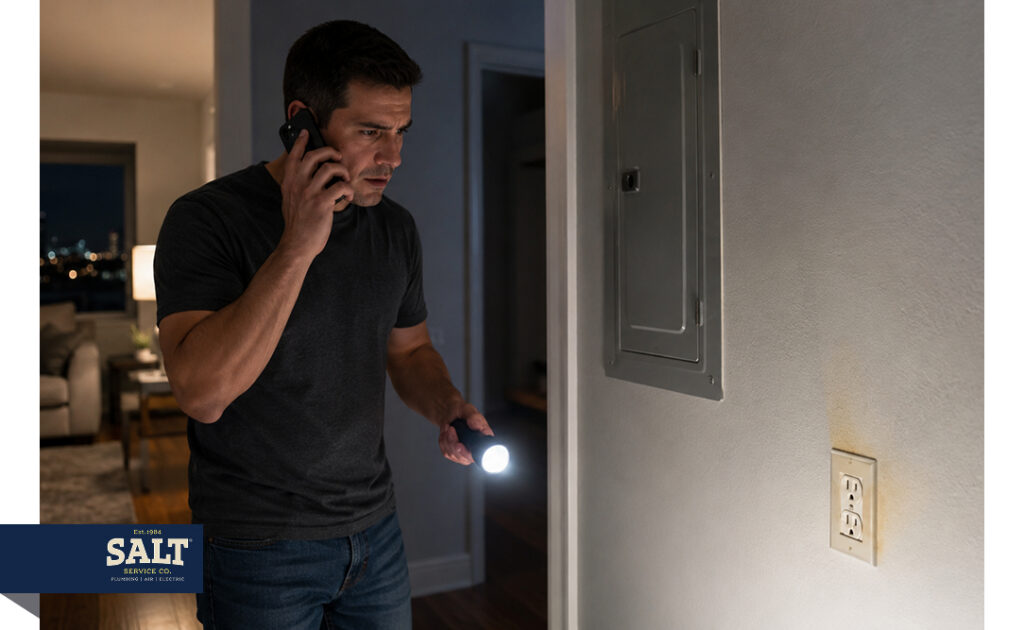
Call an emergency electrician immediately if you smell burning plastic, see sparks or scorch marks, hear buzzing from your panel, or feel heat near an outlet. These signals mean an active electrical fault that could start a fire. For anything involving smoke or a shock victim, call 911 first.
It’s 9:30 PM and a kitchen outlet just shot a spark across the counter — or maybe half your house suddenly went dark. At that moment, do you know when to call an emergency electrician, or whether the issue can wait until morning?
In Austin, electrical problems create immediate stress for homeowners. Whether you are dealing with summer heat or late-night flickering lights, the line between a minor repair and a fire hazard is not always clear. Making the wrong call can lead to dangerous consequences or unnecessary emergency fees.
At SALT Service Co., we want to give you a clear path forward when your home’s safety is on the line. This guide breaks down a simple triage framework, the red-flag symptoms that demand immediate help, and safe steps to protect your property while you wait for a licensed electrician.
Electrical Triage: When to Call for Emergency Help
A total power outage is often safer than a single flickering light. While a blackout is a major inconvenience, a faint buzzing sound or a warm outlet cover suggests an active electrical arc that can ignite a fire. Use this framework to decide your next move.
Tier 1: Call 911 Immediately
Contact emergency responders for active flames, heavy smoke, or if someone has suffered a serious electric shock.
Tier 2: Call SALT for Emergency Service
If you’re wondering when to call an emergency electrician, look for these red-flag sensory signs:
- See: Brown scorch marks or visible sparks.
- Smell: Burning plastic, ozone, or a fishy odor.
- Hear: Crackling, popping, or buzzing from the panel or walls.
- Feel: Heat on the wall near an outlet or a tingle when touching a switch.
Tier 3: Schedule Same-Day Repair
If the problem is contained to one outlet, there is no heat or smell, and you can safely stop using that circuit, standard same-day service is sufficient.
If you are unsure whether a symptom is dangerous, professional diagnostics can clarify whether you need emergency response or routine service.
High-Risk Warning Signs That Demand an Emergency Call
Electrical failures cause roughly 46,700 home fires each year, according to the NFPA. These disasters rarely happen without warning. If you notice any of the following, stop using the circuit, shut off power at the breaker if safe, and call for help immediately.
- Burning smells: A plastic or fishy odor means wire insulation is melting. This is an active fire risk.
- Sparks, smoke, or popping: Arcing reaches temperatures high enough to ignite wood studs inside your walls.
- Hot outlets or scorch marks: Discoloration indicates that electrical wiring is failing and overheating.
- Electric shocks: A tingle from a switch signals a grounding fault that could become lethal.
- Buzzing or humming: These sounds often point to loose connections or a failing electrical panel.
- Partial power loss: If half your home goes dark, improper voltage can destroy expensive appliances.
- Water contact: Leaks near outlets create a serious shock hazard because water conducts electricity.
- Damaged wiring: Cracked or chewed insulation allows live wires to arc or cause direct shocks.

What to Do While Waiting for an Emergency Electrician
You smell burning plastic near a kitchen outlet at 2 a.m. You need to act now, before the technician arrives. Follow these steps to keep your Austin home safe.
- Fire safety first: If you see smoke, evacuate and call 911. Never use water on an electrical fire.
- Cut the power: Go to your main panel with dry hands. Use a phone flashlight and switch off the affected breaker or the main disconnect.
- Unplug with caution: Only unplug devices if there are no sparks, heat, or water present.
- Set boundaries: Keep children and pets away from the area. Do not touch buzzing or charred devices.
- Document symptoms: Note specific sounds or smells to help technicians speed up the diagnosis.
Regular electrical inspections are the best way to catch these hazards before they become midnight emergencies.
Emergency vs. Wait: How to Tell the Difference
Is that flickering light just annoying, or is it actually dangerous? Knowing when to call an emergency electrician — and when a situation can wait — helps you manage cost concerns while keeping your family safe.
Some issues can wait for a standard appointment if there is no heat, smell, or sparking. You likely do not need an emergency response for:
- A single dead outlet.
- One breaker trip that resets and stays reset.
- A single non-working bulb or fixture.
- Mild flickering during Central Texas storms.
Escalate to an emergency call immediately for:
- Repeat trips or widespread flickering.
- Burning smells, buzzing, or heat from outlets.
- Smoke, shocks, or water involvement.
Emergency rates reflect the cost of rapid response and 24/7 staffing. If the situation is contained, scheduling same-day electrical services is the smartest way to protect your home without the emergency premium.
Utility Outage vs. Home Hazard: Who Do You Call?
When half a unit goes dark but the streetlights stay on, do you know who to call? Neighborhood-wide blackouts are utility issues handled by providers like Austin Energy. Isolated or partial outages, however, indicate an internal fault.
Turn off sensitive electronics immediately to prevent damage from voltage irregularities and contact a professional. Partial outages are a high-risk symptom that your panel or service line is failing.
For property managers, if you see smoke, sparks, or water near electrical components, treat it as an emergency regardless of the hour. Document the symptoms for the technician and notify the property owner immediately. If an outage affects medical equipment, alert the dispatcher and activate your medical backup plan.
Once power is stabilized, schedule professional electrical troubleshooting or a thorough electrical inspection to find the root cause and confirm long-term safety.
EV Chargers, Solar, and Generators: Emergency Signs for Modern Tech
You might expect a high-tech EV charger or solar battery to send a push notification before a failure, but electricity still behaves the same way it did fifty years ago. The most critical emergency signals remain the analog ones: heat, smell, and sound.
EV Chargers
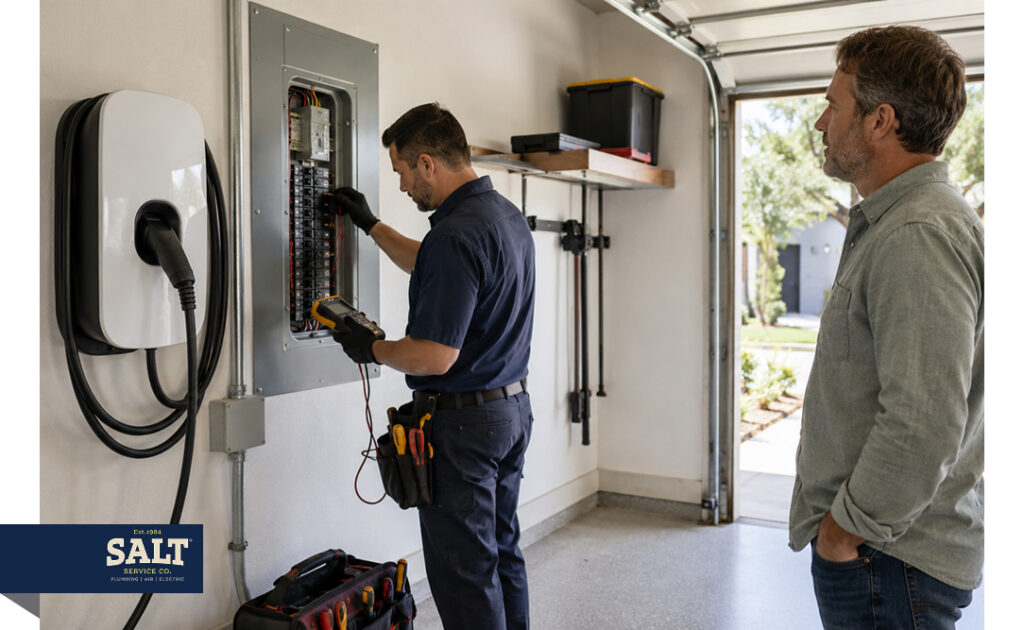
Stop charging immediately if the connector feels hot or you smell burning at the plug. Repeated breaker trips often signal panel capacity problems that require professional inspection.
Solar and Battery Storage
Watch for hissing, battery swelling, or water intrusion after a Central Texas hailstorm. These are urgent fire hazards. Stay back and call for help.
Smart Hubs and Connected Devices
If devices stay offline while lights flicker, you likely have hidden wiring problems or instability that a digital reboot cannot fix.
Generators
Never backfeed a portable generator into a wall outlet during an outage. This creates a lethal risk for you and utility workers. Use a transfer switch installed by a licensed electrician.
Your Emergency Electrician Checklist for Austin Homeowners
Electrical safety in Austin homes often comes down to what you can see, smell, or hear. The risk of an electrical fire always outweighs the cost of an after-hours call. If you notice burning odors or arcing sparks, act quickly using this framework.
- Call 911 immediately if: You see active flames or smoke, or if someone is involved in an electrical shock.
- Call an emergency electrician if: You smell ozone or burning plastic, see sparks, hear buzzing at the panel, find hot outlets, or experience sudden partial power loss.
- Safety steps while waiting: Shut off the main breaker only if you can reach it safely and the area is dry. Do not repeatedly reset a tripping breaker. Keep people and pets away from the affected area.
When you call, tell the dispatcher what you saw or smelled, which rooms are affected, and if any life-sustaining medical equipment has lost power.
SALT Service Co. provides 24-hour emergency electrical support and same-day service across Austin and surrounding communities. Family-owned since 1984, licensed and background-checked, SALT is ready to keep your home safe.
Frequently Asked Questions
What qualifies as an electrical emergency?
An electrical emergency is any situation posing an immediate risk of fire, shock, or significant property damage. This includes visible sparks, a burning plastic smell, hissing sounds from a panel, or warm outlet covers. If you feel a tingle when touching a switch or experience a sudden partial power outage, treat it as an urgent safety threat and call a professional right away.
Should I turn off my main breaker or just the circuit breaker?
Shut off the main breaker if you are unsure which circuit is failing or if you notice severe symptoms like smoke or widespread buzzing. If the problem is confined to a single clearly identified outlet, switching off that specific breaker is usually sufficient. Never touch an electrical panel if you are standing in water or if the equipment itself is wet.
My breaker keeps tripping. Can I just reset it again?
No. While a single trip might indicate a simple circuit overload, recurring trips signal a hard fault or a short circuit that could cause a fire if ignored. Never hold a breaker in the on position or attempt to bypass it. If a reset does not hold, leave the circuit off and call for professional diagnostics.
Half my house has power and half does not. What does that mean?
A partial power outage often means one leg of your electrical service has failed, a high-risk symptom for your home’s appliances. This imbalance can cause sensitive electronics to burn out from improper voltage. If your neighbors have full power, the issue is likely in your main panel or service line, requiring immediate inspection by a licensed electrician.
I am a tenant. Should I call an emergency electrician or my landlord?
If you see sparks, smell burning, or suffer a shock, treat it as an emergency and call a professional right away rather than waiting for a landlord to respond. Most lease agreements require you to follow emergency maintenance protocols for life-safety issues. Document the situation and notify your property manager once the immediate danger is stabilized.
What is the difference between a 24-hour and a same-day electrician?
A 24-hour electrician provides emergency response outside standard business hours, including nights and holidays, for immediate safety threats. A same-day electrician prioritizes urgent repairs during normal daytime hours. SALT Service Co. offers both: 24/7 emergency response for hazards and same-day scheduling for urgent but non-life-threatening issues like a dead outlet or a faulty light switch.
For non-emergency upgrades or to schedule a safety inspection, you can request service online.