



A quick power flicker may not seem like a big deal, but even small surges can damage electronics, appliances, and HVAC systems. Many homeowners think lightning is the main threat, when in reality, smaller power fluctuations can happen more often and still cause problems over time.
This guide explains what whole-home surge protection does, when it is worth the cost, and what to ask a licensed electrician before installing one. At SALT Service Co., we want Austin homeowners to understand their options so they can make a confident, informed decision.
How Whole-Home Surge Protection Works (And What It Doesn’t Do)
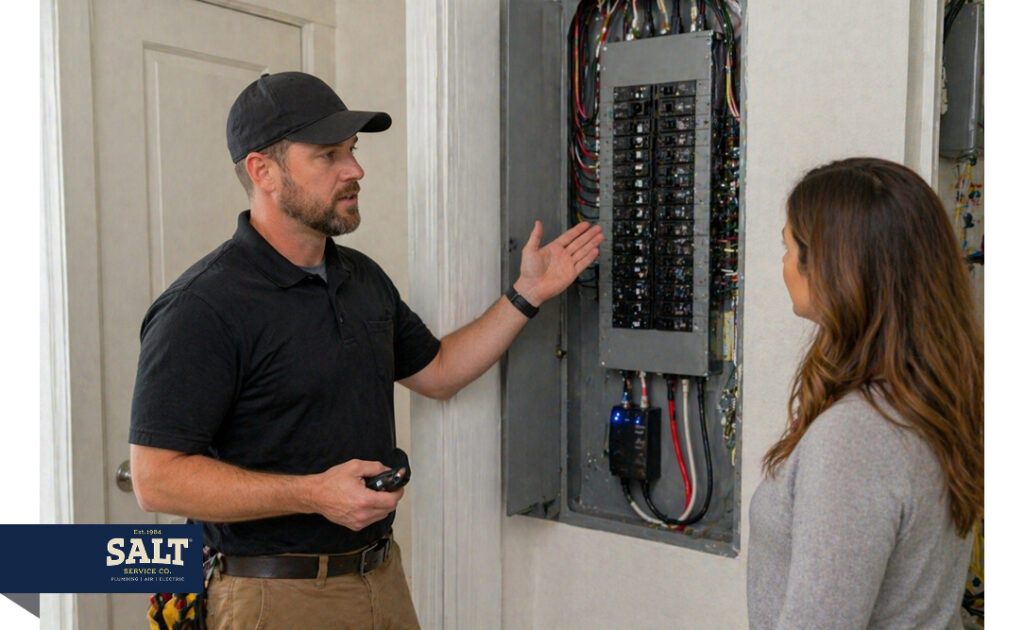
Most homeowners think of a surge protector as a magic shield against lightning — that’s a misconception. No residential device can stop a direct strike containing millions of volts. A whole-home surge protection system is a panel-mounted device that acts as a gateway, diverting dangerous voltage spikes to the ground before they reach your circuits.
Whole-Home vs. Power Strip Protection
Power strips only protect the devices plugged into them. They cannot help hard-wired equipment like your HVAC system, water heater, or smart oven. A whole-home protector is installed at the main electrical panel to safeguard every outlet and appliance in your house at once.
Type 1 vs. Type 2 Devices
We typically recommend one of two categories based on your home’s layout. Type 1 devices are service-entrance rated and sit between the utility pole and your meter. Type 2 devices are the standard for Central Texas homes, installed at the main breaker panel to manage both external utility spikes and internal surges.
Setting Realistic Expectations
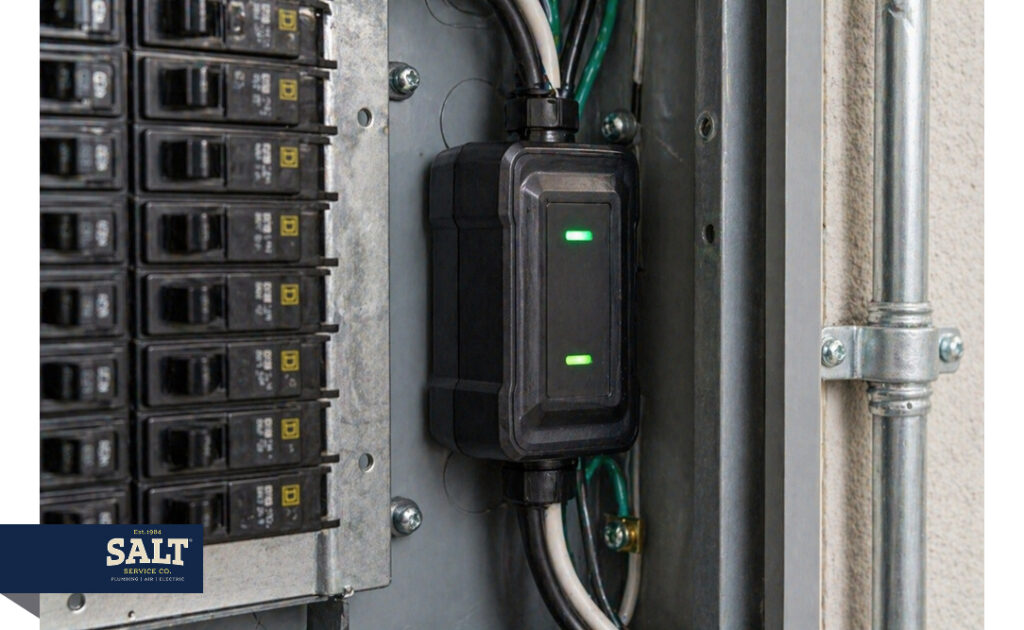
Surges are rarely just a storm problem. Research shows 60% to 80% of power spikes are generated internally — your AC compressor cycling on and off is one of the biggest culprits. These surge protective devices (SPDs) are sacrificial tools that wear out over time. Most units include LED indicator lights; if the light goes out, the protection is exhausted.
One important note: surge protection won’t fix flickering lights caused by loose neutrals or an aging panel. Those are separate electrical issues that need their own diagnosis.
Beyond Lightning: Why Surge Protection Is Your Daily Defense
Industry data from NEMA confirms that internal micro-surges are the most frequent threat to modern electronics — roughly 80% of the electrical surges hitting your appliances every day come from inside your own walls. Central Texas homeowners often focus on lightning, but the daily wear-and-tear from your own appliances is the bigger long-term risk.
External Surge Causes
These are high-voltage events that can cause immediate equipment failure. Common sources include:
- Utility switching: Grid adjustments or power restoration after a local outage.
- Storm faults: Nearby lightning strikes to power lines or transformers.
Internal Surge Causes: The Daily Wear-and-Tear
Most damage occurs during routine operation, not major storms. Every time a heavy motor cycles, it creates a brief voltage spike. Common culprits include:
- HVAC compressors and refrigerators
- High-draw appliances like electric dryers and water heaters
- Modern loads including EV chargers and variable-speed pool pumps
The Layered Protection Setup
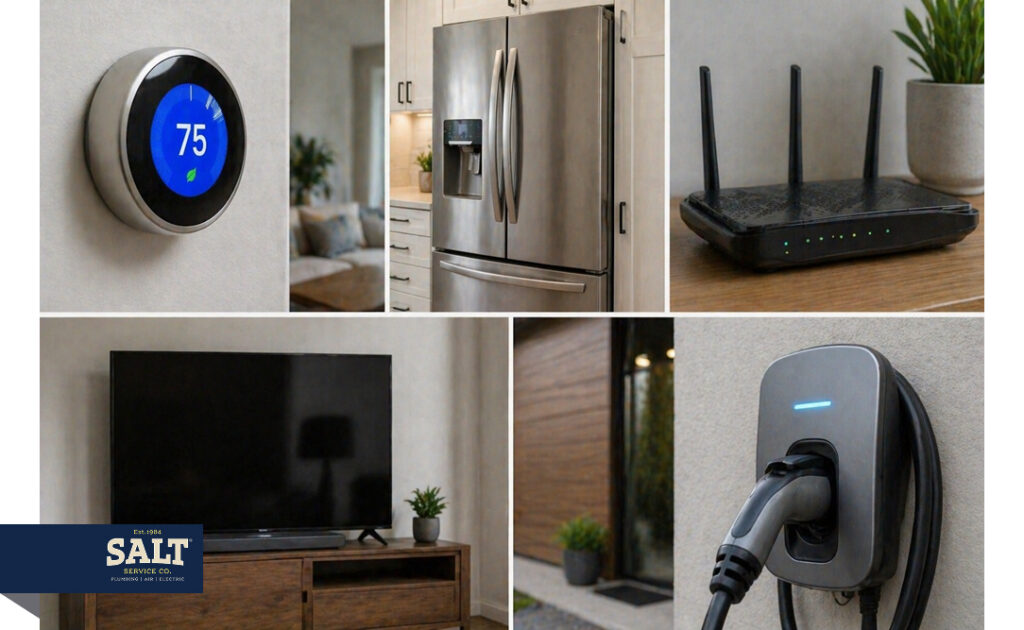
A practical defense uses a two-tier strategy. We recommend whole-home surge protection at your main panel as the primary line of defense against large spikes. For sensitive electronics like Wi-Fi routers, TVs, and gaming PCs, continue using point-of-use surge strips. The combination protects both your hard-wired appliances and your delicate digital gear.
Quick caution: A surge protector only works if your home has a proper grounding system. If your grounding is outdated or loose, the SPD has nowhere to divert excess energy. Our technicians always inspect grounding and bonding during installation to confirm your protection system performs as intended.
Is Whole-Home Surge Protection Worth It for Your Central Texas Home?
How much would it cost to replace every hard-wired appliance in your home after a single power spike? A $20 power strip protects your laptop, but it can’t protect a $7,000 HVAC system, an electric range, or an EV charger. For most Austin-area homeowners, the decision comes down to protecting those major investments.
What Does Installation Cost?
Professional installation for a high-quality Type 2 SPD typically ranges from $400 to $800. This varies based on the kA rating (surge capacity), local permit fees, and panel accessibility. If your panel is full, a technician may need to rearrange breakers or install tandems to create space.
Pros and Cons: A Realistic Look
- Pros: Protects expensive hard-wired equipment, reduces cumulative wear from daily micro-surges, and provides peace of mind during Central Texas storm season.
- Cons: Higher upfront cost than portable strips. No residential device is lightning-proof against a direct hit — that’s a physical limitation, not a product flaw.
Compatibility and Warranty Realities
If you have solar, battery backups, or an EV charger, your surge protection must coordinate with those specific inverters. Regarding warranties: many connected-equipment policies require you to file with homeowners insurance first and provide original appliance receipts. Keep all purchase records and photograph your panel right after installation to protect any future claim.
If you need a licensed electrician to evaluate your panel and grounding, SALT Service Co. is ready to help. Our team also offers electrical inspections to confirm your home is safe and storm-ready.
How to Decide if Whole-Home Surge Protection Is Right for You
Whole-home surge protection does more than defend against lightning strikes. It buffers against the internal micro-surges that happen every time your HVAC or electric range cycles on. Power strips protect your laptop — they can’t reach your outdoor AC unit or your smart refrigerator. When you compare the cost of an SPD to replacing a single major appliance, the investment often pays for itself.
Use this quick checklist to gauge whether it makes sense for your home:
- Do you have expensive hard-wired loads like an HVAC system or smart appliances?
- Have you noticed flickering lights or tripped breakers during local storms?
- Do you run a tech-heavy home office or an EV charging station?
- Is your electrical panel older or potentially under-grounded?
- Are you looking for more comprehensive coverage than just power strips?
If you checked two or more boxes, a whole-home SPD is a smart next step. Schedule a safety inspection to verify your grounding and confirm your home is storm-ready.
Frequently Asked Questions About Surge Protection
What is the difference between a whole-home surge protector and a power strip?
A whole-home surge protector is installed at your main electrical panel to protect hard-wired appliances and entire circuits throughout the house. Power strips only protect devices plugged directly into them. The best approach combines both: a whole-home unit for major appliances like your HVAC, and point-of-use strips for computers and other sensitive electronics.
Will a whole-home surge protector protect my house from lightning?
No residential surge protector provides 100% protection against a direct lightning strike, which carries millions of volts. These devices manage the indirect surges caused by nearby strikes or utility switching during a storm. They significantly reduce the risk of fire and equipment damage — but they don’t make a home entirely lightning-proof.
How do I know if my whole-home surge protector is still working?
Most whole-home units have LED indicator lights or a status window showing the device’s health. A green light means the unit is active; a red light or no light means the internal components sacrificed themselves to block a surge. Check those lights after every heavy storm to confirm your protection is still active.
Can you install whole-home surge protection if my panel is full or outdated?
Installation is usually possible in full panels using tandem breakers or a small sub-panel. However, if your panel is obsolete or unsafe, a full replacement may be necessary before adding protection. Our licensed electricians can inspect your current panel to find the safest mounting approach for your specific home.
Do connected-equipment warranties actually pay out if something gets damaged?
Manufacturer warranties do pay out, but they require a strict claim process. You’ll typically need to file with homeowners insurance first and provide original purchase receipts for damaged appliances. Never discard a failed surge protective device — most manufacturers require you to return the unit for testing to confirm it was active during the event. Many homeowners choose professional installation to get proper documentation for these claims.
Protecting Your Austin Home From the Grid Up
Whole-home surge protection is one of the most cost-effective investments you can make for a home full of hard-wired appliances. The real threat isn’t just the storm outside — it’s the daily micro-surges from your HVAC compressor, electric range, and EV charger quietly wearing down your equipment over time.
If your home has significant hard-wired loads or an older electrical panel, a licensed electrician can assess your grounding and recommend the right SPD for your setup. SALT Service Co. serves Austin and the surrounding area — we’re ready when you are.