






Your bedroom, living room, or covered patio still feels stuffy after sunset. Before you buy a fan or schedule service, you want to know whether ceiling fan installation is a simple replacement or a larger electrical project. The answer affects the price.
SALT Service Co.’s Austin-market pricing covers what each scope includes, from replacing an existing fan to converting a light fixture or adding a fan in a new location. We also cover what can raise the final price: your home’s wiring, ceiling access, control options, fan-rated box support, and any finish repairs. You’ll know what to check before requesting service.
National averages offer useful context, but they cannot account for the conditions inside your Austin home. A standard swap may be straightforward, while a new location can require wiring, switching, and access work. Because a ceiling fan is a moving, vibrating fixture, it needs a properly supported fan-rated box, not just the box that held a light fixture.
Start with the local price table and scope definitions below.
Austin Ceiling Fan Installation Pricing by Project Scope
Why can two similar ceiling fans have very different installation costs? The fan is only part of the job. The bigger factor is what the electrician finds above the ceiling: existing wiring, a fan-rated electrical box, access for new cable, and the controls you want.
| Project Scope | What Determines the Final Price |
|---|---|
| Simple replacement | Replacing an existing fan on a verified fan-rated box with usable wiring |
| Light-to-fan conversion | Evaluating the existing box, upgrading it if needed, and confirming switch compatibility |
| New location, attic access | Running new cable from an accessible attic area and adding controls as needed |
| New location, finished ceiling | Fishing wire through limited-access areas, creating openings if necessary, and addressing repairs |
| Optional add-ons | Separate controls, remote receivers, smart switches, angled-mount hardware, and access-opening repairs |
A simple replacement typically involves the fewest variables because the wiring and support box are already in place. A light-to-fan conversion may require a box upgrade. A new location requires more planning because the electrician may need to run cable, add a switch, and work around framing or limited ceiling access.
Once you request service, each SALT estimate states what is included: labor, standard mounting materials, electrical testing, cleanup, and permit or inspection handling when required. It also identifies exclusions, including whether the homeowner or SALT supplies the fan and whether drywall texture or paint matching is covered.
National installation ranges can offer background context, but they should never replace verified Austin-area flat-rate pricing. An onsite evaluation is the most reliable way to price your specific project accurately.
Existing Wiring Is the Biggest Factor in Ceiling Fan Installation Cost
Picture a first-floor living room beneath a second story: no attic above, no existing ceiling fixture, and a fan planned over the seating area. This is not a quick fan swap. An electrician may need to fish cable through framing and open, patch, texture, and paint finished surfaces to create the electrical path.
Ceiling fan installation usually fits one of three scopes:
1. Existing fan to new fan: If the wiring is usable and the electrician verifies a listed fan-rated box or support system, this is typically the most predictable visit. The work mainly involves removing the old fan, mounting the new one, making connections, and testing it.
2. Existing light fixture to fan: The wiring may be usable, but the existing box cannot be assumed to support a fan. Unlike a stationary light fixture, a ceiling fan creates ongoing weight and vibration. The electrician may need to replace or reinforce the box with fan-rated support.
3. No existing fixture or power at the location: This becomes an electrical-access project. It can involve routing new cable, installing a listed fan-rated brace and box, adding or changing switches, and repairing openings needed to reach the work area.
A brace or box may be a modest material cost. Labor and finish repairs often drive the higher estimate when cable must travel through framing or finished ceilings.
If your project needs new cable, switch changes, or circuit evaluation, SALT can help through its electrical wiring services.
Five Site Conditions That Can Change Your Ceiling Fan Installation Price
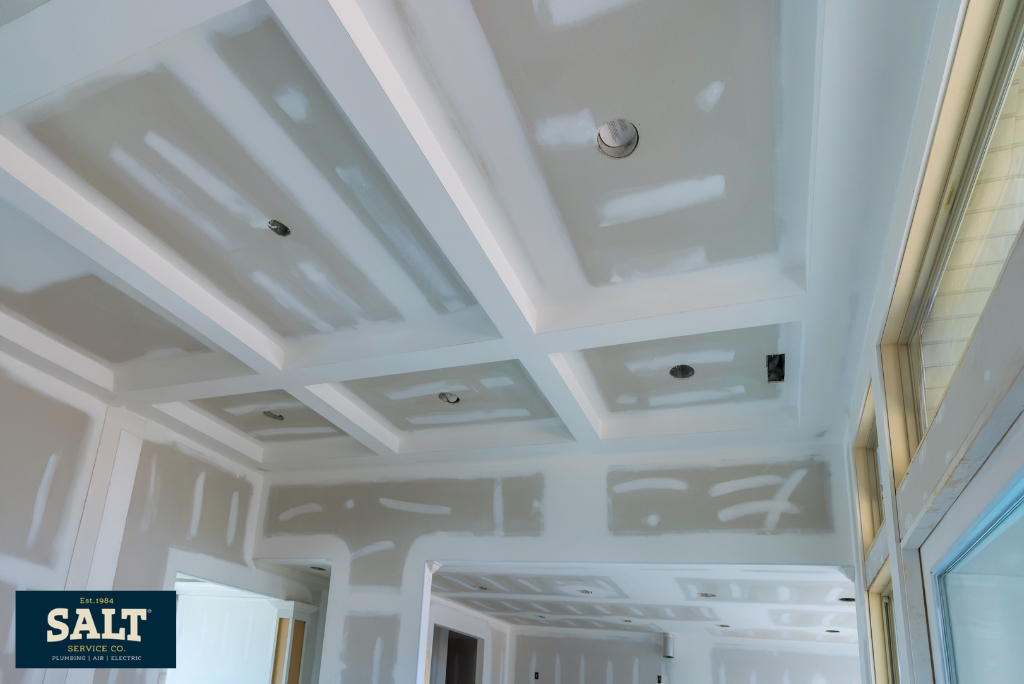
The fan itself is not always the costly part. A basic ceiling fan installation can become more involved when the ceiling, mounting support, wiring, or controls need upgrades for a safe, functional setup.
Use this checklist before your appointment:
| Site Condition | How It Can Change the Installation Price |
|---|---|
| Ceiling height, slope, and access | Vaulted, angled, two-story, or hard-to-reach ceilings may require a longer downrod, angled-ceiling hardware, or more time for safe ladder or lift access. Limited attic access can also make new wiring more labor-intensive. |
| Fan weight and mounting support | A box that held a light fixture is not automatically rated to support a moving fan. An electrician can verify the existing box or install a retrofit brace or structural support as needed, following the fan manufacturer’s instructions and applicable code. |
| Control configuration | One wall switch is typically the simplest option. Separate fan and light controls, remote receivers, and smart switches can require added setup or wiring changes. Some smart controls need a neutral wire at the switch box, which may be absent in older homes. |
| Circuit capacity and protection | A new fan location may reveal the need for circuit work or compatible protective devices, depending on the home’s electrical system and applicable code requirements. |
| More than one fan | Installing several fans in one visit may reduce repeat travel and setup time. Ask for the bundled scope in writing so every location, control option, and access condition is clear. |
For patios, porches, and other exterior areas, choose a damp-rated or wet-rated fan that matches the location’s moisture exposure. Pairing the project with new switches, recessed lights, or outdoor fixtures? Explore SALT’s indoor and outdoor lighting services.
Why a Standard Light Box May Not Be Safe for a Ceiling Fan
A ceiling box that safely held a light fixture is not automatically safe for a ceiling fan. A light hangs still; a fan creates repeated vibration and side-to-side force while it runs.
Not every ceiling electrical box is built to hold a fan. Under the National Electrical Code (Section 314.27), boxes used to support a ceiling fan must be specifically listed and marked for that purpose — and fans over 35 pounds need a box rated for that exact weight, or separate support tied into the framing above.
If your box isn’t rated for fan support, that’s an easy fix. Depending on your ceiling, we can swap in a properly listed box, install a retrofit brace, or add support directly to the framing — all before your fan goes up, so it’s secure for the long run.
The code was updated for 2026, so if you’re unsure whether your home’s wiring meets current standards, we’re happy to take a look.
Before ceiling fan installation, a technician checks:
- Box labeling, condition, and fastening method
- Ceiling framing and available access
- Fan weight and manufacturer mounting instructions
- Grounding and wiring condition
- Switch wiring for remotes or smart controls
Older Austin-area homes can add complications, including brittle wire insulation, shallow boxes, missing equipment grounds, or no neutral conductor at the switch for certain smart-control plans.
This evaluation is not an upsell. It helps prevent wobble, noise, ceiling damage, and unsafe support failures. For help with fan support, wiring, or controls, explore SALT’s electrical services.
SALT’s licensed electricians hold TECL #26149 and follow the same upfront flat-rate pricing process for ceiling fan work across Central Texas. Pflugerville homeowners can schedule ceiling fan service through SALT’s Pflugerville electrical services team.
Choose a Ceiling Fan and Controls Before Your Installation Quote
Will the ceiling fan you choose work with your room, ceiling, and preferred controls? Confirming those details before the electrician arrives helps prevent scope changes after the visit begins.
Match blade span and airflow to the room’s size. A fan that is too small may not move enough air, while an oversized model can overwhelm a compact bedroom, even when installed correctly.
Consider the ceiling:
- Low ceiling: Choose a low-profile, flush-mount fan.
- High or sloped ceiling: Select a compatible downrod and angled-mount kit. Follow the manufacturer’s blade-clearance requirements.
- Controls: Decide whether one wall switch and a remote are enough, or whether separate fan and light wall controls justify added wiring work.
DC-motor fans may offer quieter, more efficient operation, but review warranty terms and replacement receiver availability before paying extra for smart features. Coordinating the fan with other fixtures? See SALT’s interior decorative lighting ideas for room pairings and style guidance.
With those choices made, you can compare appointment timing and written quotes more accurately.
Get a Ceiling Fan Quote That Covers the Work Your Home Needs

Treat ceiling fan installation quotes as a scope comparison, not a race to the lowest price. First, define the job: are you replacing an existing fan, converting a light fixture, or adding a fan in a new location? That answer determines whether the work involves mounting, electrical modifications, or both.
Next, give every electrician the same project details: the fan’s model and weight, ceiling height and slope, preferred controls, attic or ceiling access limits, and whether the existing box is rated to support a fan. Consistent details produce estimates you can compare fairly.
Finally, request a written estimate that identifies electrical work, fan-rated mounting or support upgrades, access and finish repairs, plus any permit or inspection responsibilities. A low quote may exclude wiring, switch changes, or repairs after opening a finished ceiling. Choose the quote that clearly states what is included before work begins.
Austin and Central Texas homeowners can review the ceiling fan installation service page for scope details and SALT’s flat-rate process. SALT’s licensed electrical team provides upfront pricing and a lifetime guarantee on repairs and installations.
Call (512) 956-7842 Schedule an Electrical AssessmentFrequently Asked Questions
How much does it cost to replace a ceiling fan?
In Austin, a ceiling fan replacement fits SALT’s simple-replacement category when usable wiring and a verified fan-rated box are already in place. The fan purchase price, box upgrades, control changes, ceiling height, and access requirements can raise the total. Ask for a written scope that identifies exactly what the flat-rate price includes.
How much does ceiling fan installation cost with new wiring?
Ceiling fan installation with new wiring costs more because it requires cable routing, fan-rated support, switching, and potentially access openings and finish repairs. First-floor rooms without attic access often require more labor than locations with open attic access above. An onsite electrical evaluation is the most reliable way to price the wiring path, controls, and any ceiling repairs accurately.
How long does ceiling fan installation take?
A simple ceiling fan replacement commonly fits within a short service visit when the wiring, mounting support, and controls are ready to use. New wiring, fan-rated box retrofits, high or vaulted ceilings, smart controls, and difficult attic access can extend the work. Your electrician should confirm the expected timeline after evaluating the location rather than estimating before seeing it.
Do I need an electrician to install a ceiling fan?
A licensed electrician is strongly recommended for new wiring, circuit or switch changes, fan-rated box upgrades, older wiring concerns, high ceilings, or any uncertainty about safe mounting. Ceiling fans create vibration and need support designed for fan use. Permit and inspection requirements vary by project scope and Central Texas jurisdiction, so confirm local requirements before work begins.
Can a ceiling fan replace a light fixture on the same box?
A ceiling fan can replace a light fixture, but the existing box must first be confirmed as listed and marked for fan support. A standard light-fixture box may need replacement or a retrofit fan-rated brace connected to framing. The electrician should also check the fan’s weight, box condition, grounding, and switch wiring before completing the conversion.