




You haven’t touched the thermostat since May, but your July bill just arrived and it’s nearly double last month’s total. Every Austin homeowner knows that sinking feeling as cooling costs spiral during a triple-digit heatwave. Summer electric bill spikes almost always fall into one of three buckets: higher kilowatt-hour usage, peak-hour pricing tiers, or hidden home inefficiencies like leaky ducts and a struggling AC.
This guide gives you a fast triage checklist to pinpoint the culprit in under an hour. We’ll walk through safe DIY checks to lower your costs — and explain how professional preventive maintenance stops the financial bleed before the next record-breaking Austin heat spike. As a local, family-owned, multi-trade team serving Central Texas since 1984, SALT helps neighbors find permanent solutions that bridge the gap between electrical and cooling issues.
Start with the bill, then work inward to your AC and your home.
Is Your Bill High or Is Your AC Struggling? A 4-Step Triage
Before assuming your air conditioner is failing, spend five minutes auditing your billing statement. Many suspected equipment failures turn out to be the result of a longer billing cycle or a simple shift in utility rates.
Follow this four-step workflow to identify the source of the spike:
- Confirm billing dates: Check if the cycle was longer than usual. A 33-day cycle during an Austin heatwave will look much higher than a standard 28-day cycle.
- Compare kWh, not dollars: Look at your kilowatt-hour (kWh) usage against the same month last year. If usage is identical but the bill is higher, your rates changed.
- Check daily usage: Review your Austin Energy portal for interval spikes. High usage on weekends usually points toward lifestyle habits rather than mechanical failure.
- Account for one-offs: Did you host houseguests, install a new pool pump, or shift to a work-from-home schedule? Any of these can move the needle.
If you’re on the Austin Energy Time-of-Use (TOU) plan, timing is everything. Peak hours run from 3:00 PM to 6:00 PM on weekdays. Running your dryer, dishwasher, or EV charger during that window can significantly amplify costs.
If your kWh usage jumped regardless of the clock, your AC is usually the biggest lever. Here’s why.
Why Your AC Runs Longer (Even When It’s Healthy)
Most homeowners assume a surging electric bill means a dying air conditioner. But a spike often means your system is working exactly as designed to combat Central Texas heat. A healthy unit runs longer during an Austin July for three primary reasons:
- Temperature delta: When it’s 105°F outside and 72°F inside, your compressor must work longer cycles just to maintain that 33-degree gap.
- Humidity load: Your AC is also a dehumidifier. On sticky days, it spends significant energy pulling moisture from the air before the temperature can drop.
- Setpoint choices: Maintaining a static low temperature all day costs more than most people realize.
To lower costs, try raising your thermostat two degrees for one week. Use ceiling fans in occupied rooms to stay comfortable — just remember that fans cool people, not rooms. According to Energy.gov, turn fans off when you leave to avoid wasting electricity.
6 Hidden HVAC Faults That Force Your AC to Work Overtime
When an AC struggles, your bill rises because the system runs longer or draws more power. Industry data shows a neglected HVAC system can consume 30% more energy than a well-maintained unit to reach the same temperature. If your usage is spiking, your equipment is likely fighting one of these six mechanical faults.
Dirty Air Filter
Clogged filters restrict airflow, forcing the blower motor to work harder and pull higher amps. Replace your filter every 30 days during peak Austin heat — it takes five minutes and can measurably reduce your next bill.
Dirty Evaporator or Condenser Coils
Dust acts as insulation on evaporator and condenser coils, blocking efficient heat transfer. A technician performs a deep chemical clean to restore cooling capacity. According to the Department of Energy, the biggest savings from a tune-up occur when a technician cleans dirty coils that were forcing the unit to run longer cycles.
Refrigerant Leak
Low refrigerant forces the system to run around the clock without reaching the thermostat setpoint. Look for ice on copper lines or listen for a faint hissing sound — both point to a leak that needs professional attention.
Ductwork Leaks
Holes in your ducts can dump 20% or more of your cooled air into a 130-degree attic before it ever reaches a room. Dusty vents and rooms that stay warmer than others are common clues. Sealing duct leaks is one of the highest-ROI fixes for high summer cooling costs.
Thermostat Placement
If your thermostat sits near a window, lamp, or sunny wall, it reads ghost heat and calls for constant cooling. Compare your thermostat’s reading to a handheld thermometer in the same room — a difference of more than two degrees points to a placement problem.
Failing Electrical Parts
Weak capacitors cause hard starts — the unit pulls a massive power spike every time it kicks on. Short cycling (frequent restarts) and unusually long run times both waste significant kilowatt-hours. Do not open electrical panels yourself; this requires professional diagnostic tools.
Stop the Heat Gain: Your Home’s Envelope Is the Other Culprit
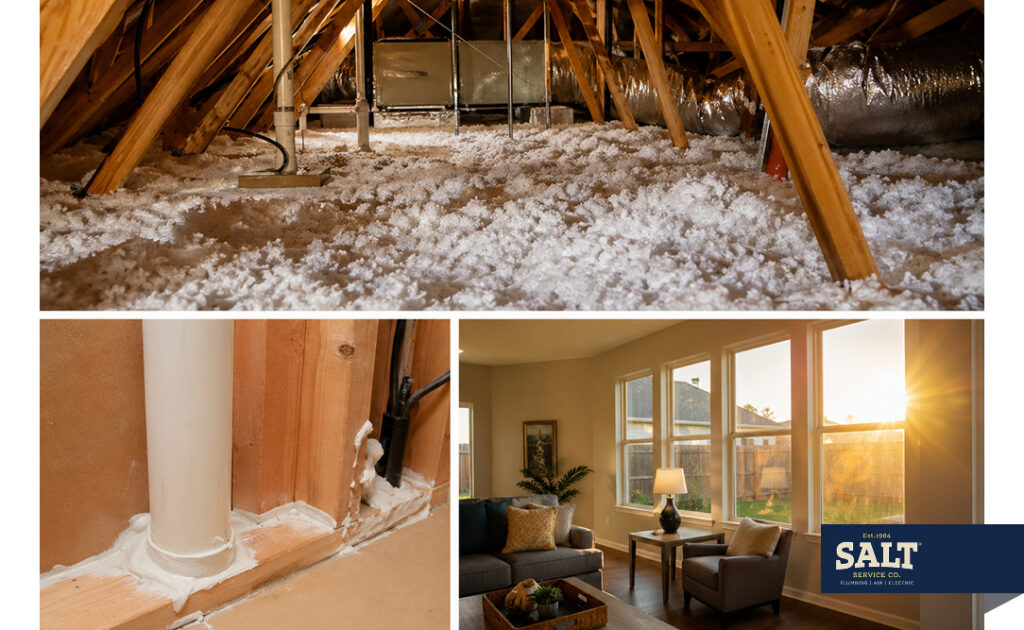
If some rooms never feel comfortable, the problem may be the house and not the unit. In Central Texas, attic temperatures routinely exceed 140°F. When your home’s envelope is weak, your AC runs constantly to keep up. Reducing this cooling load is often the fastest way to lower your bill.
Three Key Drivers of Excess Heat Gain
- Attic insulation: If you can see wooden floor joists in your attic, your insulation is too thin to block radiant heat.
- Air leaks: Check for drafts around door frames, attic hatches, and recessed lights. These gaps pull hot air in while your cool air escapes.
- Solar gain: West-facing windows in the afternoon act like a heater for your living space — unprotected glass is a major driver of excess cooling demand.
Prioritize Fixes by Effort
- Low-cost: Use weatherstripping, door sweeps, and caulk to seal gaps. These take an afternoon and pay back quickly on your next bill.
- Medium-cost: Install solar screens or blackout curtains on west-facing windows to block afternoon heat.
- High-impact: Add professional insulation after sealing air leaks — insulation installed over gaps wastes money because conditioned air still escapes.
When you reduce heat coming in, your AC runs less. Proper maintenance then makes those remaining cycles as affordable as possible.
Beyond the AC: Surprising Summer Energy Hogs
If your AC seems fine, other loads can quietly drive up your monthly kilowatt-hour usage. While cooling is the biggest draw, several other appliances stack up fast during summer.
- Pool pumps: Often the second-largest consumer in Central Texas homes. Run yours 8 to 10 hours during off-peak times to lower costs without sacrificing water clarity.
- EV charging: Charging during peak afternoon windows significantly increases costs on time-of-use plans. Switch to overnight windows to save.
- Electric water heaters: Extra summer guests and frequent laundry cycles increase water heating demand.
- Appliance heat: Using an oven or dryer in the afternoon adds heat indoors, forcing your AC to compensate.
- Halogen lighting: Old halogen bulbs generate significant heat — swapping to LED eliminates a small but continuous heat source in your living areas.
Sometimes the issue is electrical efficiency rather than usage. Frequent breaker trips, flickering lights, or outlets that feel warm to the touch suggest high resistance or outdated wiring. These are safety signals — and they cause your system to run less efficiently.
How to Take Control of Your Summer Cooling Costs
High summer bills usually stem from a mix of home heat gain, peak utility rates, and mechanical efficiency losses. Here’s a prioritized action plan to reclaim your budget:
Phase 1: This Week (DIY)
Replace your air filter to improve airflow immediately. Shift high-energy tasks like laundry and dishwashing to off-peak hours. Keep blinds closed on west-facing windows during the afternoon to block radiant heat.
Phase 2: This Season (High ROI)
Schedule a preventive tune-up to clean coils and check refrigerant levels. This prevents your system from drawing extra power just to fight through dust or low pressure. SALT+ members get priority scheduling and 10% off service — SALT+ starts at $24.95/month.
Phase 3: Long-Term (Efficiency)
Focus on air sealing and attic insulation to reduce your overall cooling load. If your unit is over 10 years old, start planning for a more efficient replacement — the energy savings often recoup the cost within a few years.
Frequently Asked Questions
Is it normal for my electric bill to jump during Austin summers?
Yes — but compare kilowatt-hour usage, not just the dollar total. If you’re on an Austin Energy Time-of-Use plan, electricity costs significantly more during peak weekdays between 3:00 PM and 6:00 PM. Longer runtimes during 100-degree days naturally increase usage even if your habits stay the same.
How do I tell if my HVAC system is causing a high electric bill?
Look for signs of mechanical struggle: the unit running constantly without reaching the thermostat setpoint, or weak airflow from your vents. If indoor temperatures stay high while the outdoor unit runs non-stop, it usually points to a dirty coil or a refrigerant issue. Check your air filter first and clear any debris from around the outdoor unit.
How often should I change my AC filter in summer?
Check your filter every 30 days during peak summer months. Standard 1-inch filters need monthly replacement if you have pets or allergies. Thicker 4-inch media filters may last up to six months. Consistent changes keep airflow strong and prevent the blower motor from overworking.
Will an AC tune-up actually lower my monthly bill?
Yes. A professional tune-up can reduce cooling energy use by 5 to 15 percent by restoring airflow and cleaning critical components. The biggest savings come from cleaning dirty coils that were forcing the unit to run longer cycles. Many Central Texas homeowners see immediate improvements in cycle times after a SALT visit.
When should I repair versus replace my air conditioner?
Consider replacement if your unit is more than 10 to 12 years old, needs frequent repairs, or uses outdated R-22 refrigerant. If repair costs are climbing and summer bills trend higher every year, a new high-efficiency system often pays for itself through lower monthly energy costs. A professional diagnosis can help you weigh the long-term ROI.
High summer electric bills in Austin are rarely a single-cause problem — and rarely unsolvable. Start with your billing statement, check your filter, and audit your home for heat gain. If the usage numbers still don’t add up, a professional AC diagnostic will tell you exactly what’s driving the cost.
SALT Service Co. is a family-owned, licensed HVAC and electrical team that has served Austin homeowners since 1984. We offer flat-rate pricing, 2,000+ five-star reviews, and same-day appointments across the Austin metro.