





AC units leak water when the condensate drain line clogs, the evaporator coil freezes over, or the drain pan cracks. In Austin’s humid summers, a running system pulls up to 20 gallons of moisture from the air daily, so even a small blockage can cause major water damage fast. Most leaks are fixable with a shop vac and 15 minutes. Some require a pro.
Finding a puddle next to your indoor AC unit on a humid July afternoon in Austin triggers instant panic. If you are staring at a wet floor and wondering why is my AC leaking water, you are facing a property damage threat as much as a comfort problem. Even if the system is still blowing cold air, pooled water can ruin drywall, warp flooring, and spark mold growth in hours.
This guide walks you through a five-minute emergency safety checklist, a visual symptom-to-cause diagnostic, and safe DIY steps for clearing a clogged drain line or thawing a frozen coil. You will also find out when to call a licensed Austin HVAC professional and what repair costs look like.
Start with safety, then diagnose.
Emergency Safety Checklist: What to Do Right Now
You walk in and see water pooling around your indoor unit or a damp stain spreading across your ceiling. Before diagnosing why your AC is leaking water, focus on safety. Water near your furnace or air handler creates serious electrical and gas hazards.
Follow this checklist immediately to protect your home:
- Thermostat to OFF: Stop the cooling cycle to halt moisture production.
- Breakers OFF: If water touches the cabinet, shut off the HVAC breakers to prevent electrocution.
- Gas Caution: If water enters a gas furnace, shut off the gas valve only if you know its location. Otherwise, leave power off and call.
- Contain the Flow: Use towels, a wet/dry vac, or buckets.
- Protect Finishes: Move rugs. Only if comfortable, poke a small drain hole in a ceiling water bubble to release pressure.
- Document: Take photos of the damage for insurance.
What NOT to do: Never run the AC to test it, and do not open unit electrical panels while water is present.
Many Austin homes have attic air handlers, where small leaks quickly lead to ceiling damage. If water reaches electrical components, you need professional help now. Call SALT Service Co. at (512) 956-7842 or schedule online:
Call (512) 956-7842 for Same-Day ServiceHow to Diagnose the Cause: A Visual Symptom Guide
Many homeowners assume a leak always means a clogged pipe, but a puddle can signal airflow failure, refrigerant issues, or a safety switch that is working exactly as designed. Use these visual clues to map out the cause quickly:
- Water under the indoor cabinet: Your primary drain line is clogged or the internal drain pan is cracked.
- Attic auxiliary pan is full: The main line is blocked, and your safety float switch has failed.
- Ice on copper lines: The coil is frozen due to airflow restrictions or low refrigerant.
- Water dripping from ceiling vents: Attic ductwork is sweating, or the unit above is overflowing.
- Water appears only during peak heat: A partial restriction is struggling with high condensate volume.
- System keeps shutting off: The safety float switch is cutting power to prevent damage. This is it working correctly.
- Water pools near a furnace: Electrical hazard. Shut off the breaker immediately.
During a humid Central Texas summer, a hard-running system pulls up to 20 gallons of water from the air daily. Minor drainage issues turn into major household floods fast. Since a clogged drain line is the most common cause, that is where we start.
How to Clear a Clogged AC Drain Line (Step by Step)
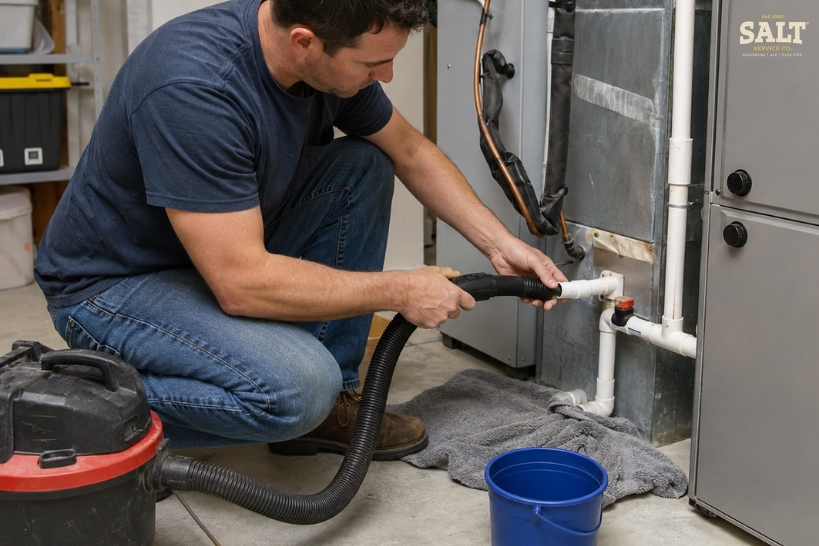
A clogged drain line is the single most common reason an AC leaks water, and it is highly fixable. You need a wet/dry shop vac, towels, a damp rag, and warm water.
Follow these steps to clear the line:
- Power Off: Shut down the system at your thermostat and breaker.
- Find the Drain: Locate the outdoor PVC stub. In Austin, look near your condenser pad, foundation line, or porch. Remove any caps or screens.
- Seal and Vacuum: Wrap a damp rag around the pipe to seal the shop vac hose. Run it for one to three minutes to pull out sludge.
- Flush and Refill: If accessible, flush the indoor access tee with one to two gallons of warm water. Pour fresh water back in to refill the P-trap. Skipping this step causes poor drainage and lets sewer odors into the house.
- Check the Float Switch: Clear any standing water from the safety switch cup before restoring power.
Common pitfalls to avoid: Never use compressed air or blowback tools, which can shatter brittle PVC. Always refill the trap, and verify drainage before running the AC again.
If the blockage will not budge after vacuuming, the team at SALT is ready to help. Our licensed technicians can locate and clear stubborn clogs from the indoor access point, even when the outdoor stub is buried. Contact us for professional AC repair in Austin.
Frozen AC Coil? How to Thaw It Without Flooding Your Home
Opening your utility closet to find the indoor unit encased in ice is a clear answer to why your AC is leaking water. Once that ice melts, it can dump several gallons of water into your home quickly. Prepare before you thaw.
Follow these four steps to thaw your coil safely:
- Switch COOL to OFF: Stop the cooling cycle immediately.
- Turn FAN to ON: Run the blower fan to circulate warm air over the frozen coil.
- Protect the area: Clear the condensate line, lay down thick towels, and check that your emergency drain pan is not already full.
- Monitor the melt: Let ice melt naturally, checking progress every 20 to 30 minutes.
Never scrape ice off the aluminum fins, use a hair dryer inside the cabinet, or restart the AC until the unit is completely dry.
Thawing solves the immediate problem. It does not fix the root cause. Coils freeze because of restricted airflow (dirty filter, blocked vents) or low refrigerant. Change your air filter and open all registers. If the system re-freezes, turn it off and schedule a professional inspection before the compressor fails.
Schedule an AC Tune-UpOther Causes, Red Flags, and What Repairs Cost
Residential water damage repairs average between $1,500 and $5,000. If a clogged drain or frozen coil is not your issue, these mechanical problems could be the culprit:
- Rusted primary pan: Water leaks directly beneath the unit even with a clear drain line.
- Overflowing auxiliary pan: The backup pan fills when a safety float switch fails to cut power in time.
- Failed condensate pump: A dead pump motor causes rapid reservoir overflows in units that drain upward.
- Improper leveling: An unpitched system pools water until it spills over the pan edge.
Call a professional immediately if you see water dripping onto electrical wiring, a coil that freezes repeatedly, or water staining your ceiling. These are not DIY situations.
Cost depends on the repair. A drain flush is the lowest-cost fix. Replacing a pump or pan sits in the mid-range. Refrigerant leaks and coil repairs run higher. If repair costs exceed half the unit’s value, replacement is often the smarter investment. SALT offers flat-rate, upfront pricing so you know the cost before work begins.

Your Step-by-Step Action Plan When the AC Leaks Water
When your air conditioner leaks, acting quickly limits damage. Follow this decision framework:
- Safety First: If water is pooling near electrical or gas components, shut off the HVAC breaker immediately and call a professional.
- Clear the Line: If your drain pan is full, use a wet/dry vacuum to clear the clogged condensate line.
- Thaw Safely: If you spot ice on the coils, turn off the cooling, set the fan to ON to melt it, then replace dirty filters.
- Call a Pro: If the leak returns within days, schedule a professional inspection.
To prevent future leaks during hot Texas summers:
- Replace filters every 30 days during peak cooling season.
- Keep all supply and return vents open and unblocked.
- Install a float safety switch on attic units to prevent ceiling overflows.
- Schedule an annual AC tune-up to clean and test the full condensate system.
SALT Service Co. has served Austin homeowners since 1984. Our licensed HVAC technicians can diagnose any AC water leak, clear stubborn drain clogs, and make sure your system runs safely all summer. Call us at (512) 956-7842 or book online.
Request a Free EstimateCommon Questions About AC Water Leaks
Is it safe to run my AC if it is leaking water?
No. Running an air conditioner while it is leaking risks structural damage and electrical shorts if water reaches internal wiring. If water is pooling near your air handler or furnace, shut off the HVAC breakers immediately. Do not run the system again until the leak is repaired.
Where is my condensate drain line outlet located outside?
In Central Texas, the outdoor condensate drain line is typically near your condenser pad, along the foundation line, or by a plumbing chase. Builders sometimes route these lines to drain near a patio or flower bed. If the outlet is buried under mulch or soil, a technician can locate and clear it from your indoor access point.
I used a shop vac and the leak continues. What now?
If your AC keeps leaking after vacuuming, you likely have a partial clog deeper in the pipe, a collapsed line, an improper trap pitch, or a cracked internal pan. Check whether your safety float switch is working correctly. If water still bypasses the drain during a full cooling cycle, a professional inspection is the next step.
My evaporator coil froze. Can I leave the AC off overnight to thaw?
Yes. Leaving the AC off overnight will thaw a frozen evaporator coil. First clear your drain line and place towels down to absorb meltwater. If the coil freezes again shortly after restarting, you have an airflow or refrigerant problem that needs professional repair.
Why is there water around my furnace or air handler?
Water around your furnace or air handler typically points to a condensate system failure: a clogged drain, cracked pan, or broken pump. Because water can damage sensitive electrical boards and blower motors, treat this as a safety hazard. Keep power off and contact SALT Service Co. at (512) 956-7842 to schedule an inspection.
How do I stop my AC drain pan from overflowing?
Change your air filters every 30 to 60 days, flush your drain line with diluted white vinegar monthly, and verify that a float safety switch is installed. An annual AC tune-up is the best way to keep your entire condensate system clean and tested before Austin’s peak cooling season starts.