

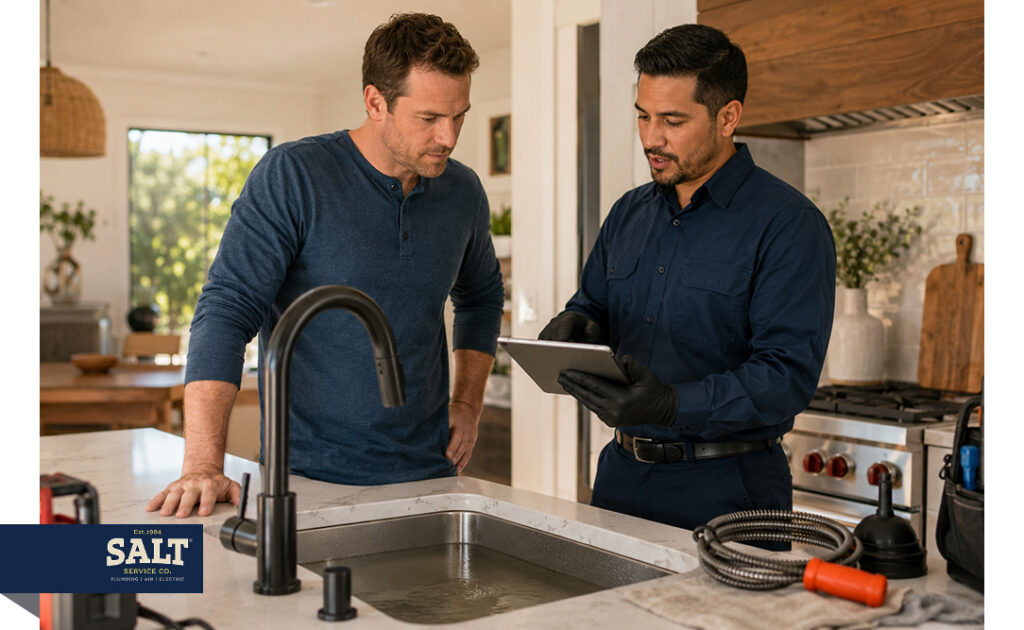
You’re standing over a sink that refuses to drain, watching the water rise while searching for a fix. You see two common options: drain cleaning vs. drain snaking, but the technical jargon makes it hard to tell which one actually solves your specific plumbing problem.
For Austin homeowners, this choice matters for the long-term health of your pipes. Between the heavy mineral buildup from our local hard water and the invasive tree roots common in neighborhoods like West Lake Hills or Travis Heights, a quick fix often isn’t enough. Choosing the wrong method means paying for a temporary solution today, only to have kitchen grease or soap scum cause another backup two weeks later.
At SALT, we want to clarify these terms so you can feel confident and avoid being upsold on services you don’t need. This guide covers:
- What each method accomplishes (and what it doesn’t)
- The difference between DIY hand snakes and professional power equipment
- When professional hydro-jetting is worth the investment
- Typical cost drivers and a simple decision checklist for your home
Finding the right solution for your plumbing starts with a clear look at what actually happens inside your pipes during each process.
What Is Drain Snaking? Breaking Through Blockages vs. Deep Cleaning
Did you know a cleared drain does not always mean a clean pipe? Snaking is the fastest way to get your water moving again, but it is often a temporary breakthrough rather than a deep clean. A drain snake, or auger, is a flexible steel cable designed to physically punch a hole through a blockage or retrieve an object like a hair mass or a small toy.
Plumbing professionals generally categorize snaking into three levels based on the severity of the problem:
- DIY Hand Snake: These small, manual tools are ideal for bathroom sinks or tubs where hair is the primary culprit. They have limited reach and torque but handle minor, localized clogs well.
- DIY Power Snake: These are drill-assisted or rental units with more force and longer reach. They carry a high risk for non-professionals because too much torque can scratch porcelain fixtures or get the cable permanently stuck in a tight pipe turn.
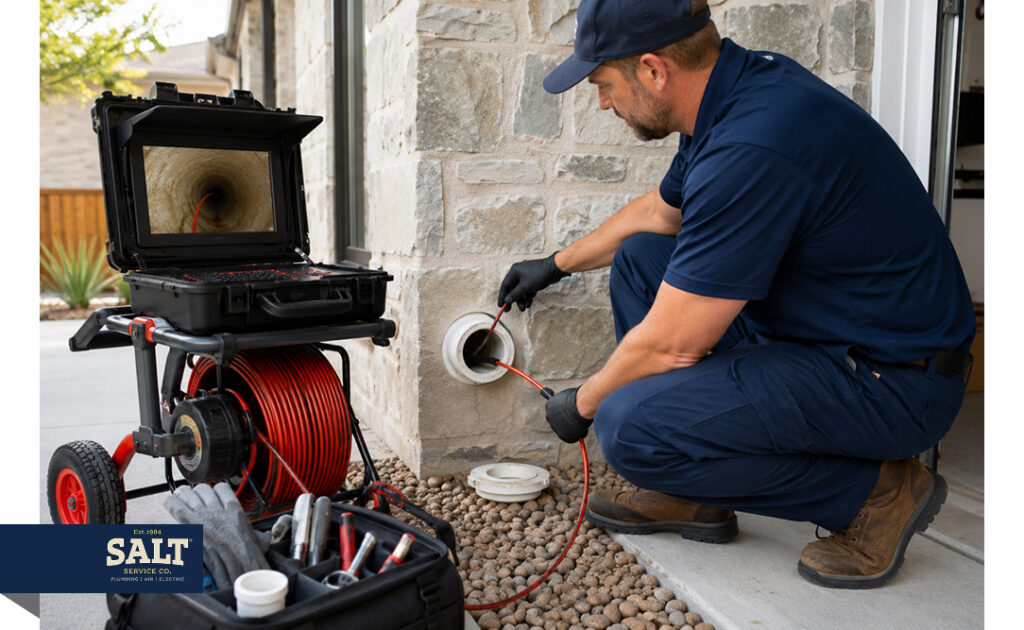
- Professional-Grade Cable Machines: These provide controlled torque and reach deep into your main lines using specialized cutter heads. You can review what a pro snake service typically includes to see how these tools safely clear obstructions without damaging your plumbing.
Snaking works well for one-time, localized clogs like a soap wad in a shower or a toilet backup. In Austin homes, we frequently use it to resolve shower hair clogs or minor kitchen blockages when you need the water to drain immediately.
Snaking has specific limits, though. It often fails to remove heavy kitchen grease, mineral scale, or thick sludge. In older Austin homes with rougher pipe interiors, the snake might pass through the blockage only for the soft sludge to smear and seal the pipe again shortly after the technician leaves. Snaking restores flow, but it does not scrub the pipe walls clean.

Professional Drain Cleaning: Restoring Pipe Health Beyond the Breakthrough
Ever wonder why a drain that was just cleared often runs slow again a few weeks later? The answer is the difference between opening a path for water and performing a full drain cleaning. While snaking addresses the immediate symptom, professional cleaning restores the pipe’s internal diameter by removing the layers of buildup that snaking leaves behind.
Professional drain services typically use two primary methods to achieve a deeper clean:
- Mechanical Cleaning: This uses a heavy-duty cable machine with specialized cutting heads. Unlike a basic DIY snake, these heads are sized to the specific pipe diameter and rotate to scrape the inner walls, shaving away soap scum, hair, and light root intrusion.
- Hydro Jetting: This is the gold standard for restoring pipe health. High-pressure water up to 4,000 PSI blasts away heavy grease, sludge, and stubborn mineral scale. The process flushes the entire system clean rather than just punching a hole through a single obstruction.
In Central Texas, our plumbing faces unique challenges. The combination of hard-water minerals and kitchen grease creates sticky pipe walls that catch debris and cause recurring clogs. For homeowners in older neighborhoods with mature trees, such as West Lake Hills or Round Rock, hydro jetting is particularly effective for scouring away the fine root hairs that snaking often misses.
We typically recommend these advanced methods for recurring clogs, slow drainage across multiple fixtures, or heavy grease buildup in kitchen lines. SALT technicians often pair these services with a camera inspection to verify the pipe’s condition and confirm the walls are completely clear. The right choice always depends on your specific pipe material and the severity of the buildup.

Drain Cleaning vs. Drain Snaking: Which Method Fits Your Problem?
Imagine finishing a family dinner in Round Rock, only to find the kitchen sink filling with greasy water. You reach for a plunger, but nothing happens. Choosing the wrong tool wastes money and risks messy overflows. For Austin homeowners, specific cues like gurgling toilets after a heavy Central Texas rain or slow drains that return every few weeks signal very different plumbing needs.
Use this guide to map your symptoms to the most effective fix:
- Single Bathroom Clog (Hair or Soap): Start with snaking. This is the most direct, cost-effective way to pull out physical hair masses or soap clogs from a single tub or sink.
- Recurring Kitchen Slowness (Grease and Sludge): Skip the snake and opt for hydro-jetting. Snaking often just pokes a small hole through soft grease, while jetting scrubs the pipe walls to prevent a quick re-clog.
- Hard Water Buildup (Mineral Scale): Hydro-jetting is the right call here. Snaking provides only short-term relief against the stubborn mineral deposits common in our local water.
- Multiple Backups or Sewage Odors: Treat this as an urgent main line issue. A camera inspection followed by root-cutting or jetting is the only way to clear invasive tree roots safely.
Selecting the right approach is about more than just clearing the path. It is also about choosing the method that is safest for the long-term integrity of your pipes.
Drain Cleaning vs. Drain Snaking: Why Your Pipe Material Dictates the Method
Could 4,000 PSI of water actually destroy your plumbing? While hydro jetting is a powerful tool in the drain cleaning vs. drain snaking debate, it is not always the safest option for every home. The most effective method is simply the one your pipes can handle without sustaining structural damage.
Homes in older Central Texas neighborhoods often feature materials that require a delicate touch. If your property was built before 1970, you likely have cast iron pipes thinned by years of corrosion or clay pipes prone to joint offsets. Some older Austin developments even contain Orangeburg pipes, made of fragile bituminized fiber. Using heavy-duty mechanical cutters or high-pressure water on these compromised lines can cause joint separation, total pipe collapse, or hidden leaks behind your walls.
Reputable plumbers recommend a camera inspection first. We use fiber-optic cameras to locate roots and verify pipe integrity before choosing a tool. This step means we solve the blockage without turning a simple clog into a total sewer replacement. At SALT, our family-owned approach across Travis County focuses on education and upfront pricing rather than high-pressure sales. We give you the facts and clear options so you can protect your home’s long-term value while avoiding accidental damage.
What Does Drain Cleaning vs. Drain Snaking Cost in Austin?
Why does one plumber quote $150 while another suggests a $600 service? The final cost depends on whether you need a quick fix or a long-term solution. Contact SALT for upfront, flat-rate pricing with no surprise fees.
The Pricing Reality Check
- Basic Snaking: Often priced as a flat-rate visit, this is the most budget-friendly option for localized clogs in branch lines, like a guest bathroom sink.
- Professional Hydro Jetting: This sits at a higher price point because it uses specialized high-pressure equipment to scrub the pipe walls. It is the gold standard for removing heavy grease or scale.
- Commercial Services: Businesses typically see higher costs due to longer pipe runs and higher usage volumes.
Key Cost Drivers
- Access Point: Easy ground-level cleanouts are more affordable than accessing lines via a roof vent or from under a concrete slab.
- Main Line vs. Fixture: Clearing a single sink drain is less intensive than a main sewer line stoppage.
- Diagnostic Needs: Adding a camera inspection to identify the root cause increases the upfront cost but prevents expensive recurring visits.
When comparing estimates, ask what “done” actually means. A low-cost bid that only pokes a hole through sludge often leads to another backup within weeks. Look for a scope that addresses both the immediate blockage and the underlying buildup.
The Long-Term Value: Why Professional Drain Cleaning Beats a Basic Snake
Why pay more for a professional service when a basic snake might get the water moving? The answer lies in the outcome. Snaking is an essential tool for emergencies, but a professional cleaning serves as a total system reset for your plumbing.
A deeper clean provides several practical advantages for your Austin home:
- Eliminates Wall Buildup: Scouring away layers of grease and soap scum prevents sticky spots where new clogs quickly form.
- Restores Full Flow: Cleaning returns the pipe to its original internal diameter so your tubs and sinks drain at full capacity.
- Removes Odors: Clearing trapped organic sludge stops the foul kitchen smells that often linger after a simple snaking.
- Prevents Emergencies: Regular maintenance on chronic lines avoids the stress and cost of a midnight sewage backup.
Longevity is the biggest differentiator in the drain cleaning vs. drain snaking debate. Snaking buys you time, but professional cleaning resets the pipe to a like-new state. It is also much safer for your pipes than harsh chemicals. For an eco-conscious approach, SALT offers organic drain cleaning in Austin to keep your home running smoothly without the chemical footprint.
Your Home’s Action Plan: Choosing Between a Snake, a Clean, or a Camera
Clearing a clog and cleaning a pipe produce very different results. While a drain snake provides the immediate breakthrough you need during an emergency, professional cleaning is the only way to keep that backup from returning. In Central Texas, our hard water and heavy kitchen grease create a sticky internal environment that a simple cable cannot scrub away. Think of snaking as a temporary hole and hydro jetting as a total system reset.
Use this escalation path to determine your next move:
- Try snaking first when: You have a single fixture backup, such as a hair clog in a shower or a first-time toilet obstruction. If the water flows freely afterward and there is no sewage smell, a manual breakthrough is likely sufficient.
- Choose professional cleaning when: Clogs repeat in the same spot, drains run slow despite being cleared recently, or you suspect heavy grease buildup in a kitchen line.
- Prioritize a camera inspection when: Multiple fixtures back up at once, you suspect tree roots, or you live in an older Austin home with cast iron or clay pipes. Verify the structural integrity of the line before applying high-pressure water.
Avoid chemical drain cleaners as a default. These products often trap corrosive heat against your pipes, which can lead to permanent damage and safety hazards. If you are unsure which method is safest for your home, the team at SALT is happy to help.
Frequently Asked Questions
Is drain snaking the same thing as drain cleaning?
No, these are two distinct plumbing services with different goals. Snaking uses a flexible cable to punch a hole through a specific blockage and restore flow, while drain cleaning uses high-pressure water to scrub the entire interior wall of the pipe. Most plumbers use the terms loosely, so ask whether they are simply clearing a path or truly scouring the pipe of grease and scale.
Why does my drain clog again shortly after it was snaked?
This usually happens because a snake only clears a narrow opening through soft blockages like grease, hair, or sludge. Once the cable is removed, the remaining debris can quickly shift back into place or catch new waste, leading to a secondary backup within days. If your drain clogs repeatedly, the pipe walls likely need a deep cleaning or there is an underlying structural issue like root intrusion.
Is hydro jetting safe for older plumbing systems?
Hydro jetting is safe for pipes in good condition, but it carries risks for aged materials like clay, corroded cast iron, or fragile Orangeburg pipes. The high-pressure water can worsen existing cracks, blow out weak joints, or cause a total collapse in compromised lines. A professional should always perform a camera inspection first to verify the structural integrity of your plumbing before using pressures up to 4,000 PSI.
Should I use chemical drain cleaners instead of calling a plumber?
Avoid chemical cleaners. They rarely remove a full blockage and can cause permanent damage through corrosive heat. These liquids are hazardous to handle and can become trapped in your lines, creating a dangerous environment for a technician to work on later. SALT Service Co. offers organic drain cleaning solutions that clear buildup without harsh toxins.
How do I know if I have a main sewer line clog?
A main line clog is likely if multiple fixtures back up simultaneously or if using one drain causes water to surface in another. Common symptoms include gurgling toilets when the laundry machine runs, a persistent sewage smell, or water appearing in the shower when you flush a toilet. If sewage backs up into your lowest floor drains, stop all water usage immediately and call for professional help to prevent property damage.
What is the fastest way to schedule a drain inspection in Austin?
The quickest way to book service is to call SALT directly or use our online scheduling tool to check for same-day or emergency availability. We offer priority windows for active backups to help Austin homeowners avoid water damage and costly restoration.